The Mighty Vajrapani: Wrathful Guardian of Wisdom
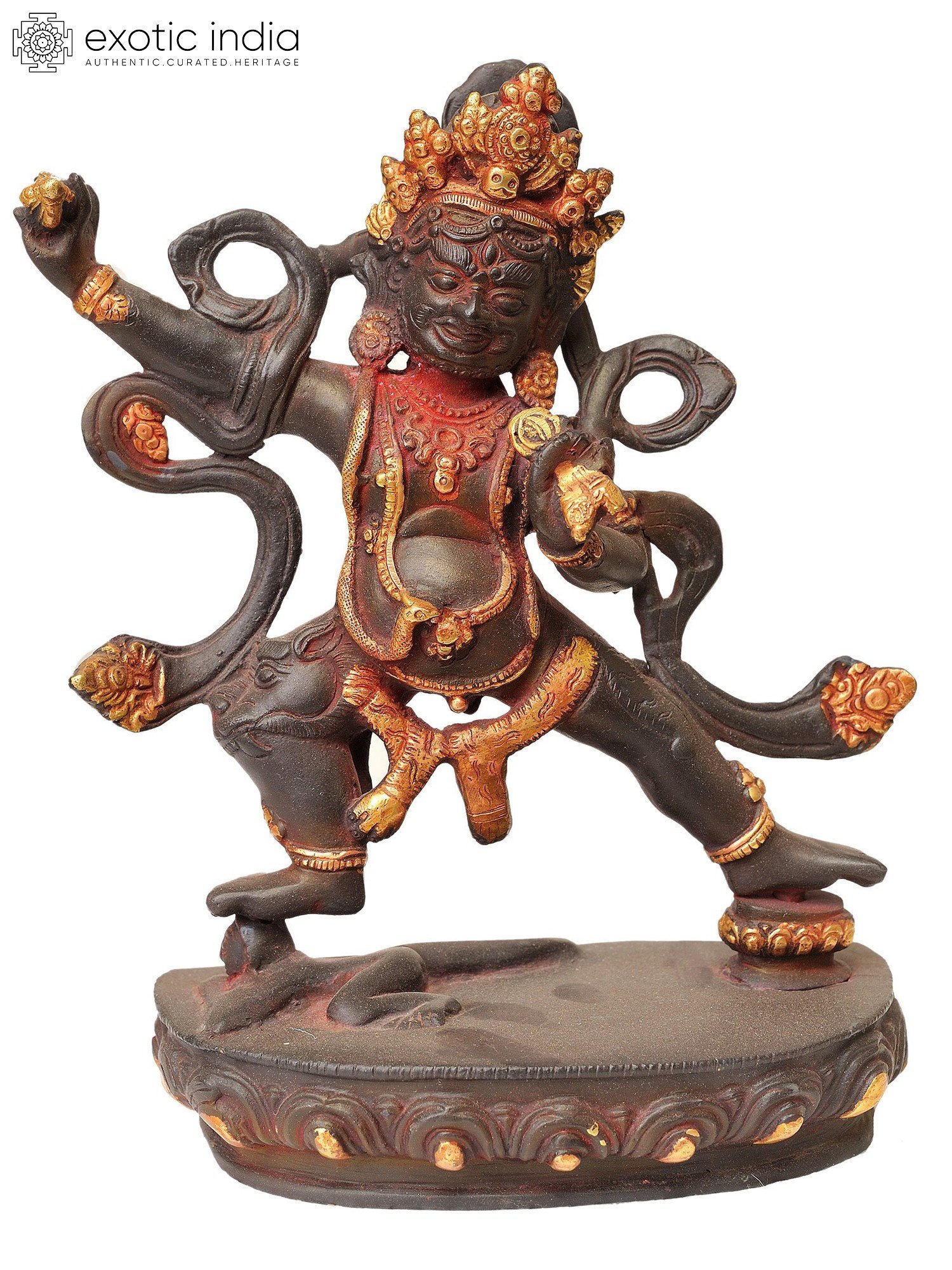
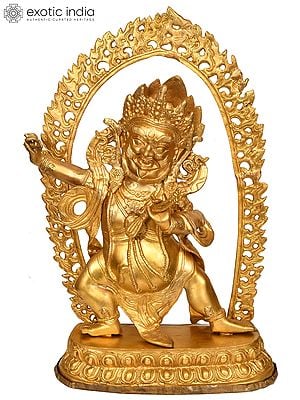
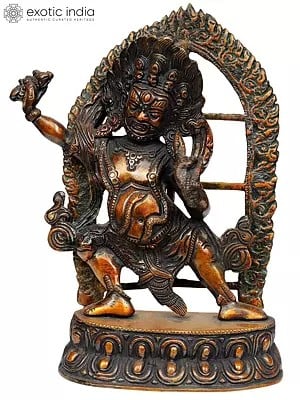
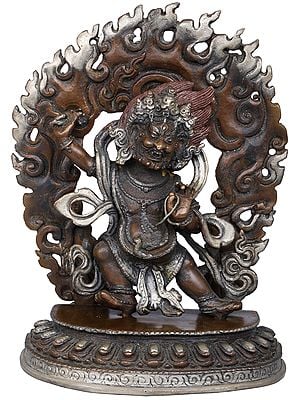
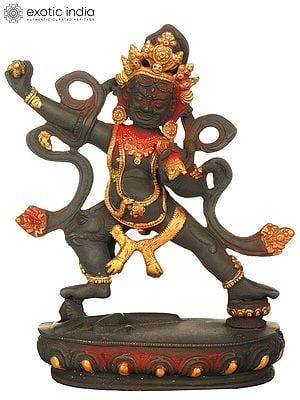
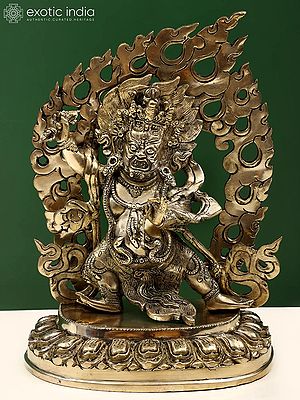
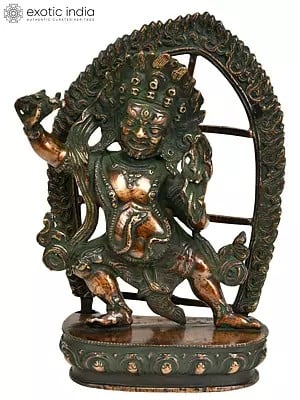
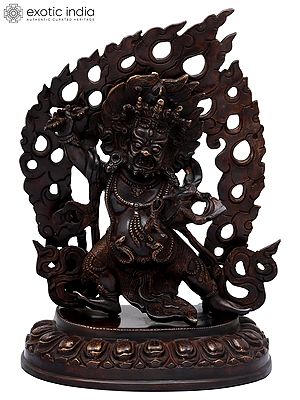
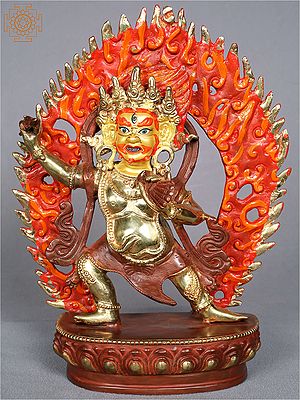
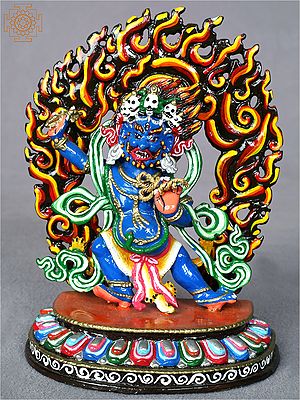
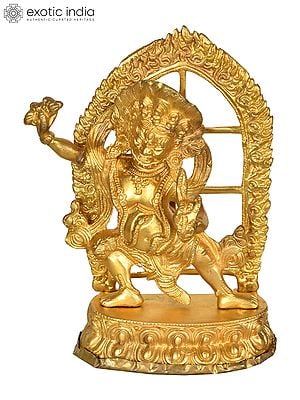
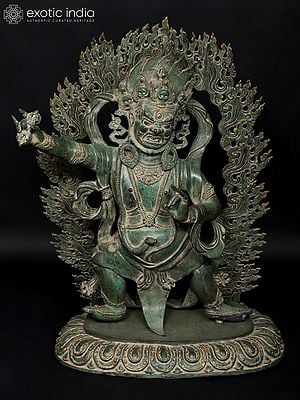
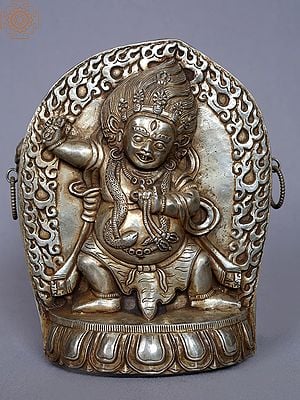
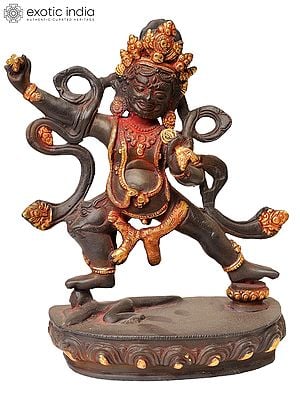
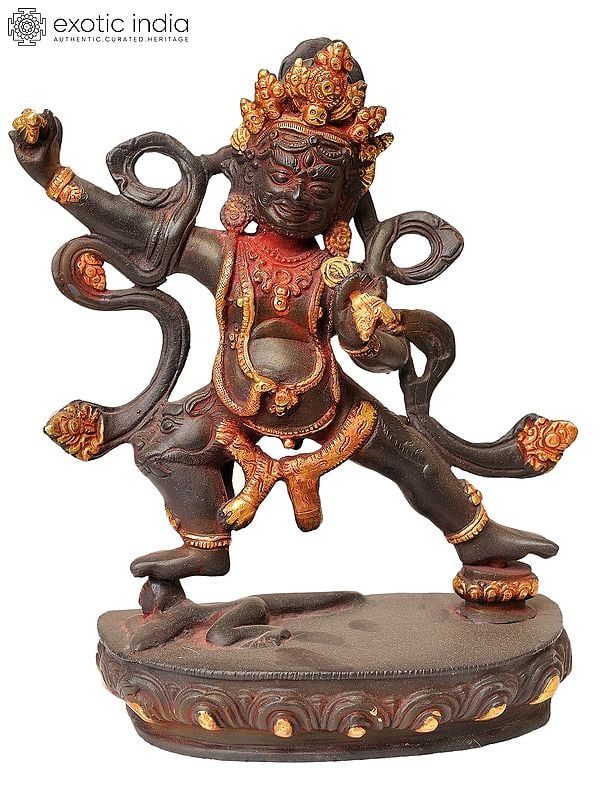
This striking brass sculpture depicts Vajrapani, one of the most powerful Bodhisattvas in Tibetan Buddhism, embodying the power of all Buddhas. His name, "Holder of the Thunderbolt" or "Vajra-bearer," signifies his fierce yet compassionate nature, dedicated to overcoming delusion and ignorance. This exquisite, handmade rendition from India captures the essence of this formidable deity with remarkable detail and artistry.
Vajrapani is often depicted in a wrathful aspect, symbolizing his active role in vanquishing obstacles and negative forces that hinder spiritual progress. His raised right hand, gripping a vajra (thunderbolt scepter), is a potent symbol of indestructible wisdom, capable of shattering illusions and ignorance. The vajra, in Buddhist iconography, is akin to the thunderbolt of Zeus or Indra, representing divine power and enlightened understanding that cuts through darkness. In his left hand, he might hold a noose or a lasso, symbolizing his ability to bind and subdue demons and negativities.
––––––––––Symbolism and Iconography
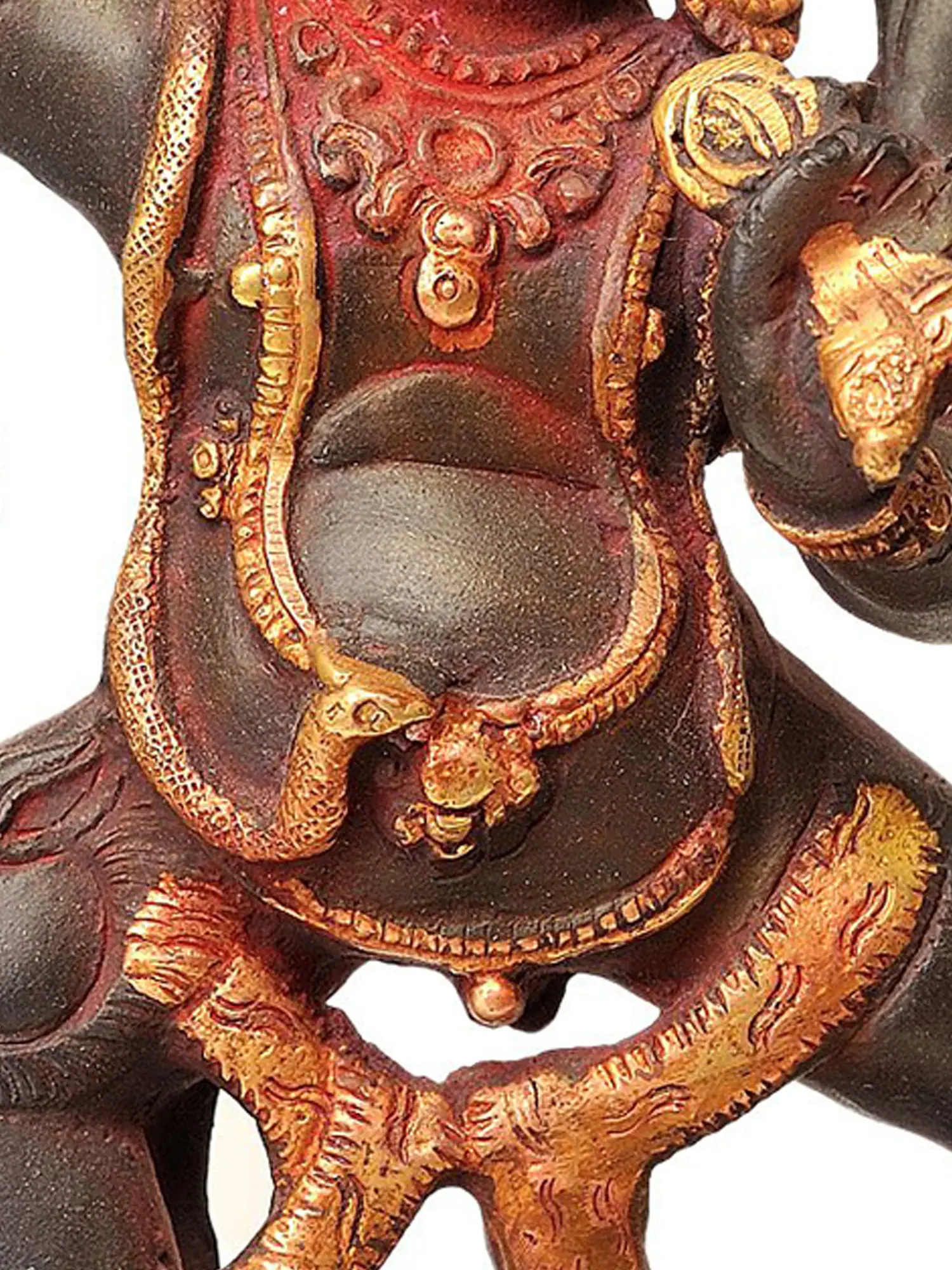
The dynamic pose of this statue is crucial to understanding Vajrapani's energetic nature. He stands triumphantly, often with one leg raised or crushing underfoot various demons or obstacles. This posture represents his victory over suffering and his readiness to descend into the lower realms to liberate sentient beings. His fearsome expression, with bared teeth and bulging eyes, is not one of anger, but of intense compassion and a burning desire to protect practitioners from spiritual and worldly dangers. The elaborate crown and ornaments adorning him signify his divine status and his role as a protector of the Dharma. The multi-armed form often associated with Vajrapani allows him to perform numerous acts of protection and assistance simultaneously, reflecting the boundless nature of his power. This particular representation, with its rich patina and delicate gold accents, brings to life the potent symbolism of this revered deity.
––––––––––Artistry and Craftsmanship
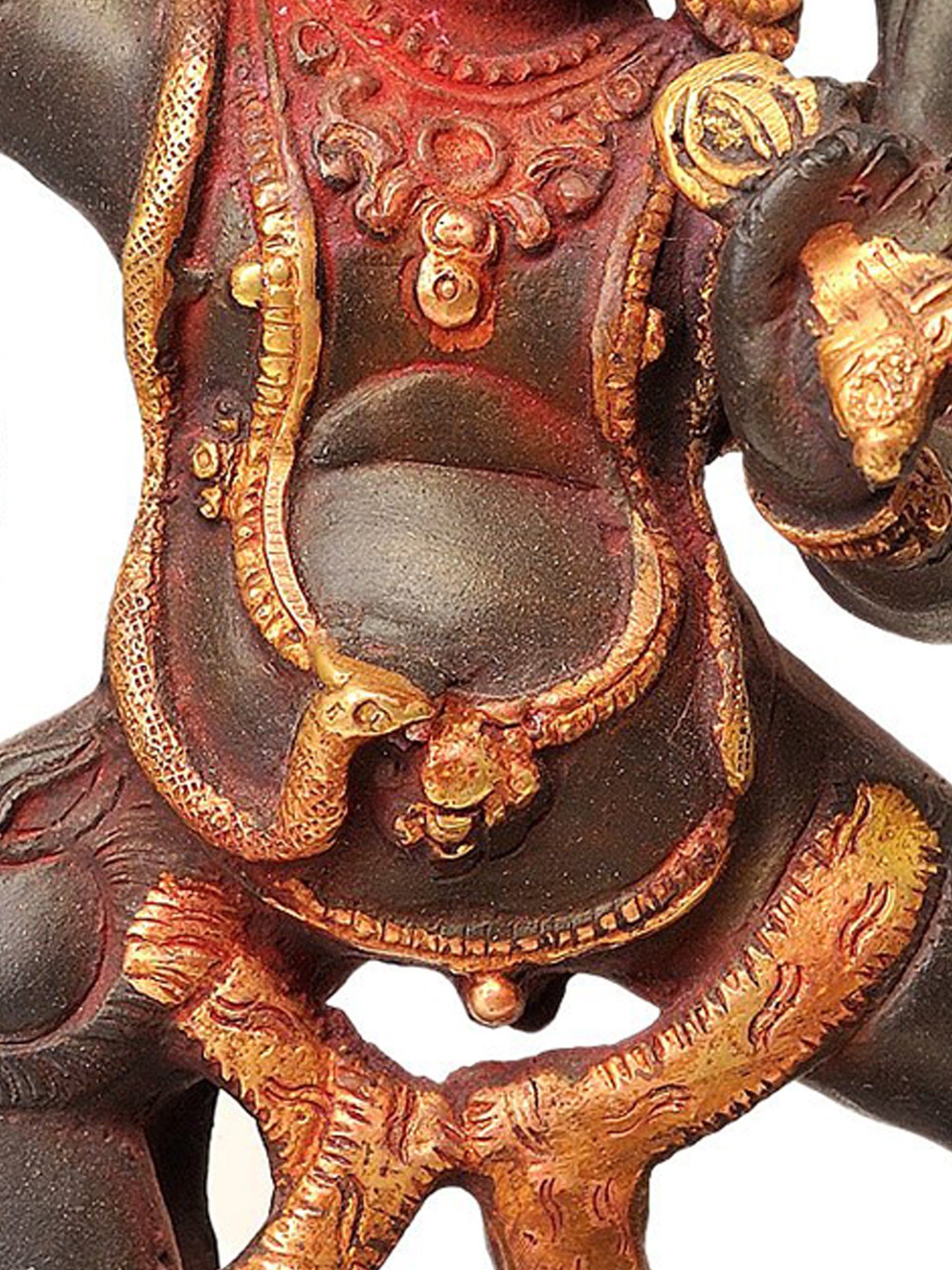
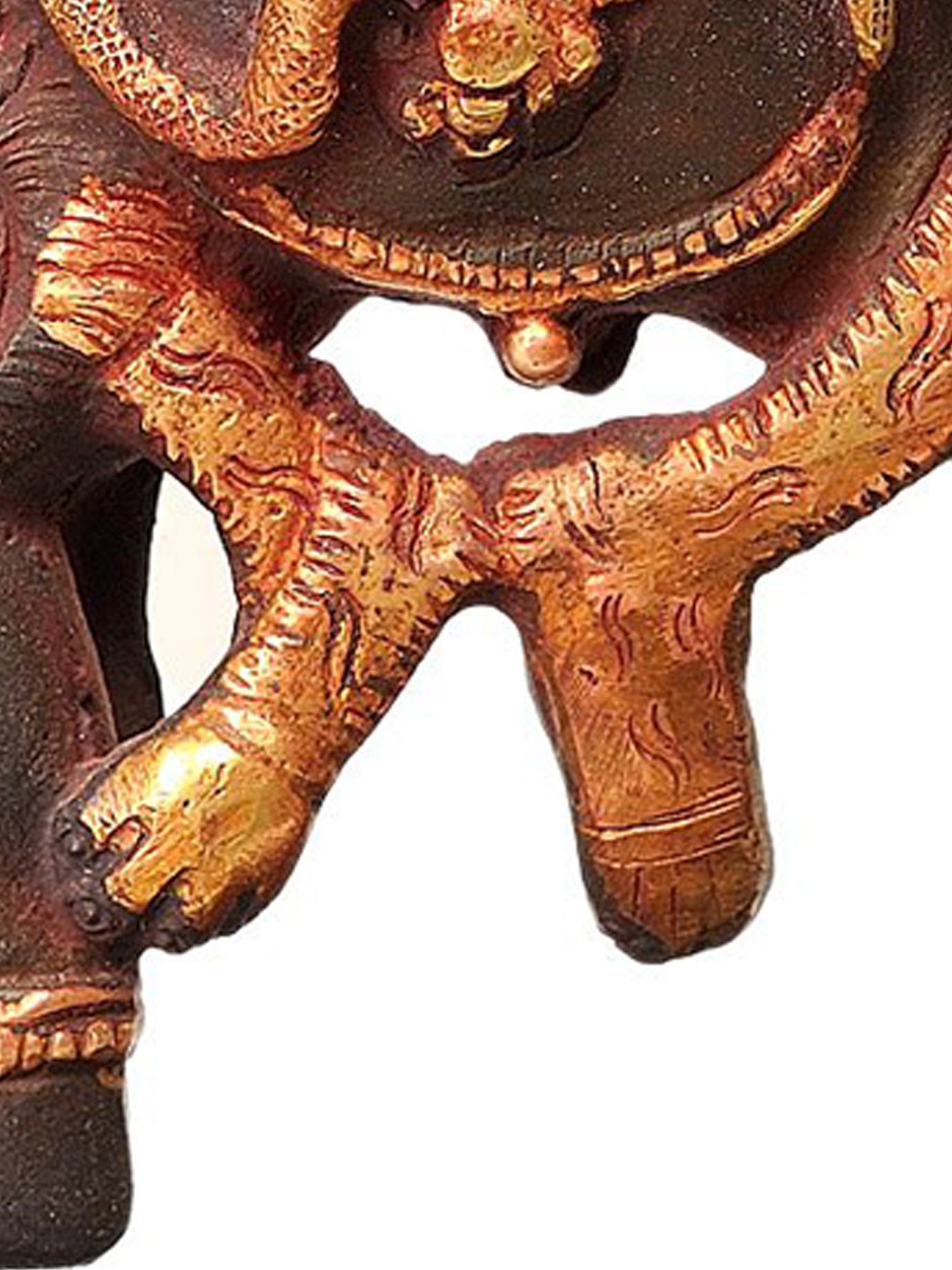
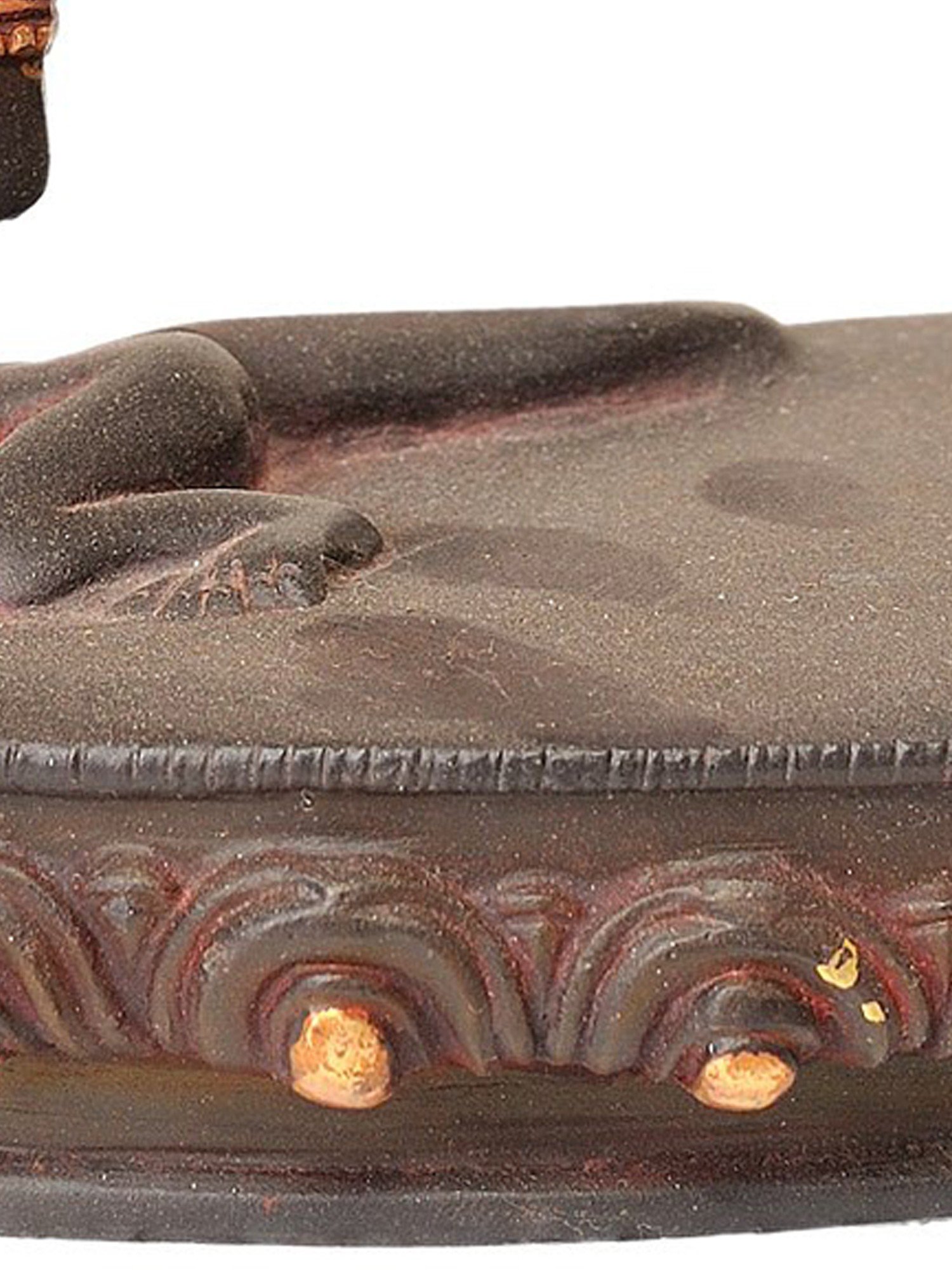
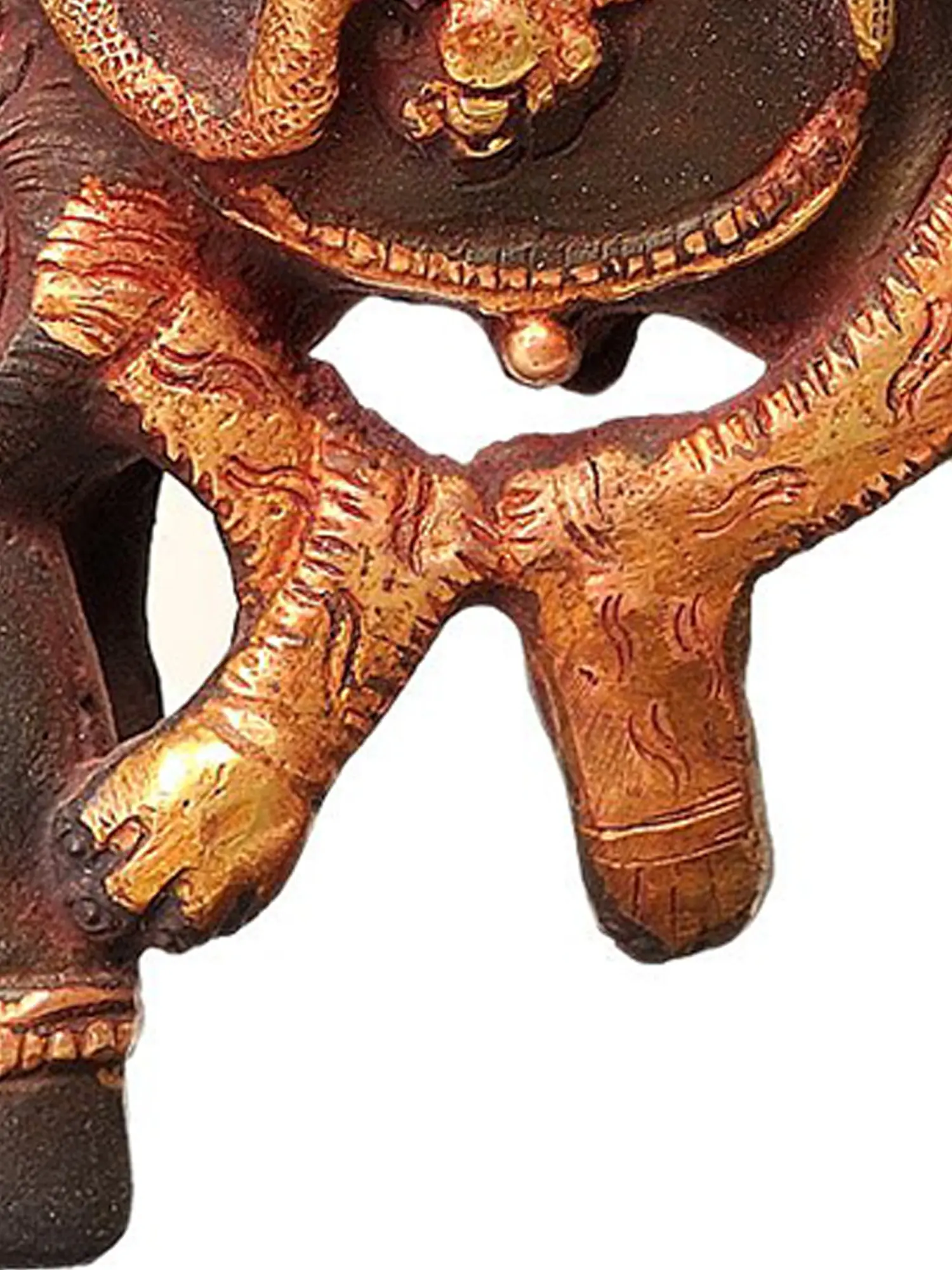
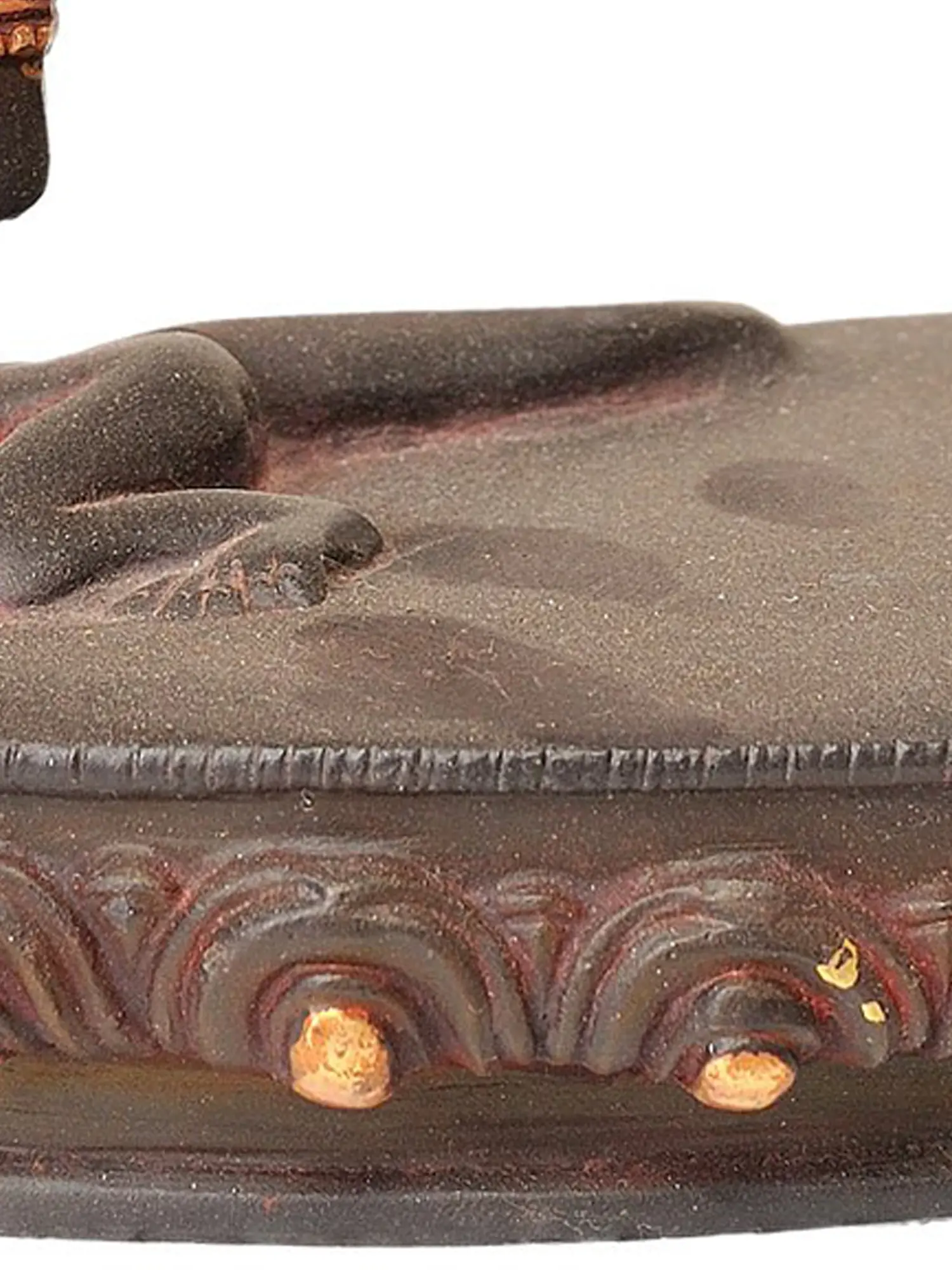
Crafted from high-quality brass, this statue is a testament to the enduring traditions of Indian metal artistry. Each detail, from the intricate facial features and the ornate crown to the powerful musculature and the flowing drapery, has been meticulously hand-finished by skilled artisans. The choice of brass not only lends a durable and lustrous quality to the sculpture but also holds significant cultural and religious importance in India, often used for sacred objects and divine representations. The rich patina and the contrasting gold highlights enhance the depth and visual impact of the piece, making it a captivating focal point for any altar, meditation space, or collection of sacred art. This handmade creation carries the spirit and devotion of its creators, offering a tangible connection to the profound teachings of Tibetan Buddhism.
Unleashing the Power of Vajrapani: Exploring the Wrathful yet
Compassionate Bodhisattva
Vajrapani is one of the chief Bodhisattvas in Mahayana Buddhism.
The Sanskrit word Vajrapani is a combination of two words, Vajra
meaning “thunderbolt” and Pani meaning “holding in hand”. He is
considered the protector of the Dharma and symbolizes the
Buddha's power. The deity of Vajrapani is found in many Buddhist
temples in China, Taiwan, and Japan in temple gates, protecting
Dharma. He upholds the truth even in adversities of darkness and
ignorance. The practitioners and followers of Buddhism who walk
the path of Buddhahood take shelter of Vajrapani who then makes
their way obstacles-free. He is believed to be a manifestation
of Buddha Akshobhya and is often associated with Lord Indra, the
god of rain in Hinduism, who is also depicted holding Vajra (his
weapon) in his hand.
In Buddhist iconography, Vajrapani is often depicted, along with
two other Bodhisattvas, surrounding the Buddha. The other
Bodhisattvas are Manjushri who represents Buddha's wisdom and
Avalokiteshvara who represents Buddha's oceanic compassion.
Vajrapani is sometimes portrayed in human form sporting a third
eye, a bell (ghanta), and a lasso with which he binds demons. He
holds the Vajra in his right hand. The Vajra symbolizes
analytical knowledge. He also wears a five-pointed Bodhisattva
crown on his head that depicts the power of the fully awakened
state of the Buddha.
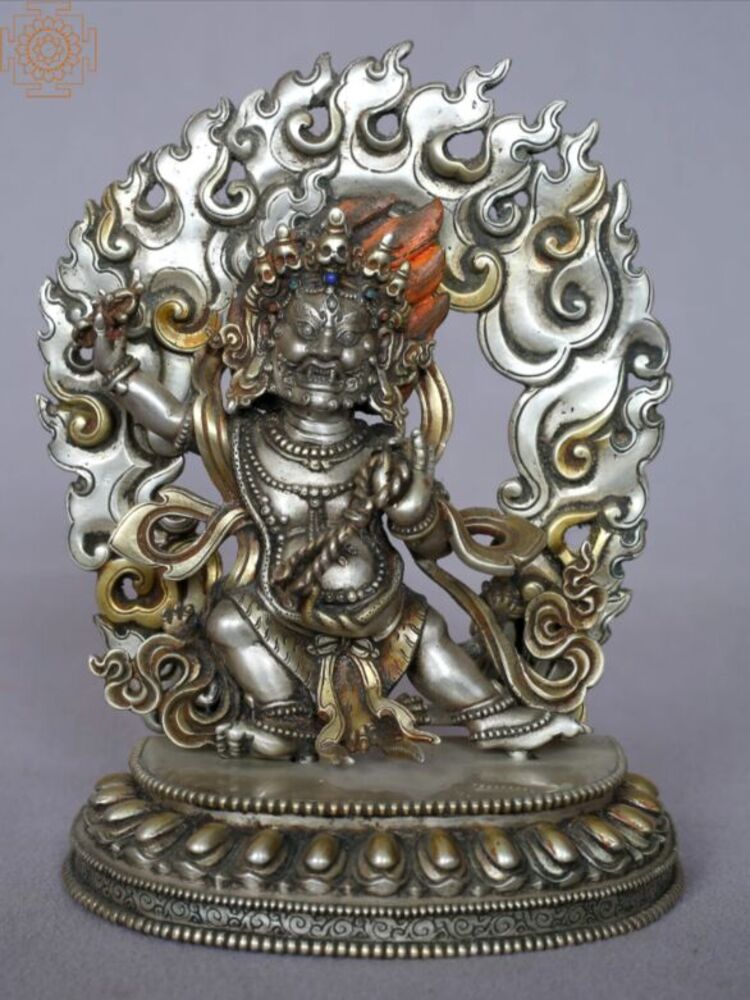
What is the importance of Vajra?
Vajrapani is sometimes depicted dancing among flames and holding
a lightning bolt in his right hand. His complexion is dark blue
or white. The Vajra or the lightning bolt in his hand symbolizes
the power of compassion and the power of all the Buddhas. It
also represents the means of accomplishing fierce determination
and unrelenting effectiveness in the conquest of negativity.
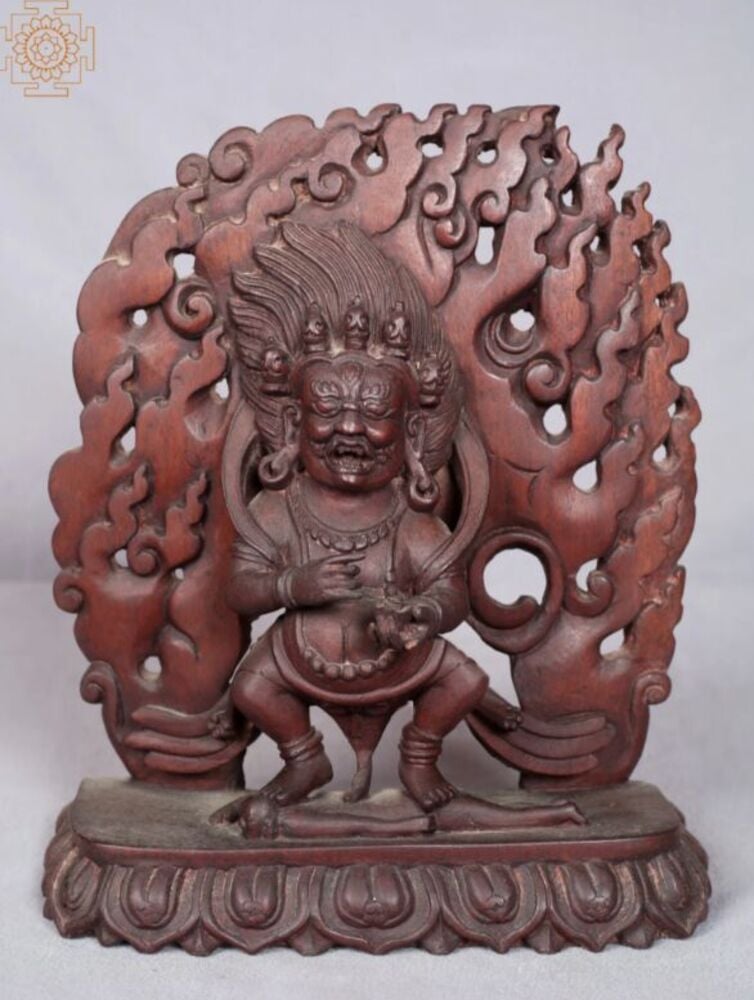
What is the significance of Vajrapani?
Vajrapani is the protector of the human-serpent deities called
the nagas. He also removes obstacles from the life of sincere
followers of Buddhism and thus accepts their prayers for getting
the inner strength to handle difficulties in their lives. His
wrathful manifestation to combat demons may appear fierce and
terrible externally, but for those who surrender to him, he
appears like a benevolent king who is always compassionate
toward all living beings. With his weapon, the thunderbolt, he
cuts through the strong ropes of illusion and ignorance in the
lives of the conditioned souls and shows them the path to
enlightenment. The mantra dedicated to Vajrapani is very simple
yet powerful: “Om Vajrapani Hum”. It is believed that those who
chant this mantra with full faith gain access to the
irrepressible energy of Vajrapani and thus become fearful and
determined in their spiritual journey.
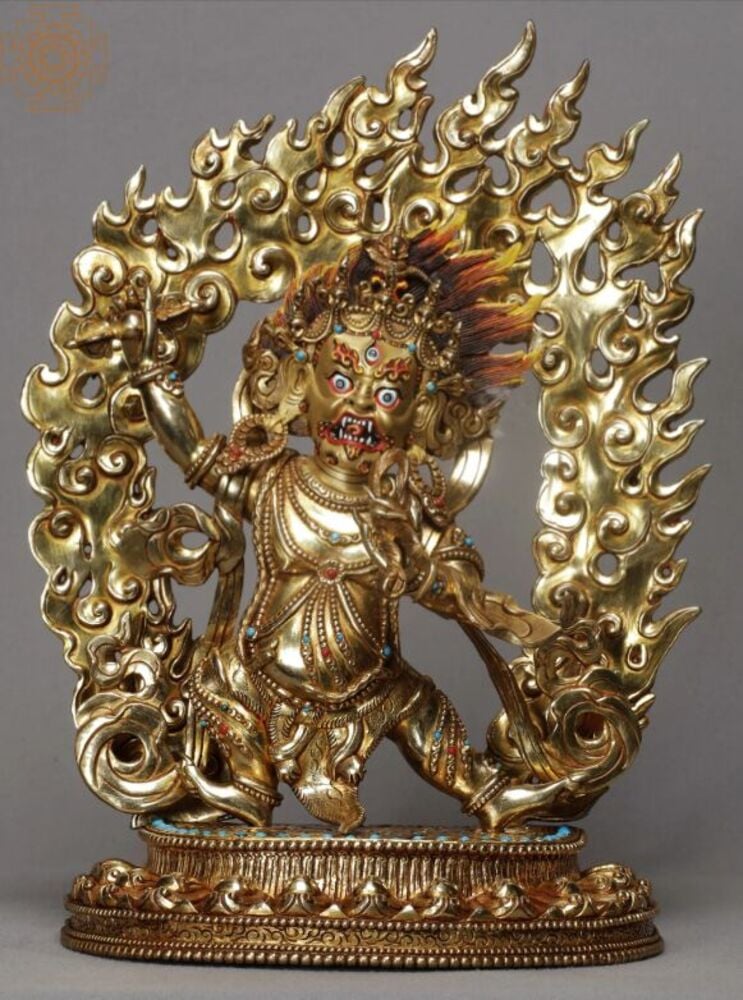
How to keep a Brass statue well-maintained?
Brass statues are known and appreciated for their exquisite beauty and luster. The brilliant bright gold appearance of Brass makes it appropriate for casting aesthetic statues and sculptures. Brass is a metal alloy composed mainly of copper and zinc. This chemical composition makes brass a highly durable and corrosion-resistant material. Due to these properties, Brass statues and sculptures can be kept both indoors as well as outdoors. They also last for many decades without losing all their natural shine.
Brass statues can withstand even harsh weather conditions very well due to their corrosion-resistance properties. However, maintaining the luster and natural beauty of brass statues is essential if you want to prolong their life and appearance.
- The best and simplest way to maintain a brass statue is to clean it at least twice a week using a soft cloth or cotton rag. This will prevent dust from accumulating on the surface. Dusting is especially important for outdoor statues since it is prone to dust accumulation much more than indoors.
- To give a natural shine and luster to the statue, you may apply coconut or olive oil using cotton on every portion. You can use a toothbrush to get to the small crevices but do not be too harsh. This will make the brass statue appear fresh and new with a polished look.
In case you have a colored brass statue, you may apply mustard oil using a soft brush or clean cloth on the brass portion while for the colored portion of the statue, you may use coconut oil with a cotton cloth.
Brass idols of Hindu Gods and Goddesses are especially known for their intricate and detailed work of art. Nepalese sculptures are famous for small brass idols portraying Buddhist deities. These sculptures are beautified with gold gilding and inlay of precious or semi-precious stones. Religious brass statues can be kept at home altars. You can keep a decorative brass statue in your garden or roof to embellish the area and fill it with divinity.












 Upload an Image