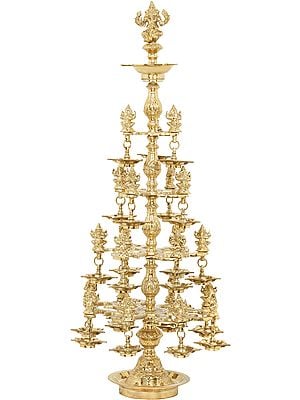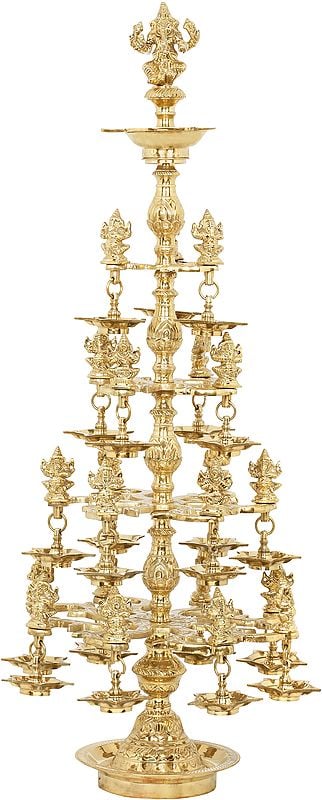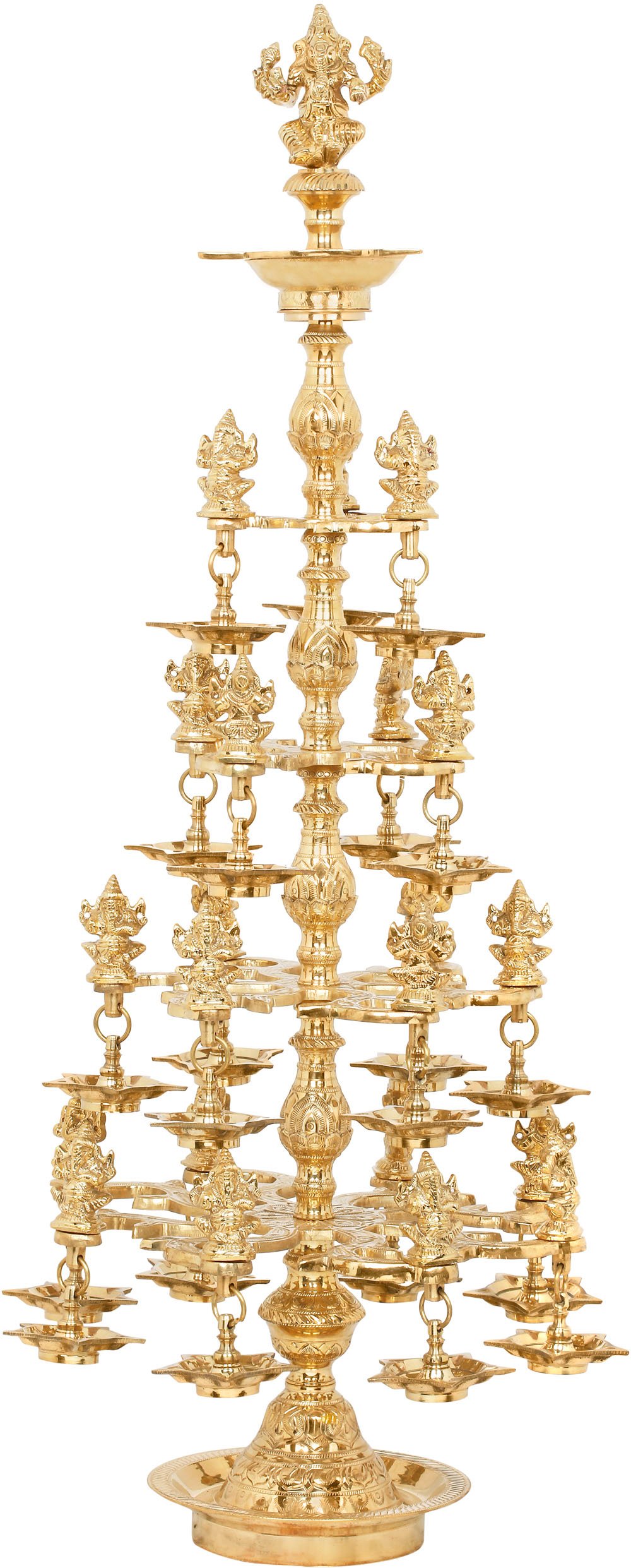
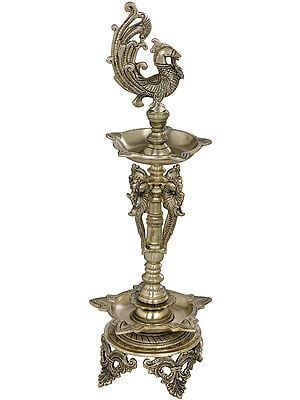
38" Multitude of Auspiciousness Large Brass Lamp with Twenty-Two Ganesha Idol
$1438
Includes any tariffs and taxes

Protective Lacquer Coating
Protective Lacquer Coating

Get your Statue - Lacquer Polish Protection
Lacquer Polish Protection is a protective coating of lacquer that is applied on the statue to protect it from tarnishing and dirt.
Notify me when this item is available
| Specifications |
 |
ZEM443 |
 |
Brass Statue From South India |
 |
Height: 38 inch |
| Width: 16.5 inch | |
| Depth: 16.5 inch | |
 |
Weight 17.70 kg |
| Delivery and Return Policies |
 |
Usually ships in 10 days |
 |
Returns and Exchanges accepted within 7 days |
 |
Free Delivery |

Easy Returns

Fully Insured

100% Handmade
The 108 names known
as the Ashtottara Shatanamavali are said to be extremely auspicious to chant.
People recite Ganapathi's 108 names and perform Pooja to gain the blessings of
this Supreme God. This brass
lamp with 108 or more wicks is also known as an
Ashtottara Deepam or 108-wick lamp. It is considered auspicious to light this
lamp while singing Lord Ganesha's Ashtottara Shatanamavali. Each light cluster
in this lamp has a sacred picture
of Lord Ganesha, directing the warmth of
the lamp straight to the almighty. Columnar lights with a well-carved stem and
hanging lamps from the branches form the fundamental structure.
A Luminary of Divine Blessings: The Ganesha Multi-Tiered Lamp
This magnificent brass lamp, handcrafted in the rich artistic tradition of South India, is more than just a source of light; it is a powerful symbol of auspiciousness, prosperity, and divine protection. Standing at an impressive 38 inches tall, its intricate design and the presence of twenty-two Ganesha idols evoke a sense of reverence and spiritual grandeur. Each Ganesha, the Remover of Obstacles and the patron of new beginnings, is exquisitely rendered, signifying blessings for every aspect of life. The lamp features multiple tiers, adorned with numerous small diyas (oil lamps). When lit, these lamps cast a warm, dancing glow, creating an atmosphere of serenity and devotion. The radiant brass, polished to a lustrous finish, reflects the light beautifully, amplifying its spiritual and aesthetic impact. This lamp is designed to be a centerpiece in any sacred space, be it a home altar, a temple, or a meditation room. Its sheer presence imbues the surroundings with a palpable aura of sanctity and good fortune. ––––––––––Echoes of Mythology and Tradition
The use of lamps, particularly in Hinduism, is deeply rooted in ancient traditions and mythology. The diya symbolizes knowledge dispelling ignorance, light overcoming darkness, and life triumphing over death. The act of lighting a lamp is a prayer, an offering, and a ritualistic expression of gratitude. Ganesha, the elephant-headed deity, is universally revered as the god of wisdom, intellect, and good fortune. He is invoked at the beginning of any significant undertaking to ensure its success. By adorning this lamp with multiple Ganesha idols, this piece embodies a profound aspiration for continuous blessings and the removal of all impediments on one's life path. The elaborate craftsmanship, reminiscent of the intricate work found in ancient South Indian temples, connects this lamp to centuries of artisanal heritage and spiritual devotion. ––––––––––An Emblem of Grandeur and Well-being
This substantial lamp is a testament to the skill and dedication of South Indian artisans. The weight and quality of the brass speak to its durability and lasting value, ensuring it can be a cherished heirloom passed down through generations. Its imposing size makes it a commanding presence, drawing the eye and inspiring contemplation. Imagine the warm, flickering light illuminating your home during festivals like Diwali, the festival of lights, or any special occasion. The multiple tiers, each holding its own set of lamps and miniature Ganesha figures, create a cascading effect of light and devotion. This lamp is not merely decorative; it is an embodiment of the aspiration for a life filled with joy, success, and divine favor. It serves as a constant reminder to approach life with wisdom, courage, and an optimistic spirit, much like the beloved deity it so prominently features.The Power of Light: Understanding the Role of Oil Lamps in
Hinduism
Hinduism is a boon to human society for it guides everyone to
follow their Dharma and rise above the material concept of life.
Hinduism is also known as “Sanatan Dharma”. These are Sanskrit
terms in which Sanatan means “eternal” and Dharma means “Intrinsic
nature or occupation”. Thus it deals with the intrinsic nature or
the real identity of the living entities; that which can never be
taken away from them. The principles of Hinduism are given in the
Vedic literature or scriptures that are considered “Apaurusheya”;
they have not been written by any ordinary person but have been
compiled by Vyasadev, the literary incarnation of the Supreme Lord
Krishna. The word “Veda” means complete knowledge, both material
and spiritual. The knowledge in Vedic literature is so vast and
precise that if one looks carefully, he will notice that nothing
is sentimental or imaginary but is based on facts and truth. There
is a clear description and information about the identity of all
living beings, the nature of the Absolute Truth, the reason for
the existence of this world, the information about the world
beyond this universe, and the relationship between us and God, the
Absolute Truth.
Why do we light a lamp?
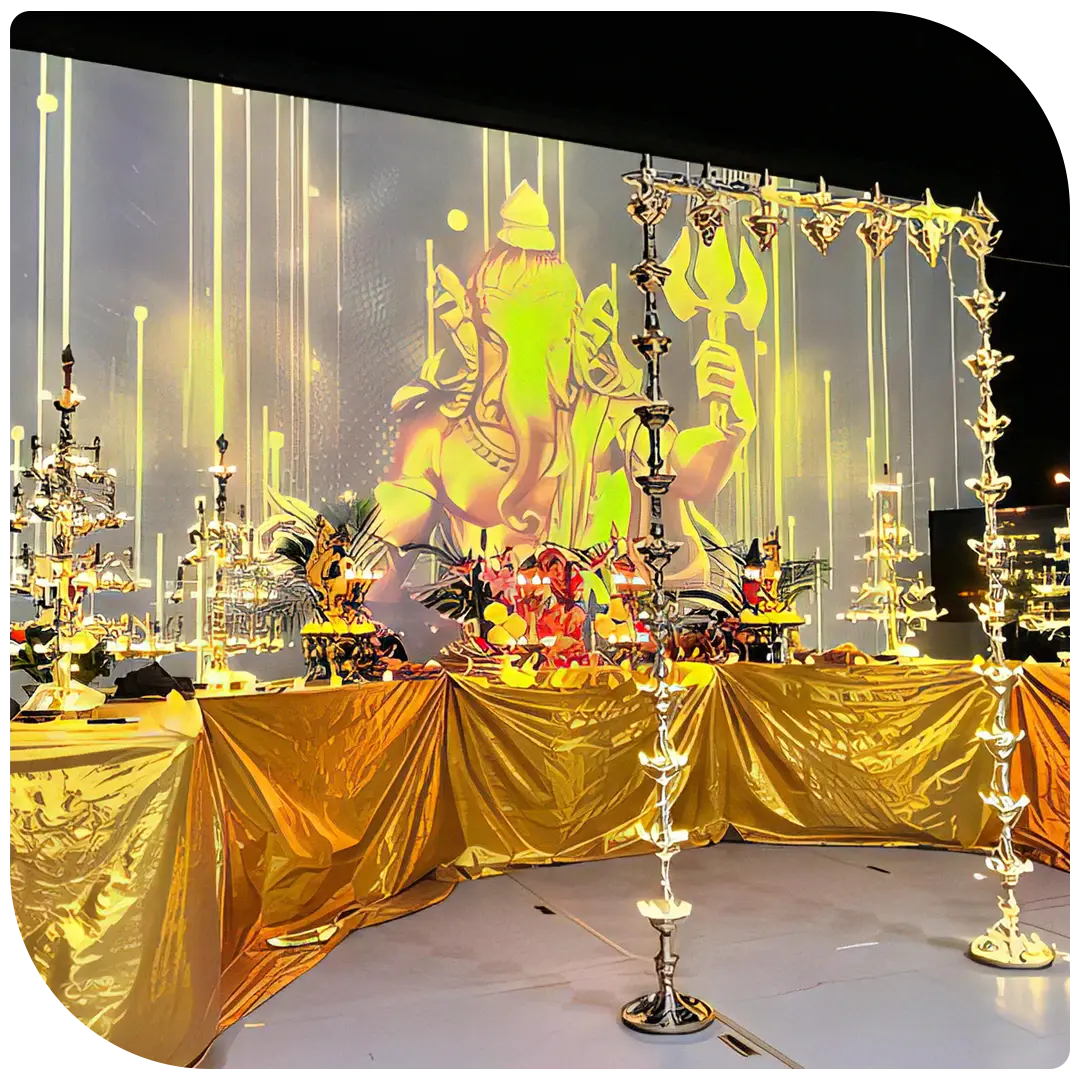
There are many rituals recommended in the Vedas for engaging our body and mind in the service of God. One of them is the lighting of ghee or oil lamps before the deity. According to the Vedic injunctions, all auspicious functions begin with lighting a lamp. It has a great spiritual significance. It is believed that the light of the lamp symbolizes “knowledge”, the wick symbolizes the false ego of the living entity, and ghee (clarified butter) or oil symbolizes all the negative tendencies (Anarthas) accumulated in the heart such as greed, lust, anger, and envy. When the lamp is lit by spiritual knowledge, all the Anarthas are exhausted, and the false ego, which is the root cause of conditional life, is also burnt. Therefore, the lamp is lit before the Lord as a sacrifice of our false ego in His service. Just as the light of the lamp dissipates all darkness, similarly, the light of knowledge dissipates ignorance of the Jivas and enables us to realize our real identity and purpose of life.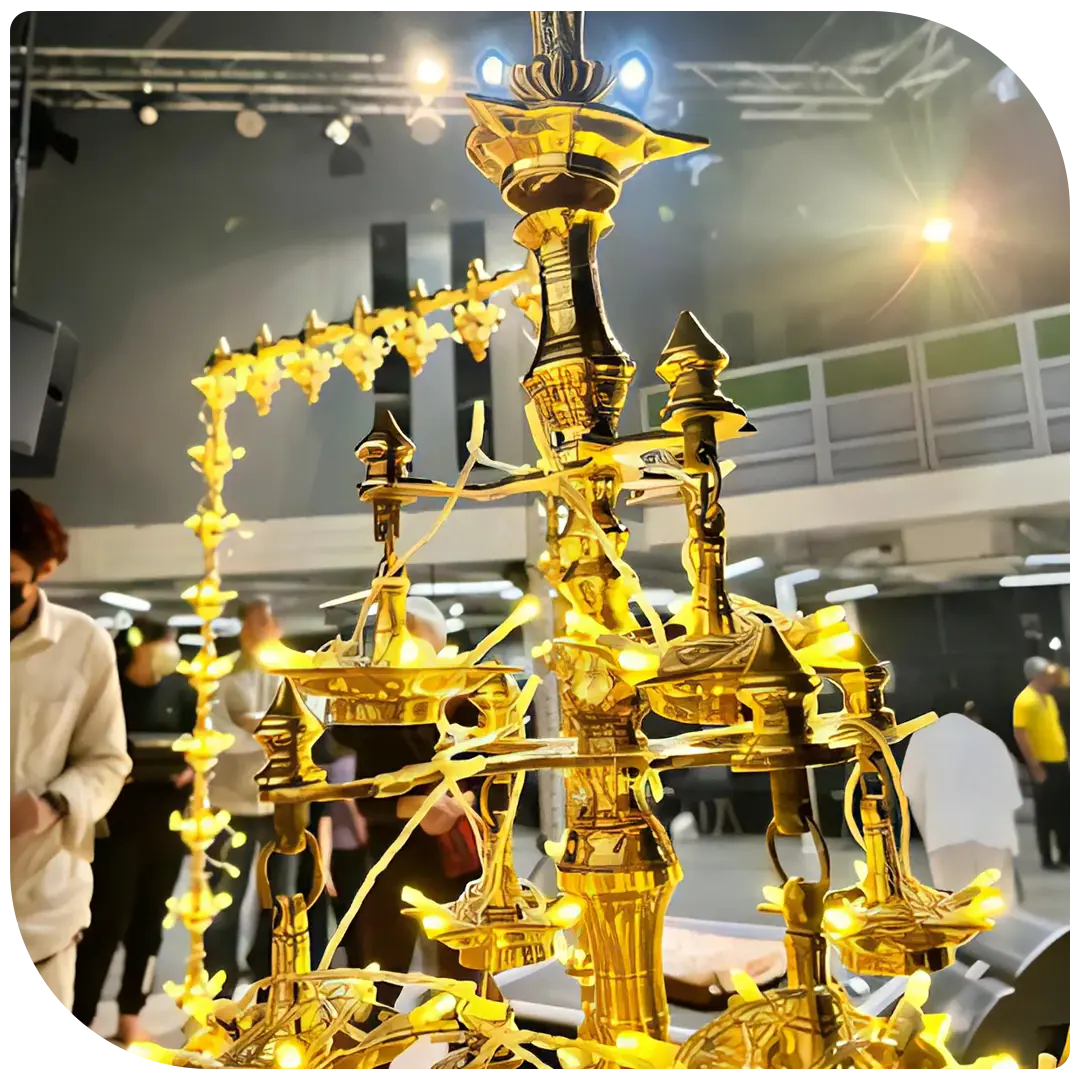
Why only an oil or ghee lamp?
One may question why only an oil lamp is lit before the Lord and why not an artificial light source. This may sound logical but lighting a lamp has a further spiritual significance. The flame of the light in a lamp always burns upwards indicating that by cultivating spiritual knowledge, one achieves the highest perfection of life and is always victorious. Also, a traditional lamp is the purest form of offering.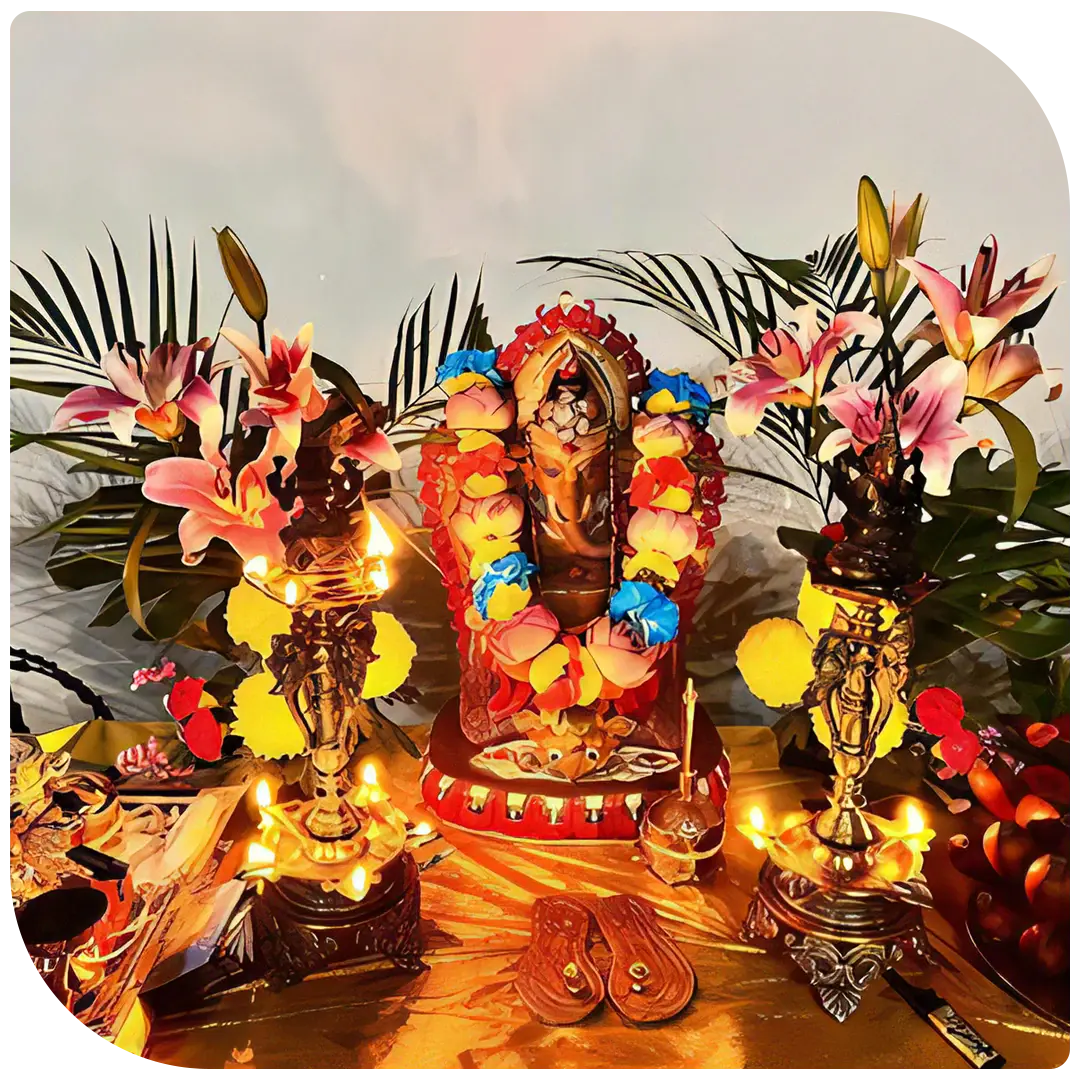
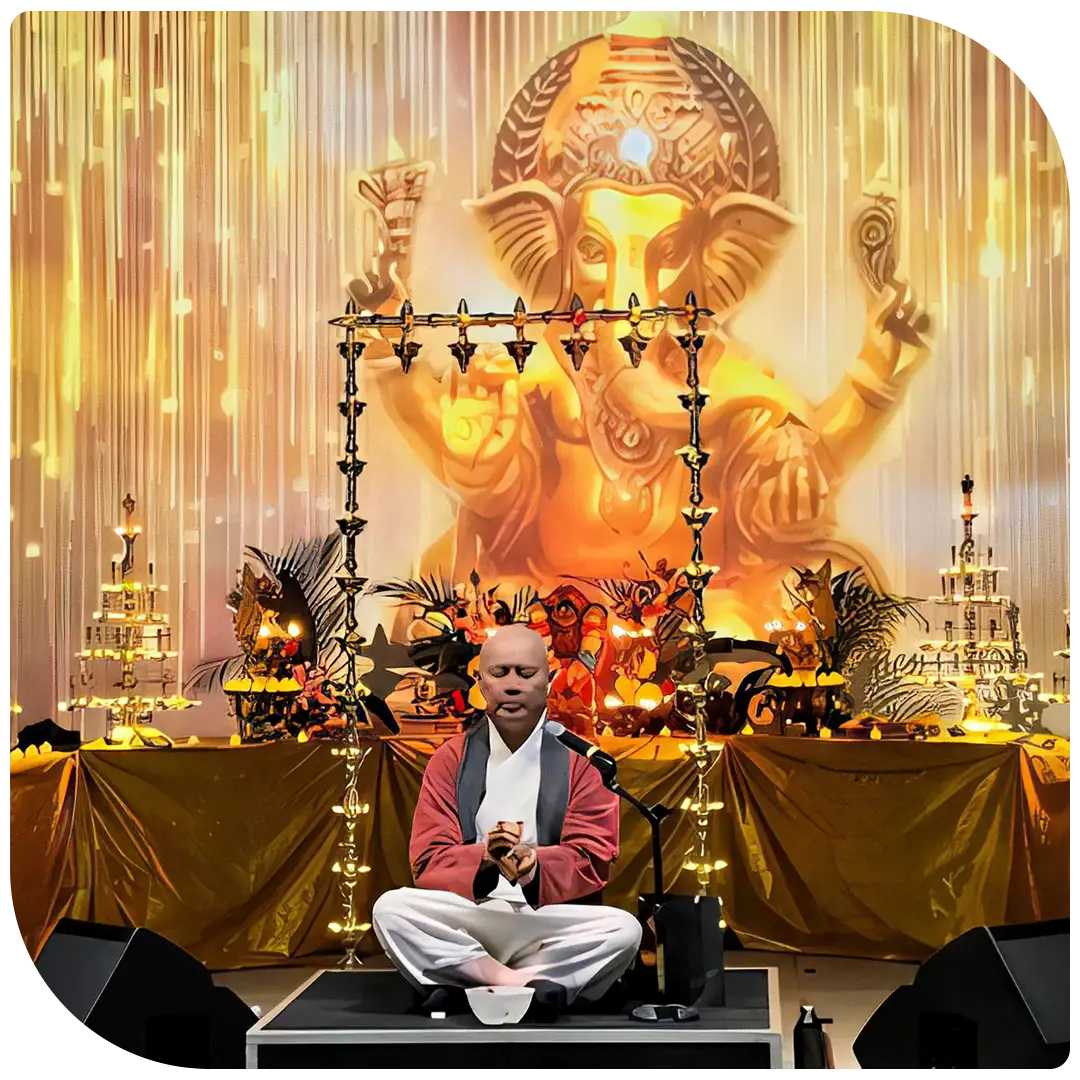
In almost every house of a follower of Sanatan Dharma, an oil or
ghee lamp is lit before the altar of the Lord or before the Tulsi
plant. Some people light it at dawn, some at dusk, and some people
prefer to light it at dawn and dusk. Either ghee or sesame oil can
be used to burn the wick. Vaishnavas (devotees of Lord Vishnu or
Krishna) especially light a ghee lamp every day in the month of
Kartik to offer their love and devotion to the Lord.
Frequently Asked Questions
-
Q. Is the statue hollow or solid ?A. Brass statues are made through a process of clay casting, hence are hollow. Whereas, panchaloha bronze statues are made through a process of lost wax casting, hence they are solid.
-
Q. Can I return the statue ?A. Of course you can return a statue. Returns need to be initiated within seven (7) days after delivery. All returned items must be in new and unused condition, with all original tags and labels attached. To know more about our Return Policy, please visit Return Policy.
-
Q. Can you customise the statue for me ?A. For any customisation, kindly email us at help@exoticindia.com.
Products related to this item
More Colors
35.3 inch X 21 inch X 15 inch
$2165.40
$3609 40% off
Includes any tariffs and taxes
6.5 ft x 3.5 ft
$23
Best Seller
Express Shipping
Includes any tariffs and taxes
24.00 inch Height x 3.70 inch Width x 1.20 inch Depth
$114
Best Seller
Express Shipping
Includes any tariffs and taxes

5.5 ft x 3.5 ft
$23
Best Seller
Express Shipping
Includes any tariffs and taxes

5.6 ft x 3.5 ft
$23
Best Seller
Express Shipping
Includes any tariffs and taxes
48.00 inch Height X 48.00 inch Width x 4.20 inch Depth
$1625
Includes any tariffs and taxes
6.50 inch Height X 6.50 inch Width X 3.80 inch Depth
$150
Includes any tariffs and taxes
7.2 inch X 9.5 inch X 2.5 inch
$104
Best Seller
Includes any tariffs and taxes
More Colors
22.2 inch Height x 8.7 inch Width x 8.7 inch Depth
$315
Express Shipping
$525 40% off
Includes any tariffs and taxes
3.50 inch Height X 4.50 inch Width X 4.50 inch Depth
$112
Express Shipping
Includes any tariffs and taxes
19.2 inch Height x 10.7 inch Width x 8.5 inch Depth
$250
Express Shipping
$500 50% off
Includes any tariffs and taxes
More Colors
23.00 inch Height X 7.20 inch Width x 7.20 inch Depth
$209.50
Express Shipping
$419 50% off
Includes any tariffs and taxes