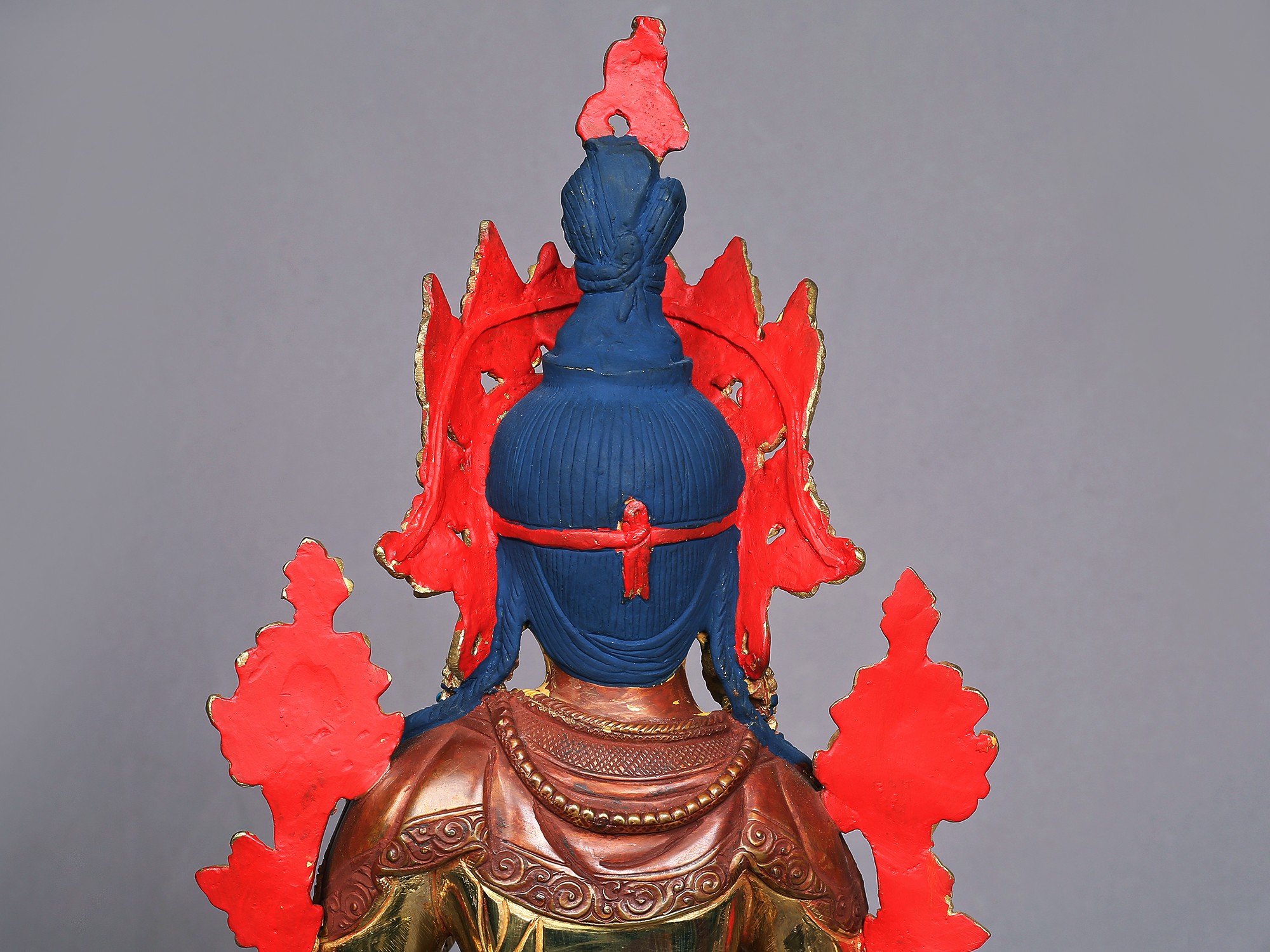
A marvelous
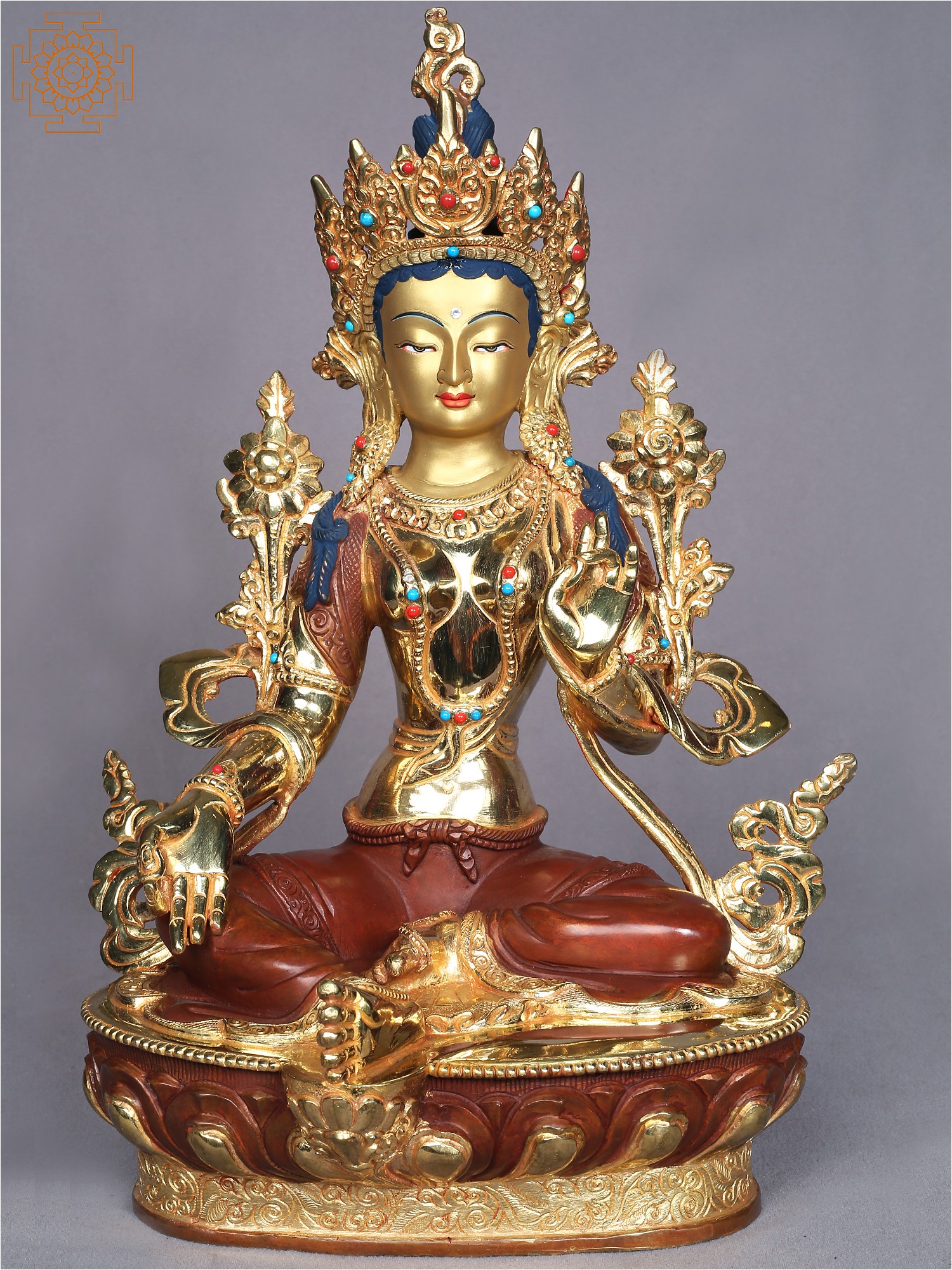
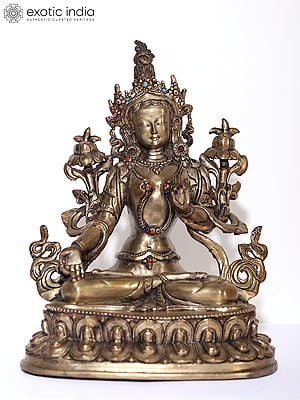
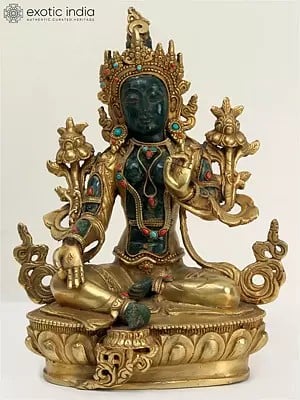
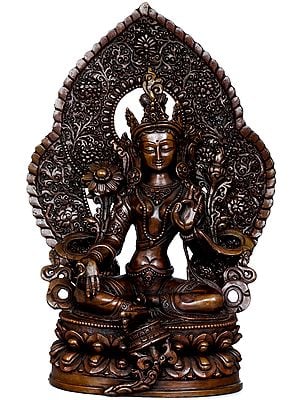
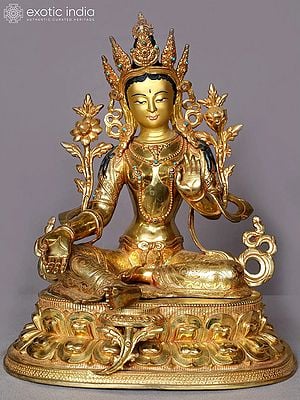
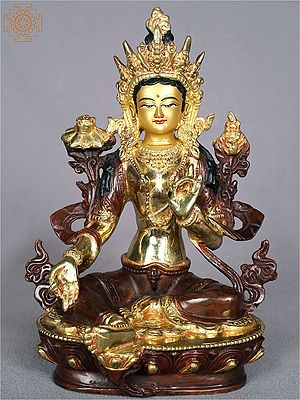
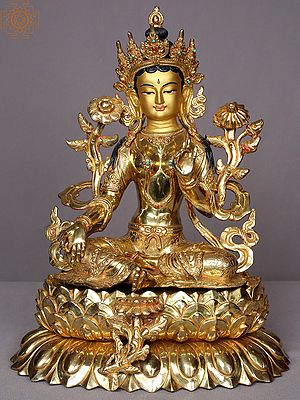
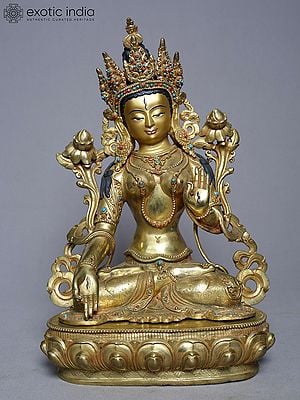
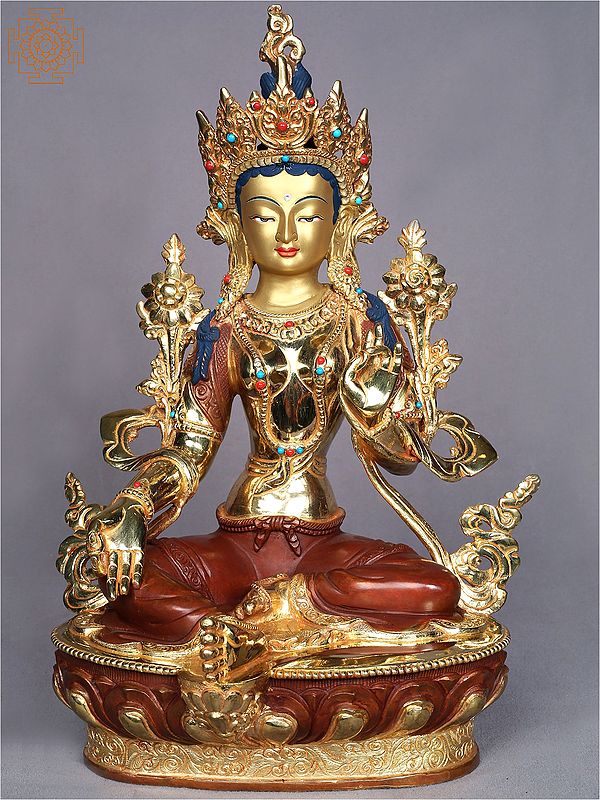
depiction of the beloved goddess of Buddhism, Green Tara, this gilded copper
statue from Nepal is a symbol of her divine compassion and ethereal beauty.
Buddhist sources often describe in the hymns and mantras of Green Tara, that
the female Bodhisattva is the perfection of virtues, which makes her outer form
the most awe-inspiring. Through the external beauty of Green Tara, who is
ever-youthful, feminine, and graceful, the devotee focuses on the inner
qualities of the goddess, which are a path and guiding light to enlightenment.
Green Tara in
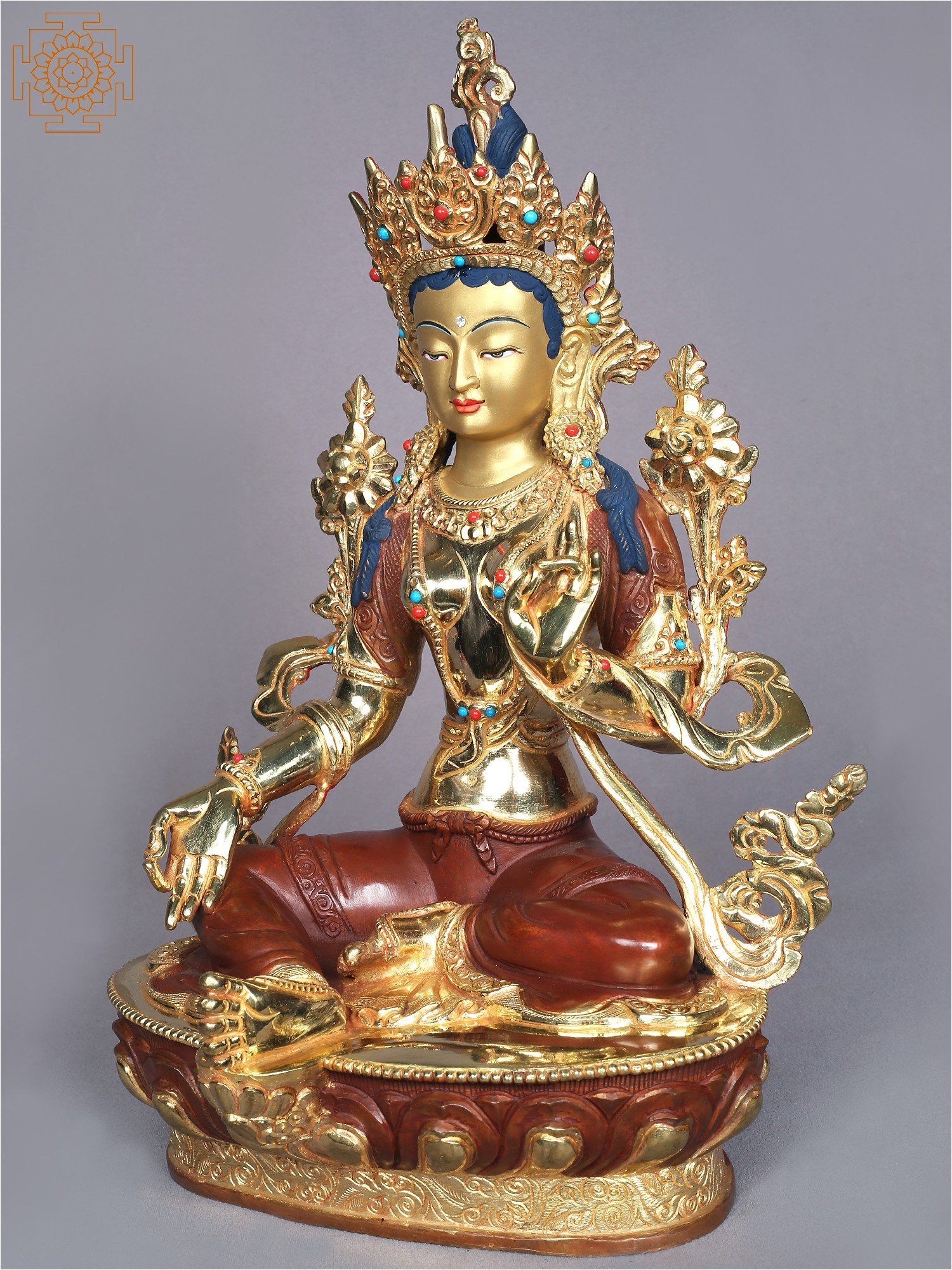
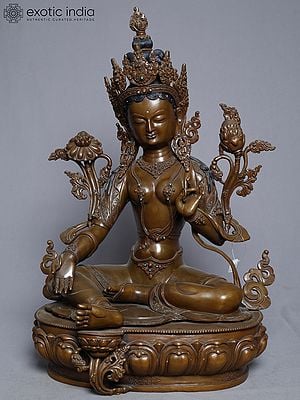
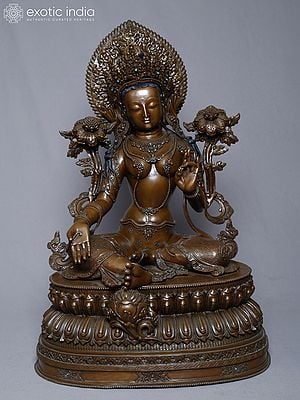
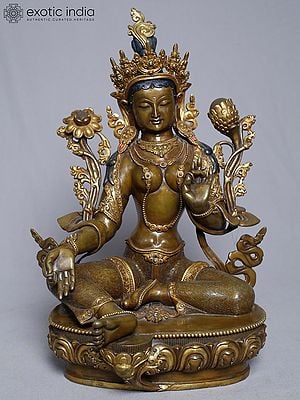
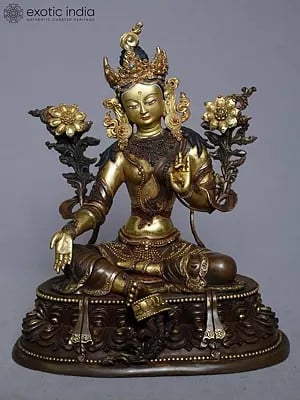
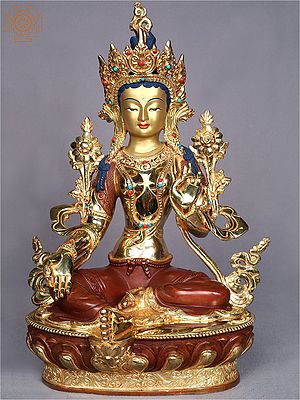
this statue is a lithesome young female, sitting on a lotus seat, with a
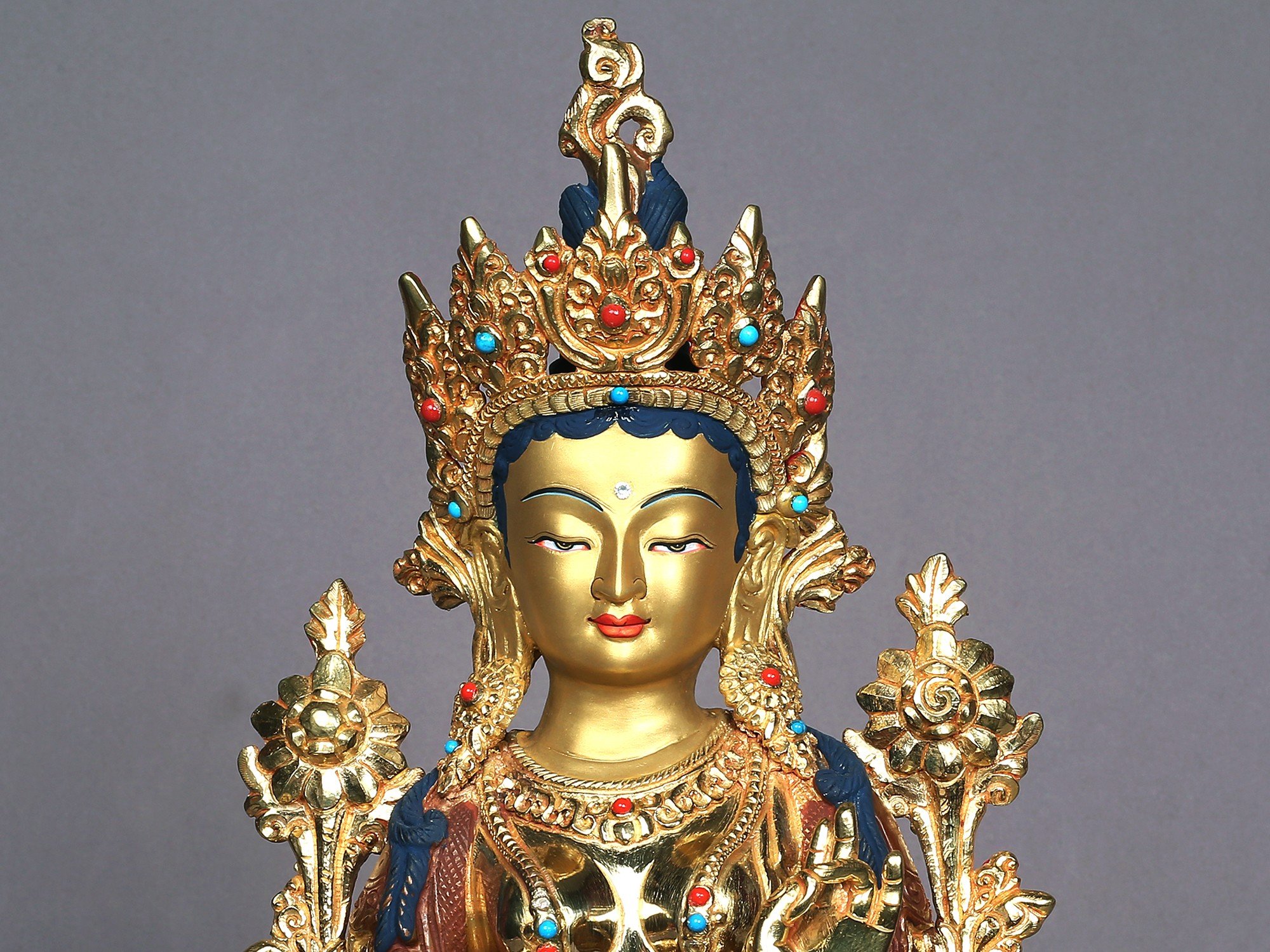
beautiful traditional crown, brocaded garments, and gem studded ornaments
adorning her supple body. The quality of liveliness in the statute is enhanced
by the gorgeously flowing lotuses that cling to the arms of Tara. With hair
that frames her countenance, eyes as lovely as delicate lotuses, and a face
devoid of sternness, Green Tara is the embodiment of the supreme motherliness,
that embraces all and salvages them from the world.
Embodiment of Compassion and Wisdom
This exquisite statue depicts Green Tara, a revered goddess in Tibetan Buddhism, embodying swift action, compassion, and liberation from fear and suffering. Crafted in Nepal, a land steeped in spiritual heritage, this gilded copper masterpiece is a testament to the artistry and devotion of its creators. The serene countenance, with eyes half-closed in meditation and a gentle smile, radiates an aura of peace and boundless love. Her posture, seated in the graceful *padmasana* (lotus position), signifies enlightenment and spiritual purity.
––––––––––––––––––––
Symbolism and Divine Attributes
Green Tara is one of the most popular manifestations of the female Buddha, believed to have arisen from a tear shed by the Bodhisattva Avalokiteshvara in his deep compassion for the world. She is depicted as a young, radiant woman, often adorned with jewels and a crown, symbolizing her princely nature and her dominion over the celestial realms. In this statue, her right hand is extended in the *varada mudra* (boon-giving gesture), offering blessings and fulfilling wishes, while her left hand holds a lotus flower, a symbol of purity and spiritual awakening. The intricate details of her divine ornaments, including necklaces, armlets, and bracelets, are meticulously rendered, reflecting the opulence of the celestial abode from which she watches over beings. The presence of turquoise and coral accents adds vibrant color and symbolic meaning, representing life, vitality, and protection.
––––––––––––––––––––
Artistry and Cultural Significance
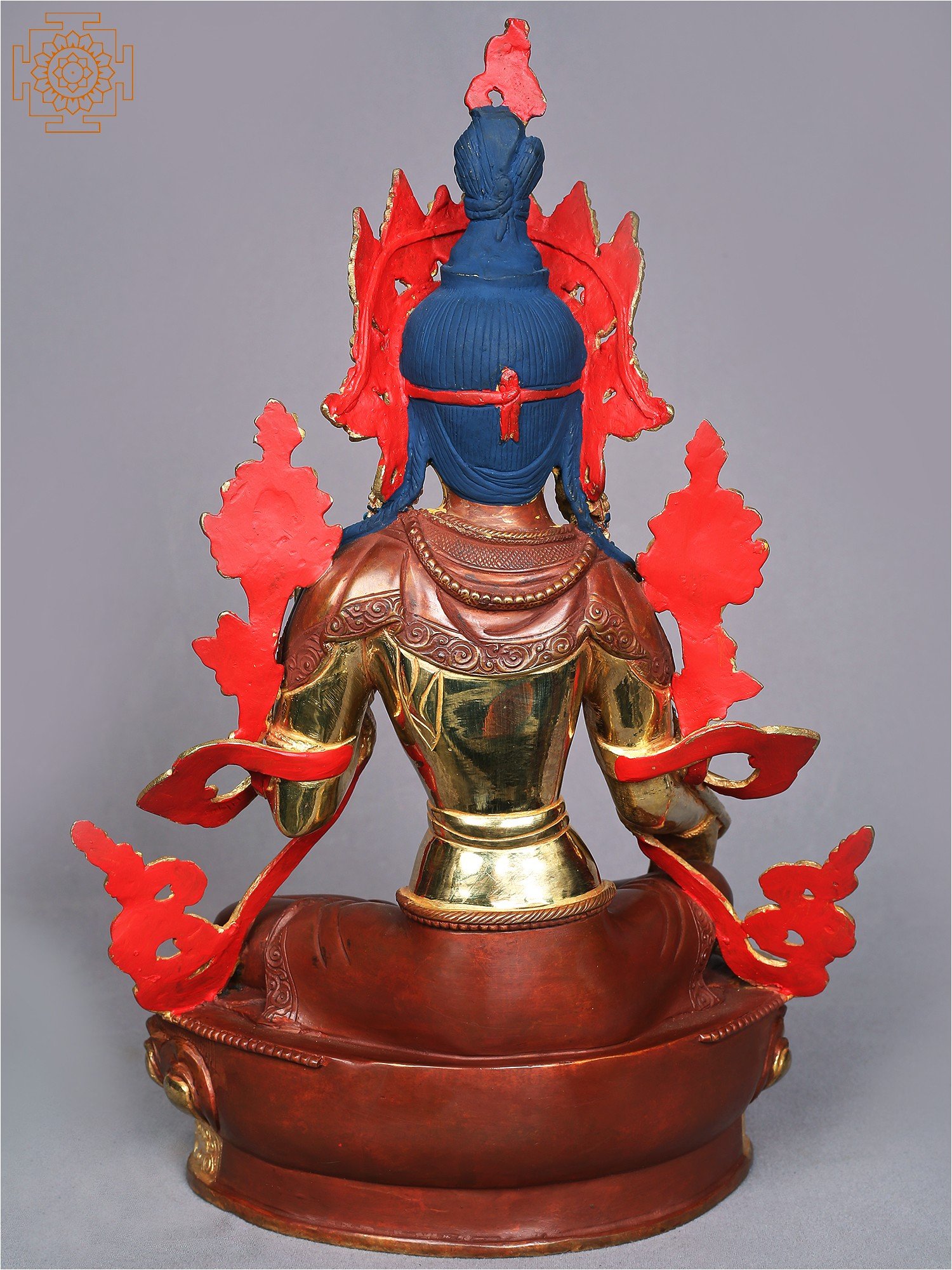
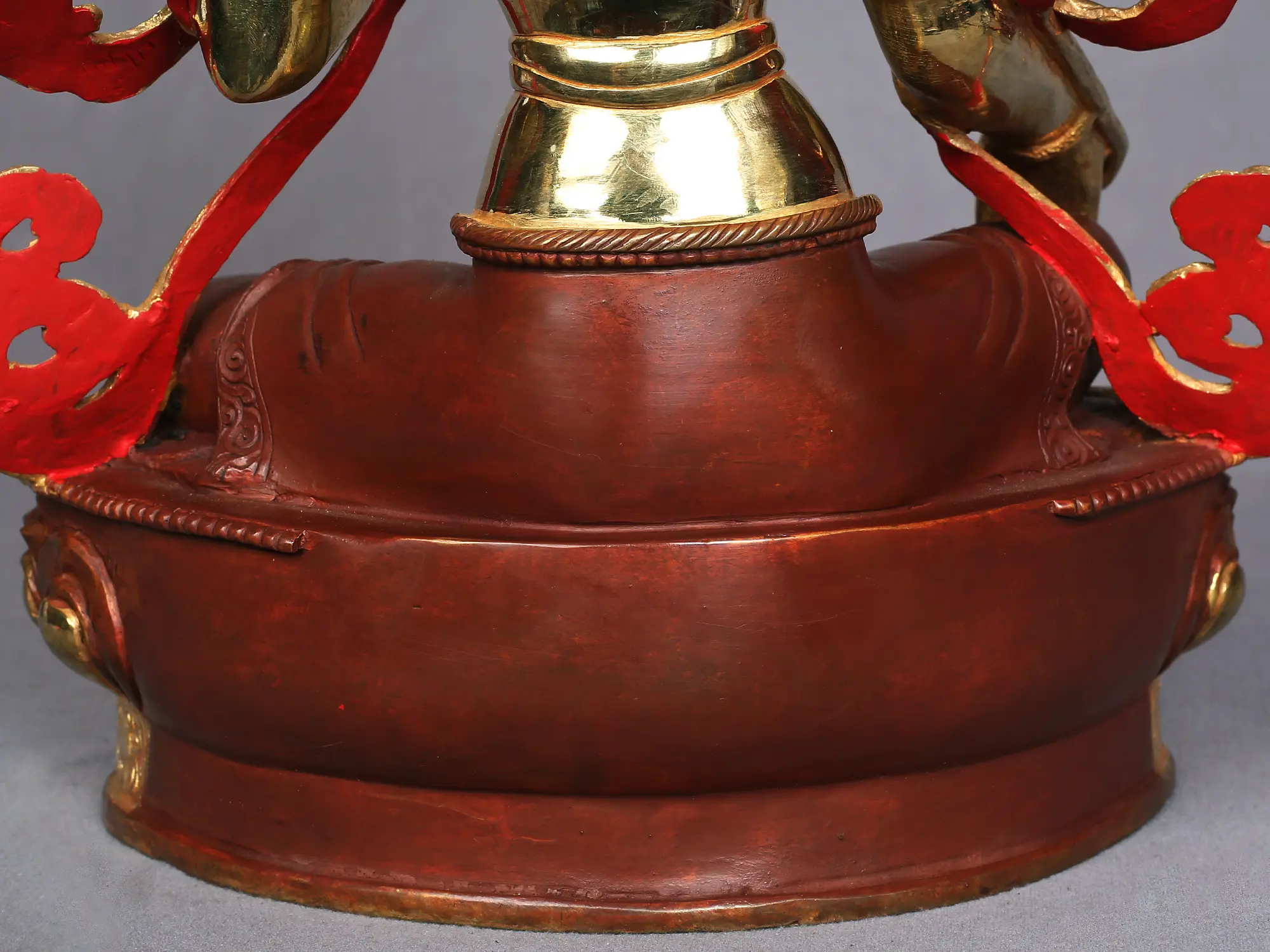
The rich gilded copper finish imbues the statue with a luminous glow, signifying purity and divine radiance. The skilled craftsmanship evident in every curve and detail speaks to the centuries-old traditions of Nepalese statue-making, passed down through generations of artisans. The base, designed as an ornate lotus throne, further elevates the goddess, emphasizing her divine status and the purity of her essence. This statue is more than just an object of beauty; it is a focal point for meditation, a source of inspiration, and a tangible connection to the spiritual wisdom of Tibetan Buddhism. It serves as a powerful reminder of the presence of compassion in the world and the potential for all beings to achieve enlightenment. Owning such a piece is an invitation to cultivate inner peace, overcome obstacles, and embrace the path of spiritual growth.How are Nepalese copper statues made?
Nepalese statues and sculptures are best known for their unique
small religious figures and ritual paraphernalia for over two
thousand years. These are mainly cast in copper alloy. Nepal draws
influences from the artistic styles of Buddhism and Hinduism, and
therefore the sculptors of the country specialize in making the
icons of both these religions. Over the years, Nepalese sculptures
evolved into their own distinctive iconography. Some
characteristic features of these sculptures that differ from other
pieces are exaggerated physical postures, youthful and sensual
features, languid eyes, wider faces having serene expressions, and
ornate flourishes. The Buddhist deity icons of Nepal have
tremendous demand in countries such as China and Tibet for ritual
purposes in their temples and monasteries.
Nepalese statues and sculptures have a high copper content and
therefore develop a slightly reddish patina on the surface as they
age. However, the most unique feature of Nepalese copper statues
is their decorative detailing. The pieces are heavily gilded and
sometimes inlaid with semi-precious stones. This embellishment
protects them from getting tarnished. The traditional lost-wax
method for casting Nepalese copper statues remains the most
practiced technique in Nepal for many centuries. This process
involves many steps and requires skilled artists.
The first step in lost-wax sculpting is to make a wax replica of
the desired Buddhist deity to be cast in copper. This replica is
created by hand and therefore needs excellent artistic skills
otherwise fine features will be lacking.
Once the wax replica is made, it is then coated with a special
mixture of clay with a brush. This layer of clay is hardened when
left to dry. A small hole is made on the base of the wax mould so
that the wax flows away when it is heated.
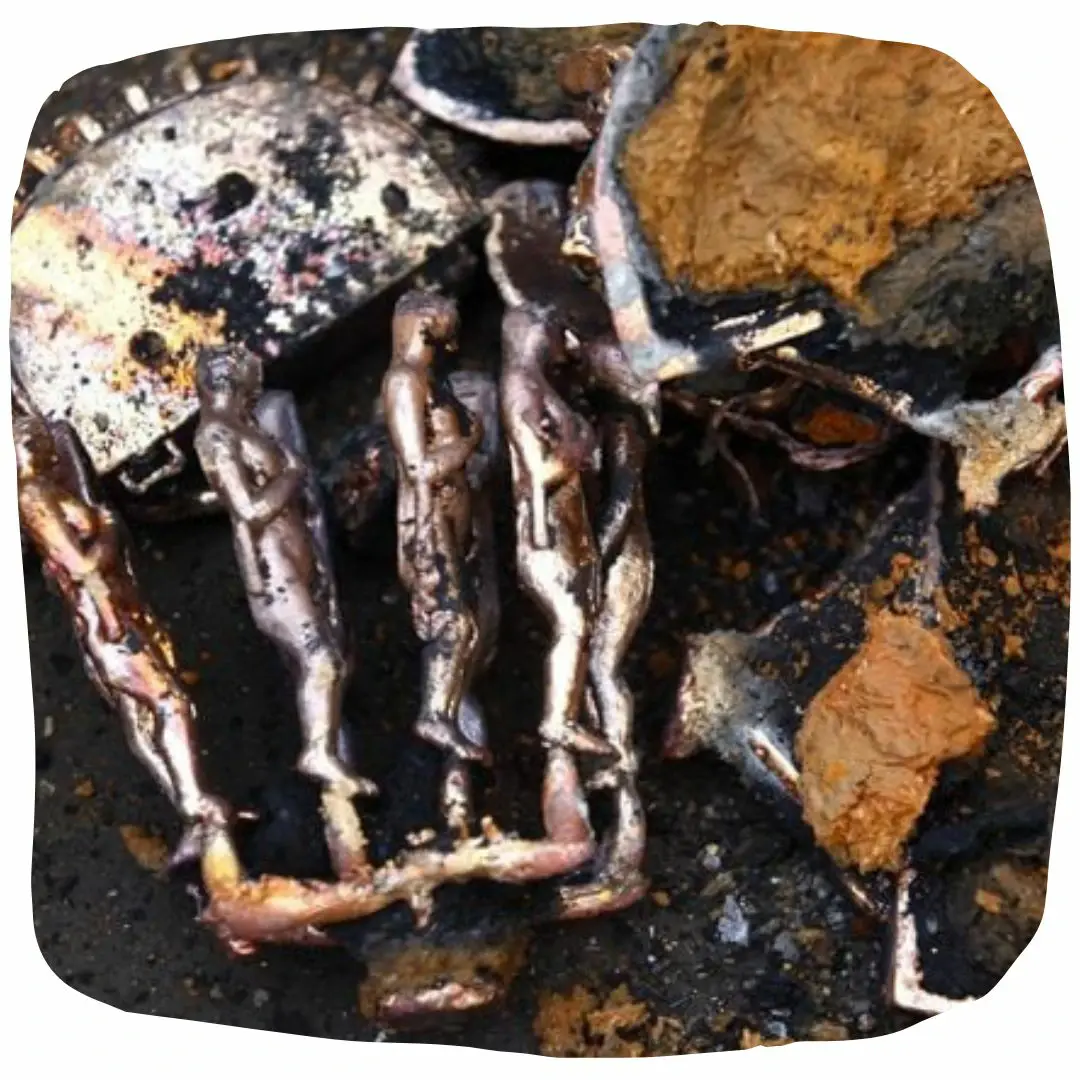
At this stage, a hollow mould in the shape of the deity is
obtained.
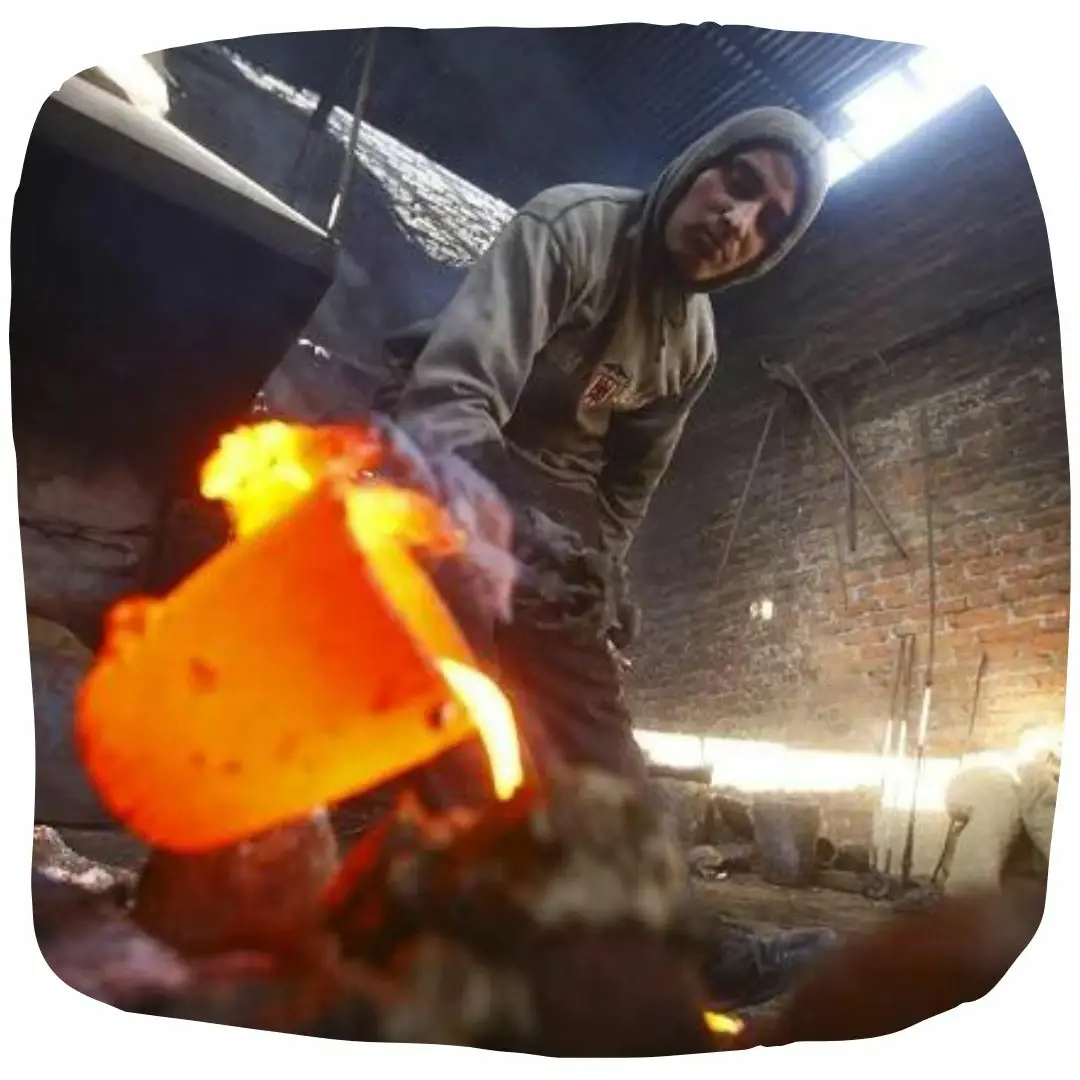
This is the time to pour liquid copper into the hollow mould which
is then allowed to cool and harden inside a container of cold
water. When the liquid metal has hardened, the mould is removed
and the statue within is revealed.
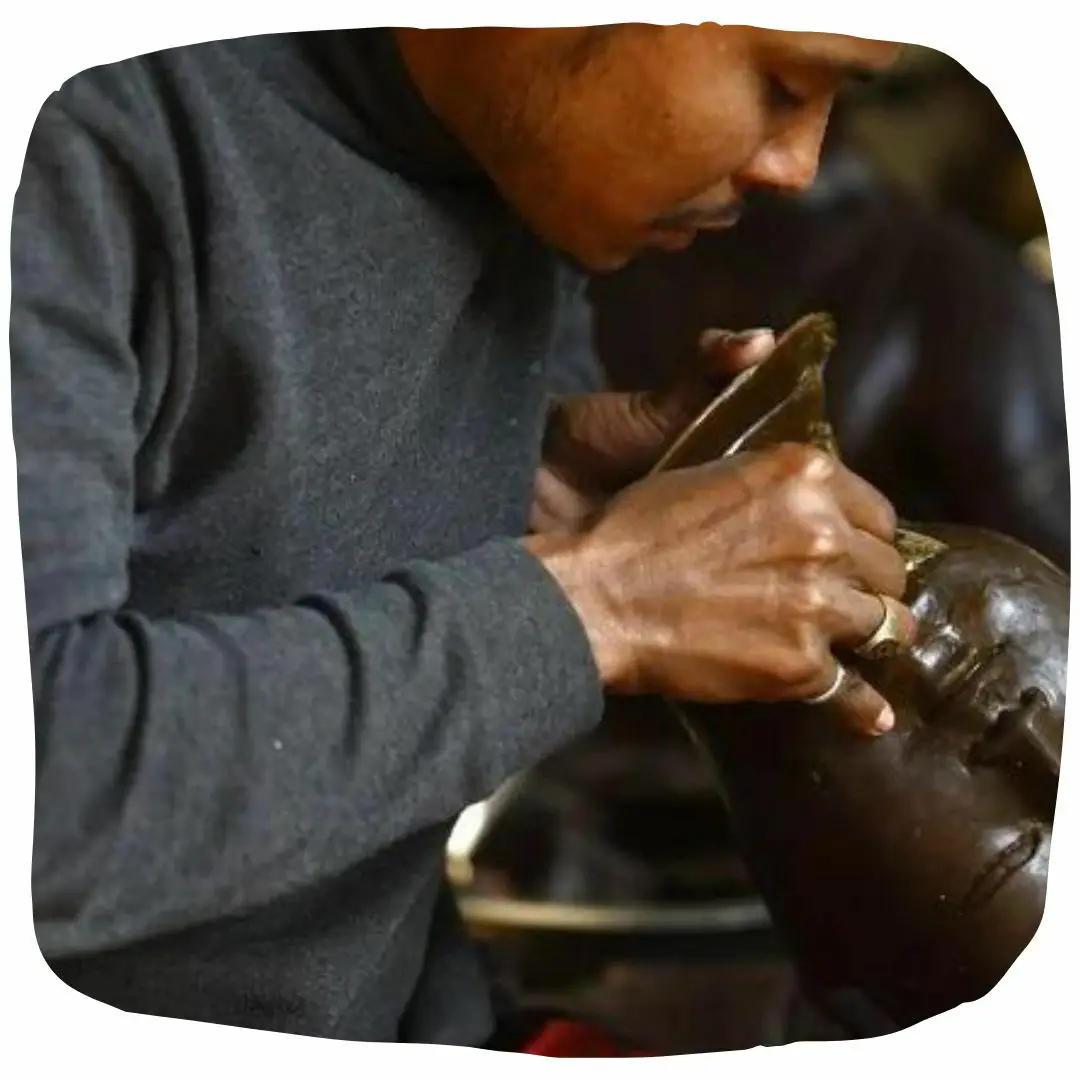
The artist works on the details of the statue using various tools.
It is then polished to get a shiny and lustrous surface.
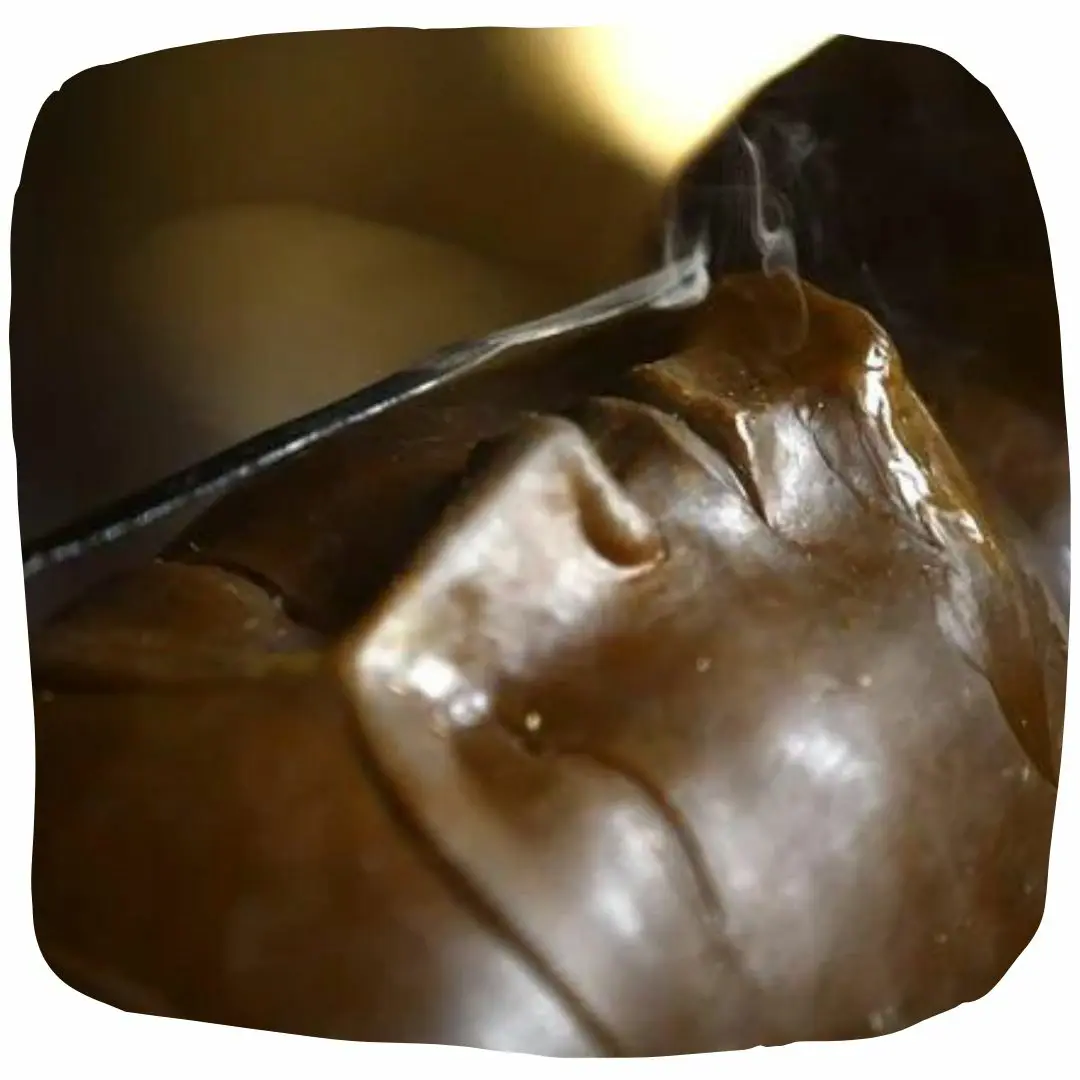
Now comes the most important part of Nepalese art which is gold
gilding. This is done by the traditional fire gilding method. A
mixture of mercury and 18K gold is applied on the surface of the
statue and heat is applied using a flame torch. The result is that
mercury evaporates along with impurities, leaving a pure 24K gold
finish.
The lost-wax method of sculpting is the most preferred technique
for artists to cast a metallic statue having intricate details.
Since Nepalese copper sculptures require extraneous effort for
giving a majestic look by adding special embellishments, it takes
several weeks to complete one masterpiece. A 24K gold gilded
copper sculpture retains its brilliant luster for many years and
appears as like before. Nepalese sculptures continue to remain one of the finest specimens of the art of the East that have a strong
aesthetic appeal that other sculptures cannot match.












 Upload an Image