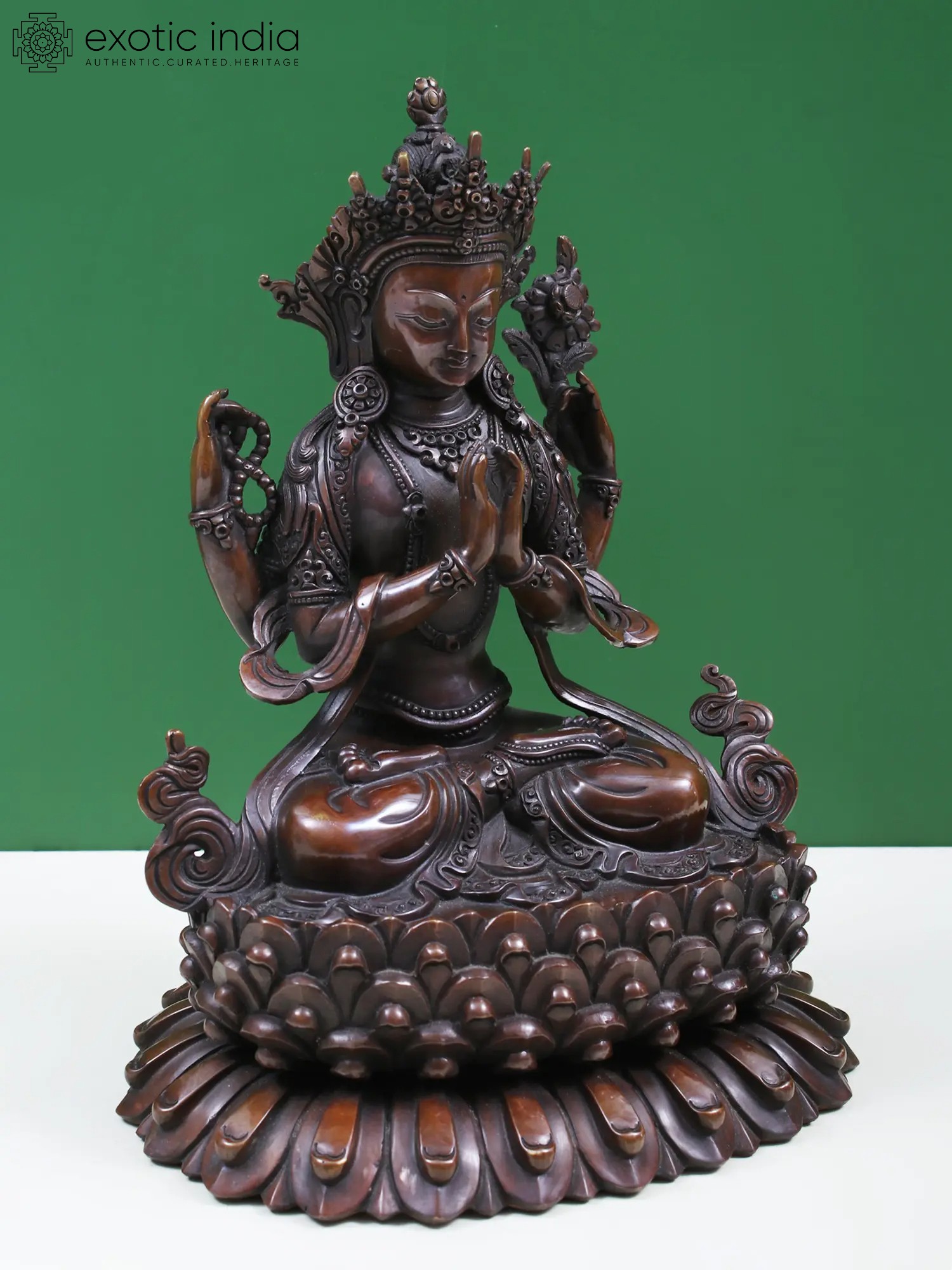
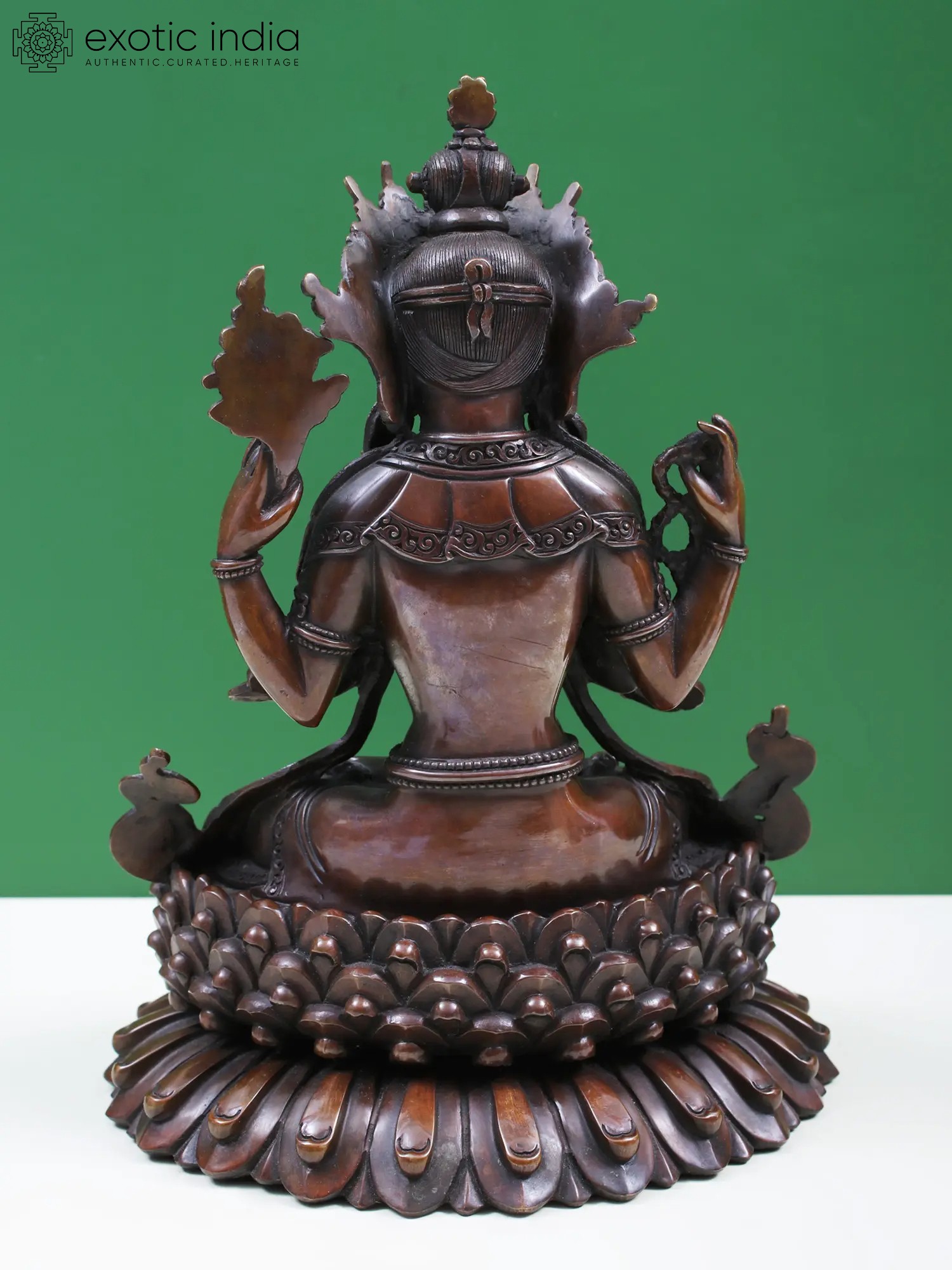
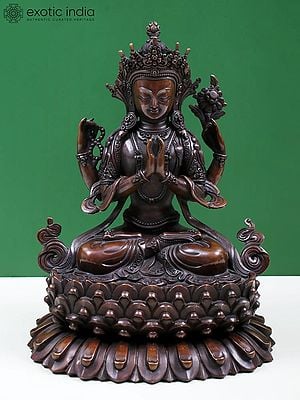
“Chenrezig”- he who
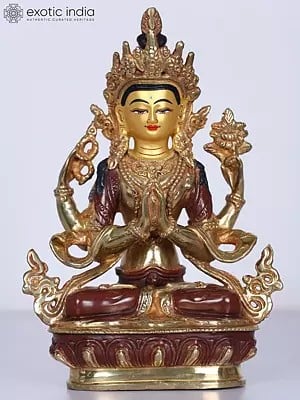
gazes with a benevolent eye, is a name for the Bodhisattva Avalokiteshvara in
Tibetan, revered popularly for his unbounded mercy for all living beings. As
the supreme example of the compassion of Bodhisattva, Chenrezig remains
eternally in the human realm, to help the followers of Buddhism cross the ocean
of existence while denying himself the ultimate salvation. The four-armed form
of Avalokiteshvara or Chenrezig is also called “Shadakshari” (he who has six or
Shada, syllables or Akshara), after his potent mantra “Om Mani Padme Hum”.
This superfine
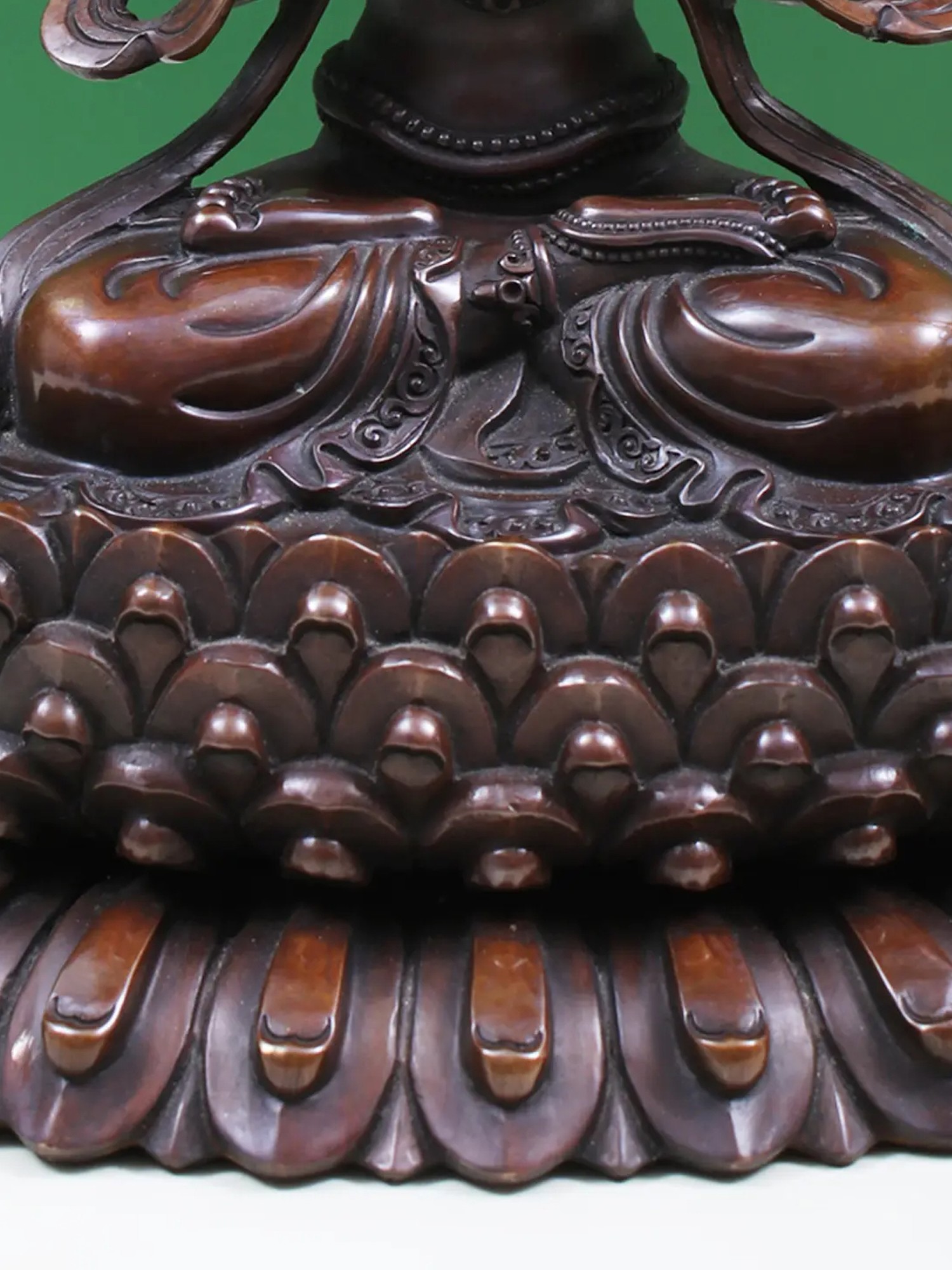
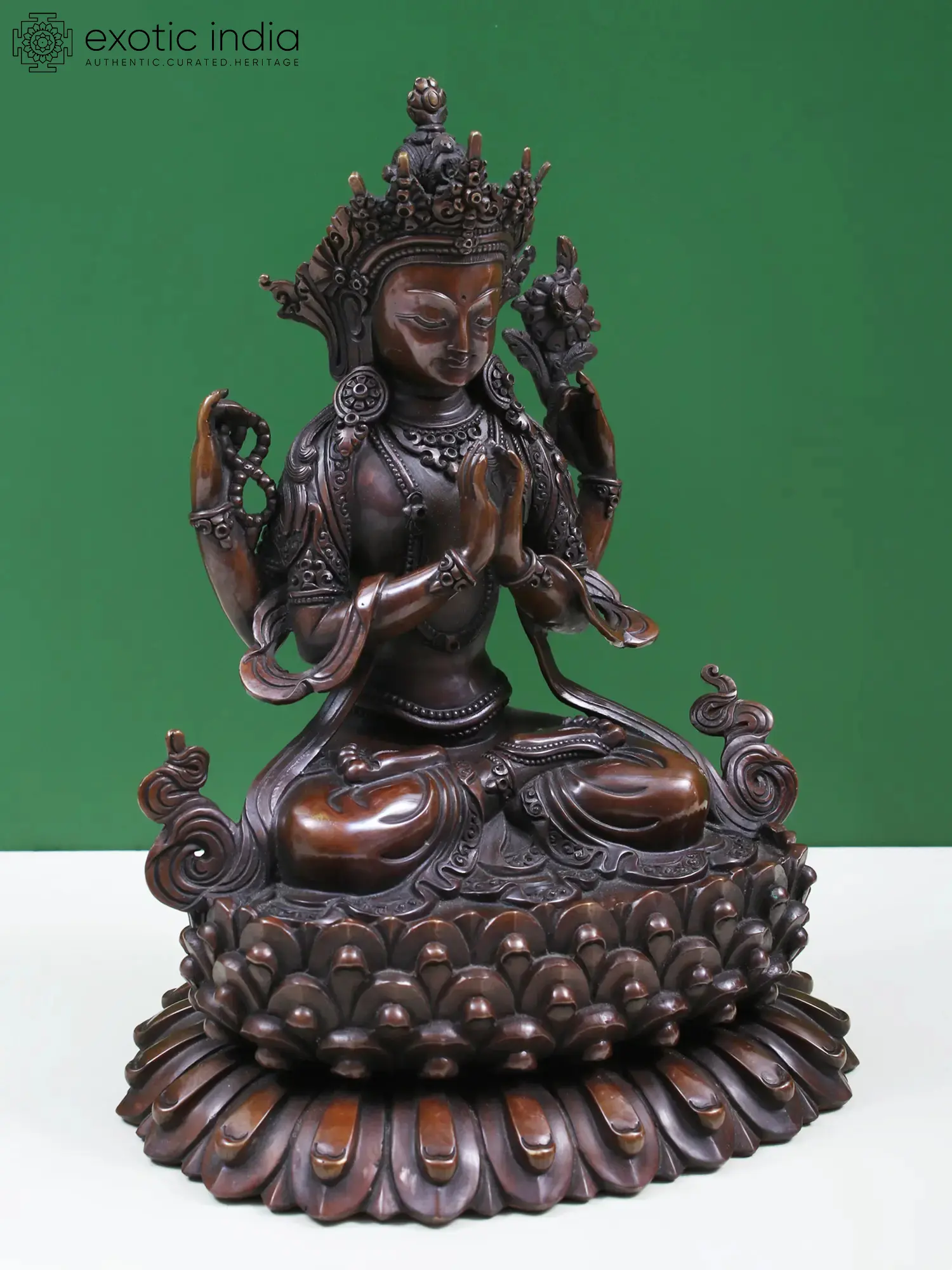
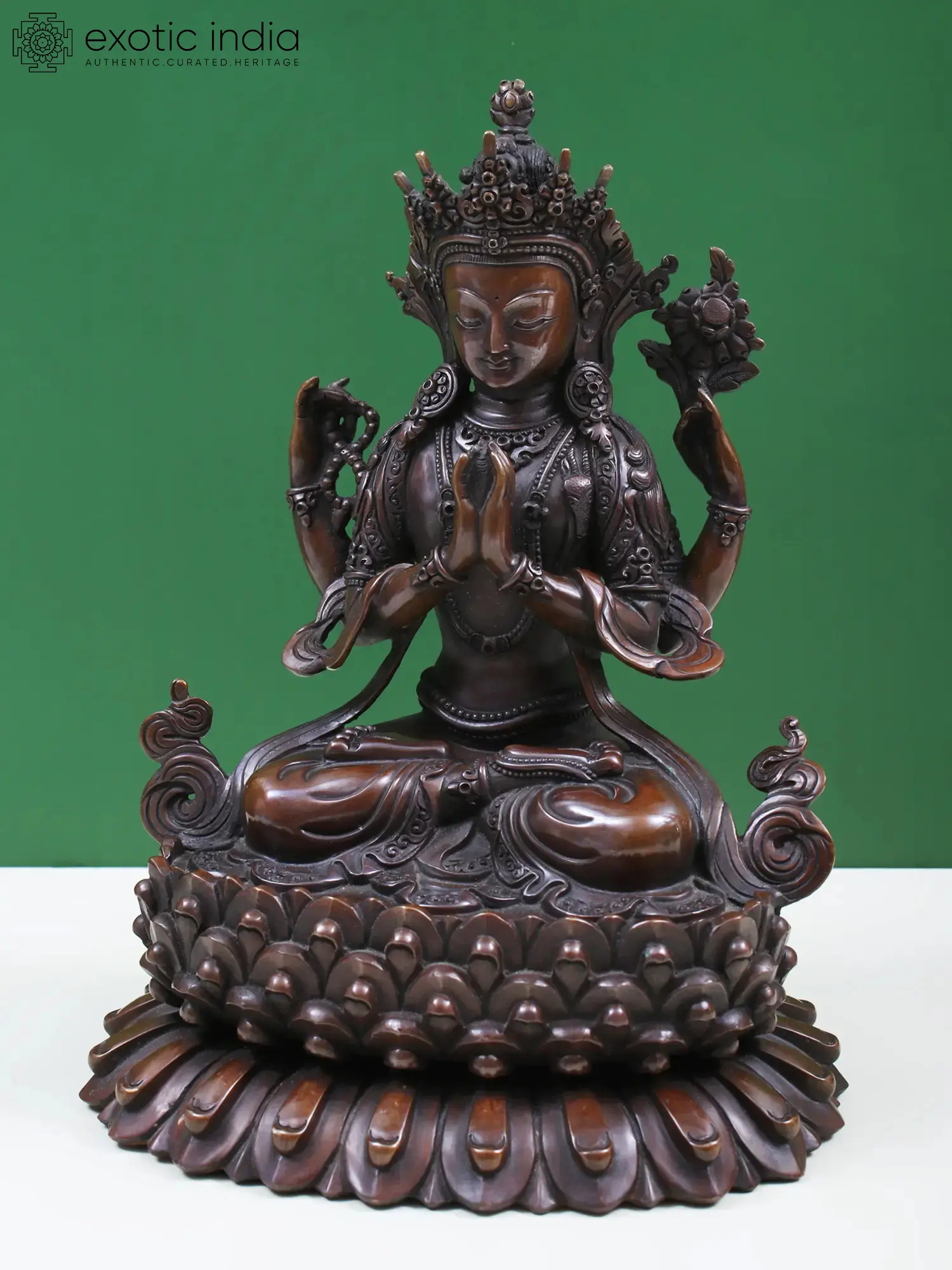
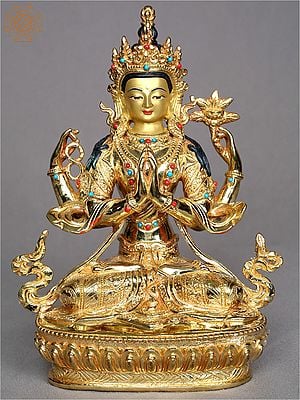
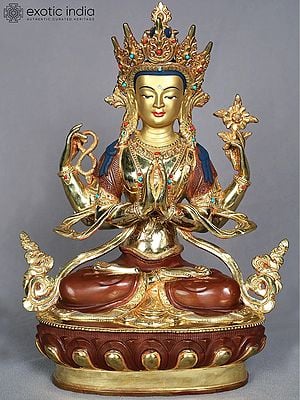
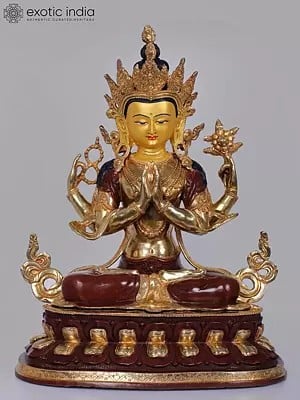
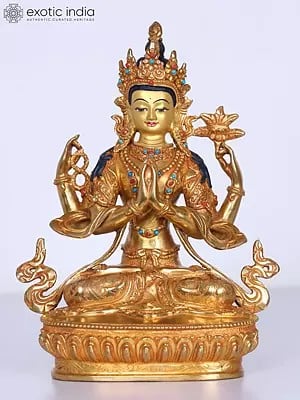
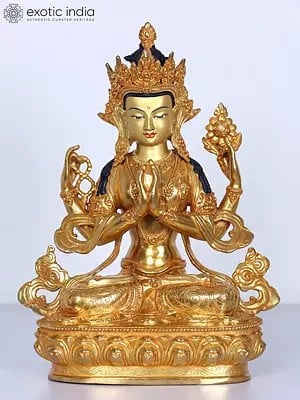
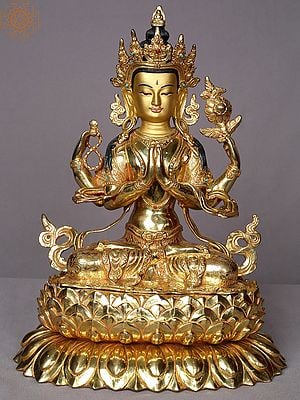
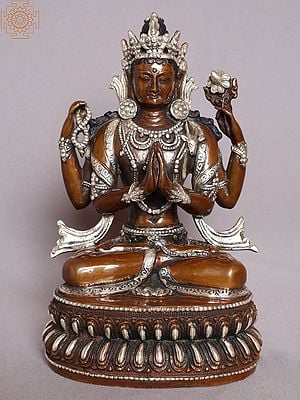
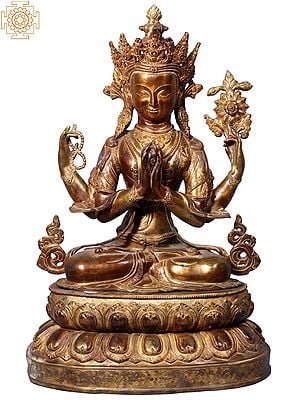
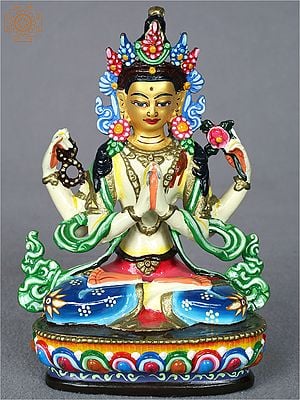
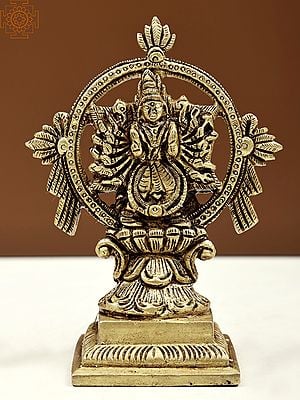
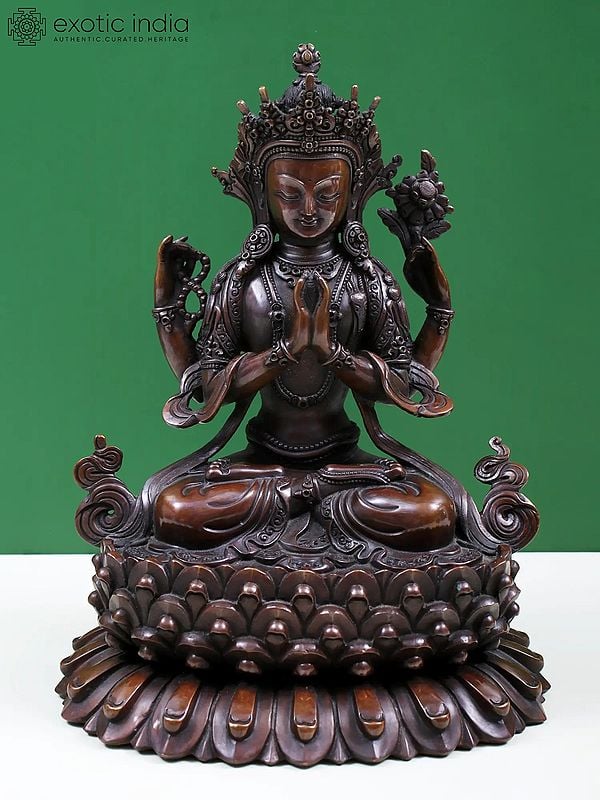
copper statue from Nepal belongs to Shadakshari Lokeshvara who sits on an
ornately-shaped lotus, symbolizing the Thousand-petalled lotus flower of
Buddhism, which is the most divine seat for any deity, a representation of
“Sahasrapadma” and the crown chakra, where the wisdom of Lokeshvara blooms.
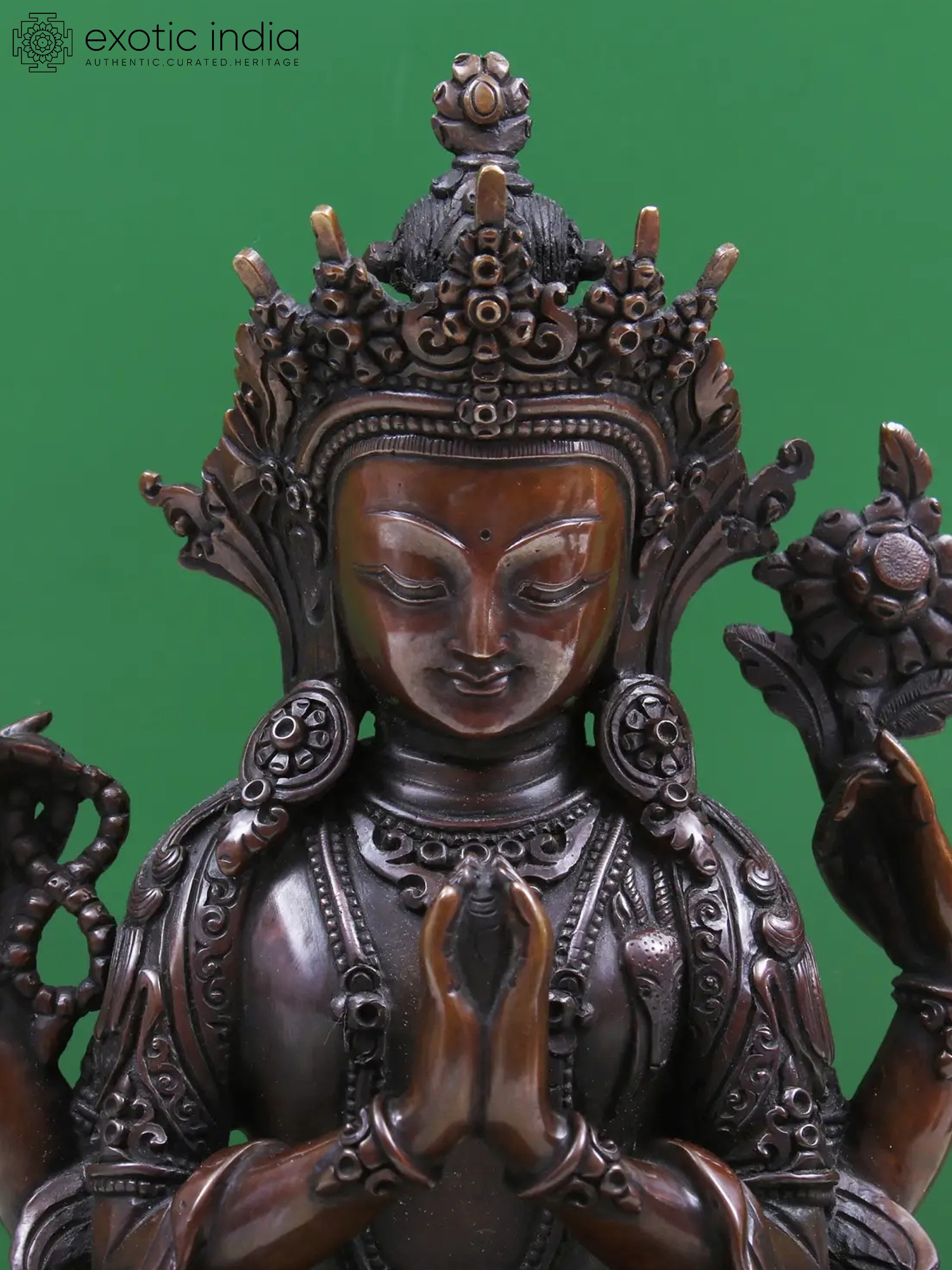
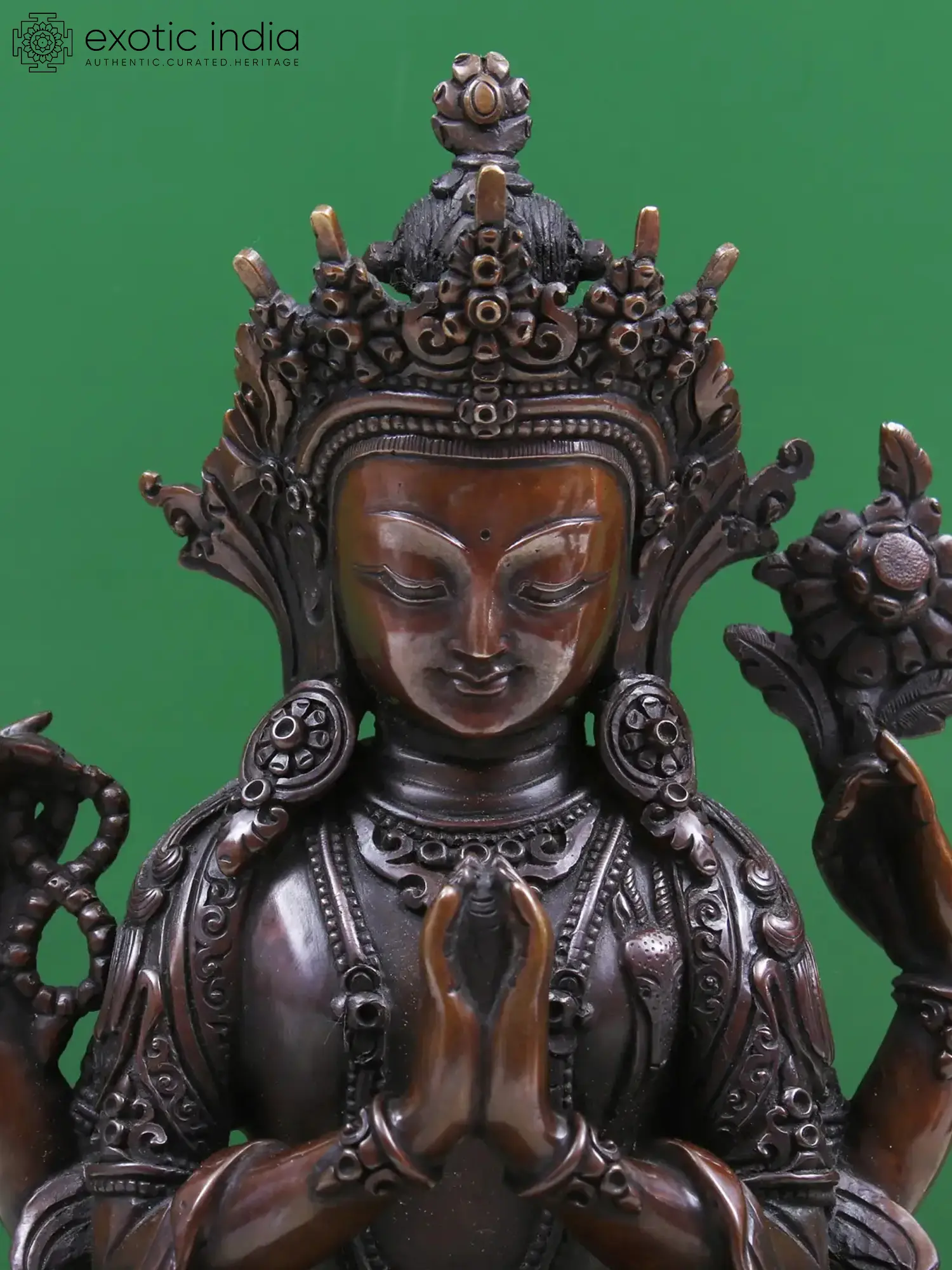
Chenrezig is beautifully
attired in soft garments along with the five-pronged crown, ornate earrings,
necklaces, armlets, bracelets, and anklets, all exquisitely delineated. The
form and expressions of Chenrezig carry a heavenliness and youthful aura, which
is amplified by the seamless polish of the statue, a masterpiece of Nepalese
art.
Embodiment of Compassion: A Reverent Depiction of Chenrezig
This exquisite copper figurine captures the serene presence of Chenrezig, the Bodhisattva of Compassion, a central figure in Tibetan Buddhism. The artistry and dedication evident in this piece speak to its Nepalese origin, a region renowned for its rich spiritual heritage and masterful metalwork. Chenrezig, known as Avalokiteshvara in Sanskrit, is the personification of all Buddhas' compassion. Legend tells that when the Bodhisattva saw the immense suffering in the world, a tear rolled down his cheek, from which the goddess Tara sprang forth to help him alleviate this pain. This figurine, with its multi-armed form, symbolizes the boundless reach of Chenrezig's benevolent attention and his ability to offer solace and aid to countless beings across all realms.
–––––––––––––––––––The Iconography of Compassion
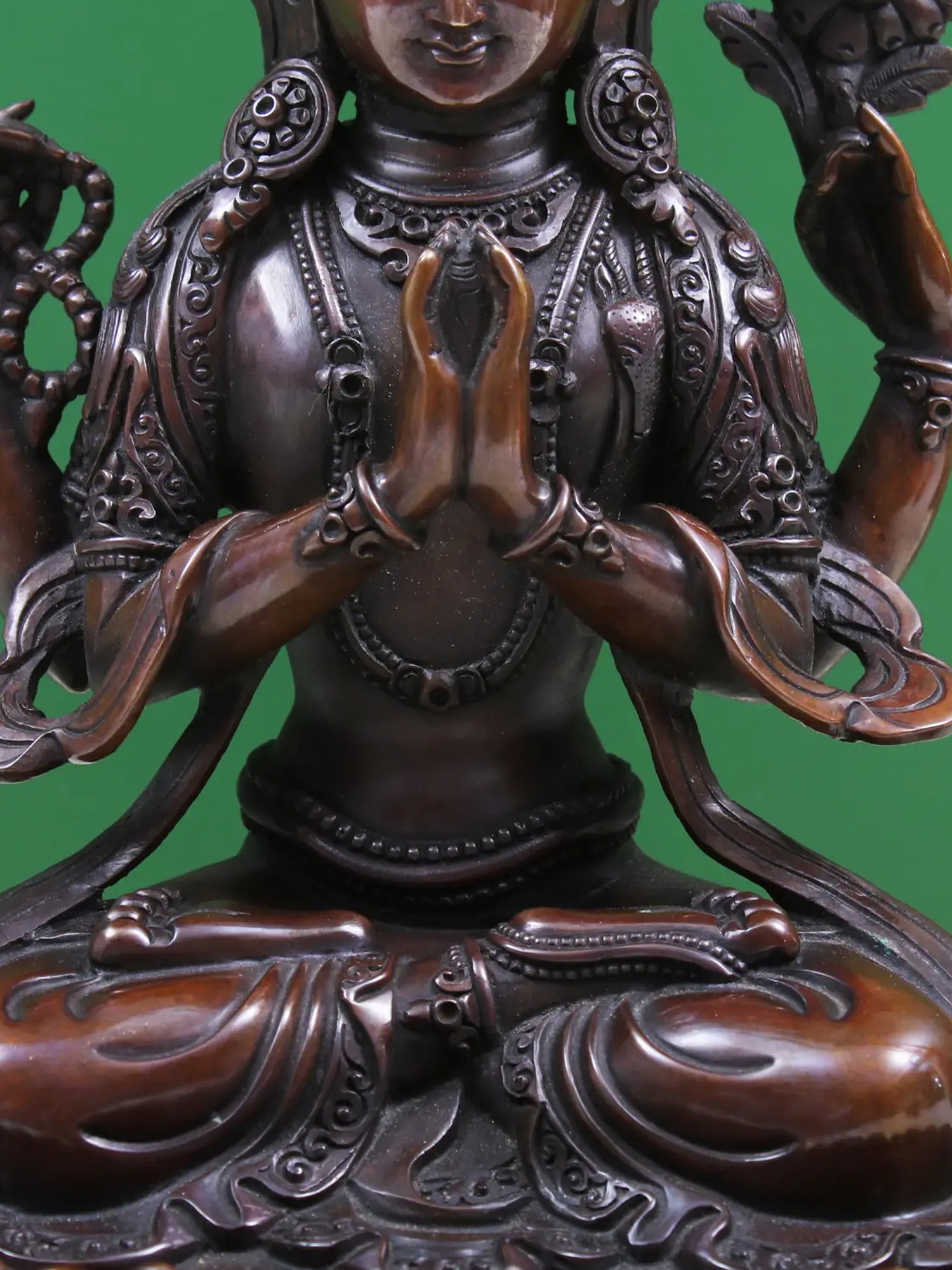
The serene expression on Chenrezig's face, with eyes gently downcast, conveys profound empathy and a deep understanding of the human condition. His central hands are pressed together in the Añjali Mudra, a gesture of prayer and salutation, signifying respect and devotion. To his right, he holds a mala, or string of prayer beads, symbolizing his constant mindfulness and his practice of reciting mantras for the benefit of all sentient beings. In his upper left hand, he grasps a lotus flower, a powerful symbol of purity, enlightenment, and the blossoming of wisdom from the mud of ignorance. The intricate details of his crown and ornaments speak to his enlightened nature and his role as a celestial being.
–––––––––––––––––––Artistry and Symbolism in Copper
Crafted from high-quality copper, this figurine possesses a weight and a lustrous patina that speaks to its enduring value and the skill of the artisans. Copper is often used in Buddhist iconography for its conductivity of spiritual energy and its association with purification. The meticulous detailing, from the flowing robes to the delicate facial features, highlights the traditional methods employed in Nepalese craftsmanship. The statue is seated upon a superfine, multi-layered lotus pedestal. The lotus, a potent symbol in many Eastern religions, represents the purification of the mind, growing unstained from the muddy waters of existence to bloom in the light of enlightenment. The waves and swirls adorning the base of the pedestal can be interpreted as the turbulent currents of samsara from which the enlightened being offers liberation. This impressive piece serves not only as a beautiful object of devotion but also as a tangible reminder of the omnipresent nature of compassion and the potential for all beings to achieve spiritual awakening.How are Nepalese copper statues made?
Nepalese statues and sculptures are best known for their unique
small religious figures and ritual paraphernalia for over two
thousand years. These are mainly cast in copper alloy. Nepal draws
influences from the artistic styles of Buddhism and Hinduism, and
therefore the sculptors of the country specialize in making the
icons of both these religions. Over the years, Nepalese sculptures
evolved into their own distinctive iconography. Some
characteristic features of these sculptures that differ from other
pieces are exaggerated physical postures, youthful and sensual
features, languid eyes, wider faces having serene expressions, and
ornate flourishes. The Buddhist deity icons of Nepal have
tremendous demand in countries such as China and Tibet for ritual
purposes in their temples and monasteries.
Nepalese statues and sculptures have a high copper content and
therefore develop a slightly reddish patina on the surface as they
age. However, the most unique feature of Nepalese copper statues
is their decorative detailing. The pieces are heavily gilded and
sometimes inlaid with semi-precious stones. This embellishment
protects them from getting tarnished. The traditional lost-wax
method for casting Nepalese copper statues remains the most
practiced technique in Nepal for many centuries. This process
involves many steps and requires skilled artists.
The first step in lost-wax sculpting is to make a wax replica of
the desired Buddhist deity to be cast in copper. This replica is
created by hand and therefore needs excellent artistic skills
otherwise fine features will be lacking.
Once the wax replica is made, it is then coated with a special
mixture of clay with a brush. This layer of clay is hardened when
left to dry. A small hole is made on the base of the wax mould so
that the wax flows away when it is heated.
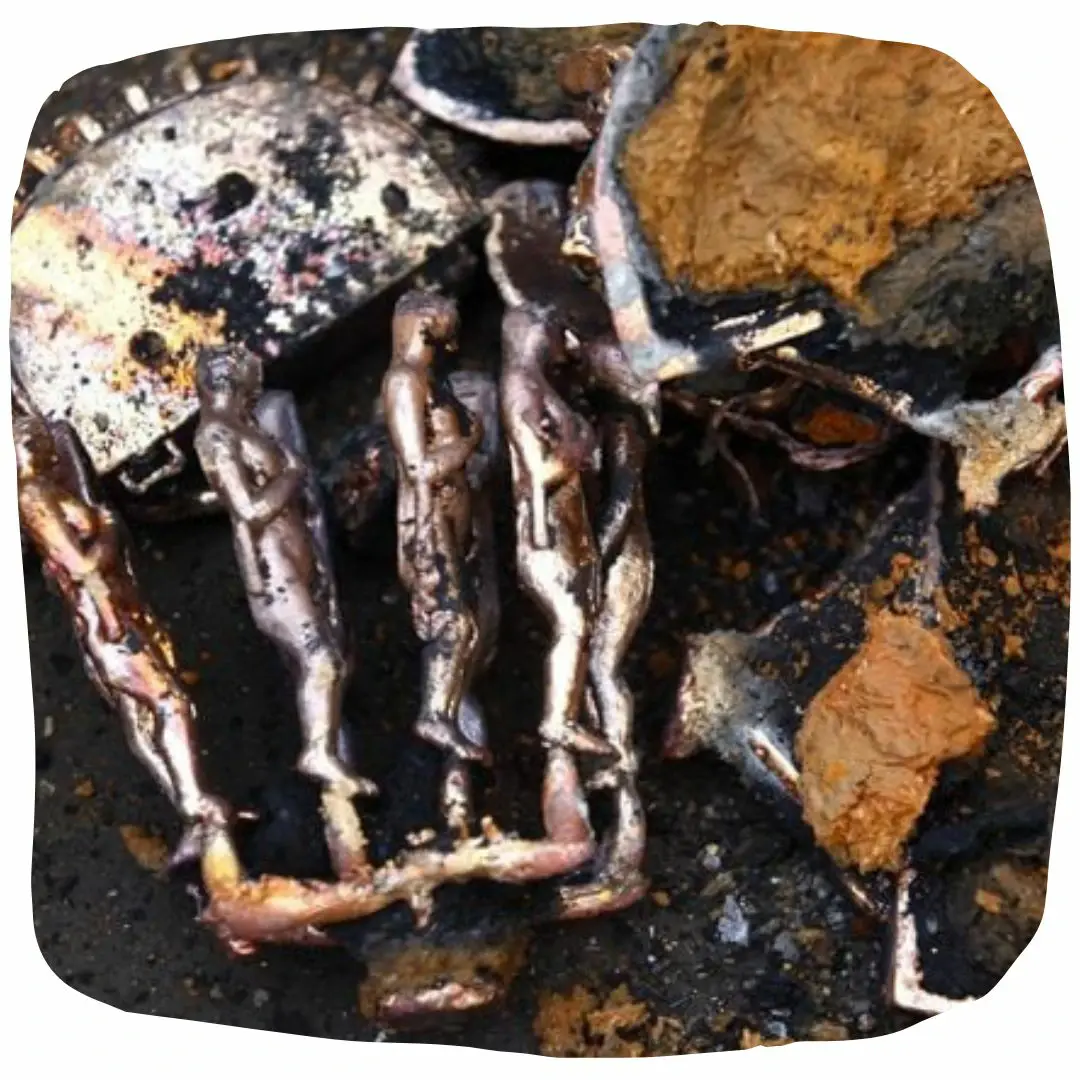
At this stage, a hollow mould in the shape of the deity is
obtained.
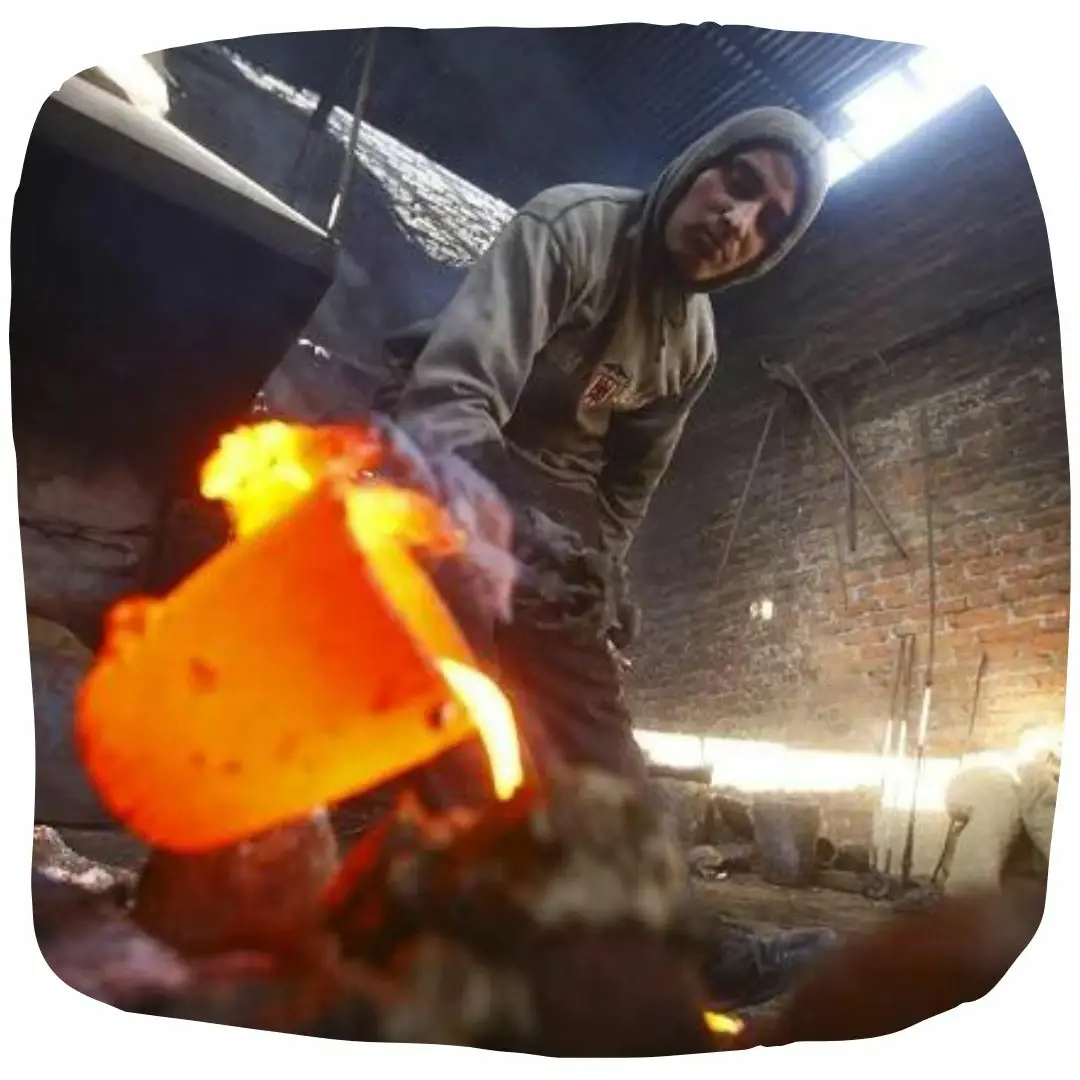
This is the time to pour liquid copper into the hollow mould which
is then allowed to cool and harden inside a container of cold
water. When the liquid metal has hardened, the mould is removed
and the statue within is revealed.
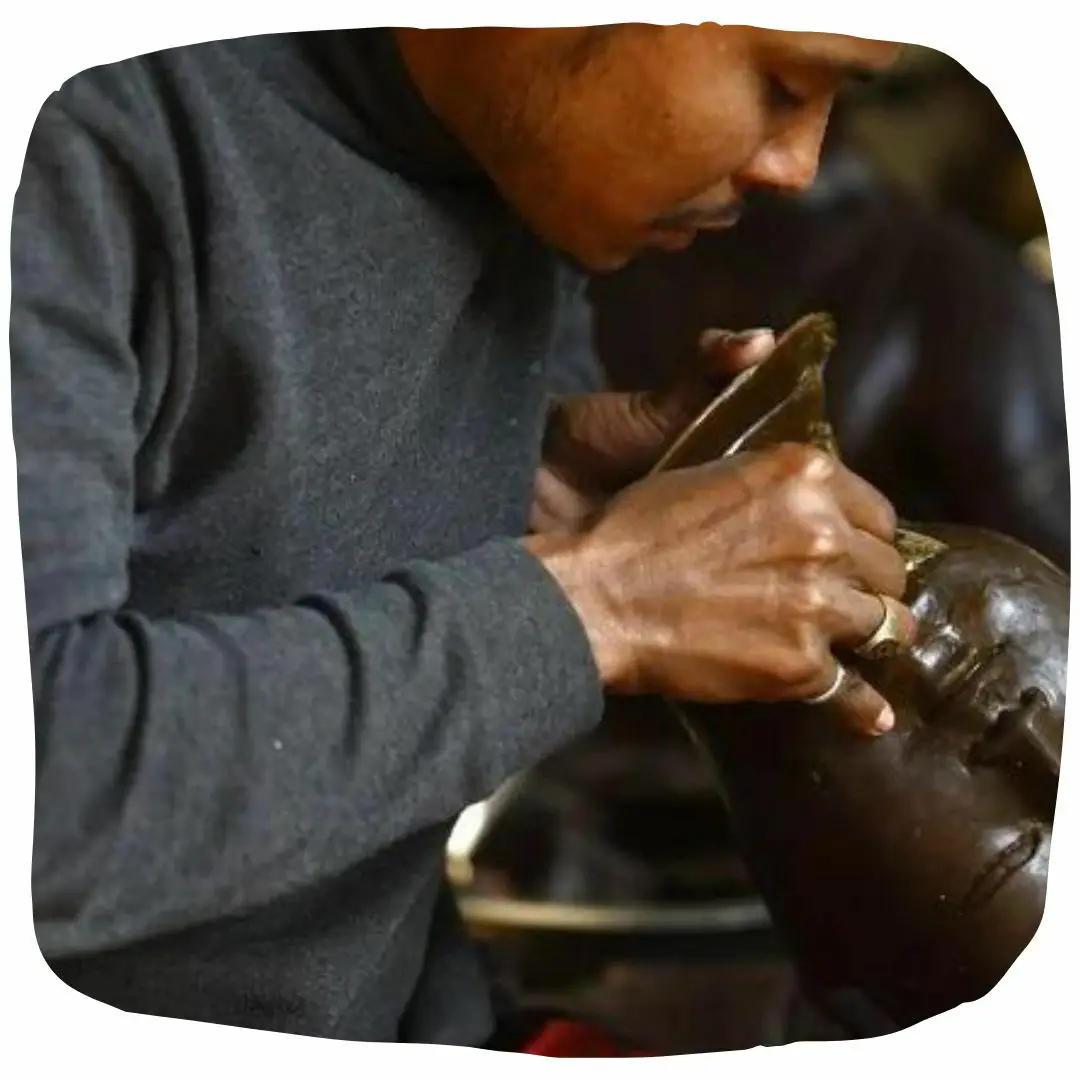
The artist works on the details of the statue using various tools.
It is then polished to get a shiny and lustrous surface.
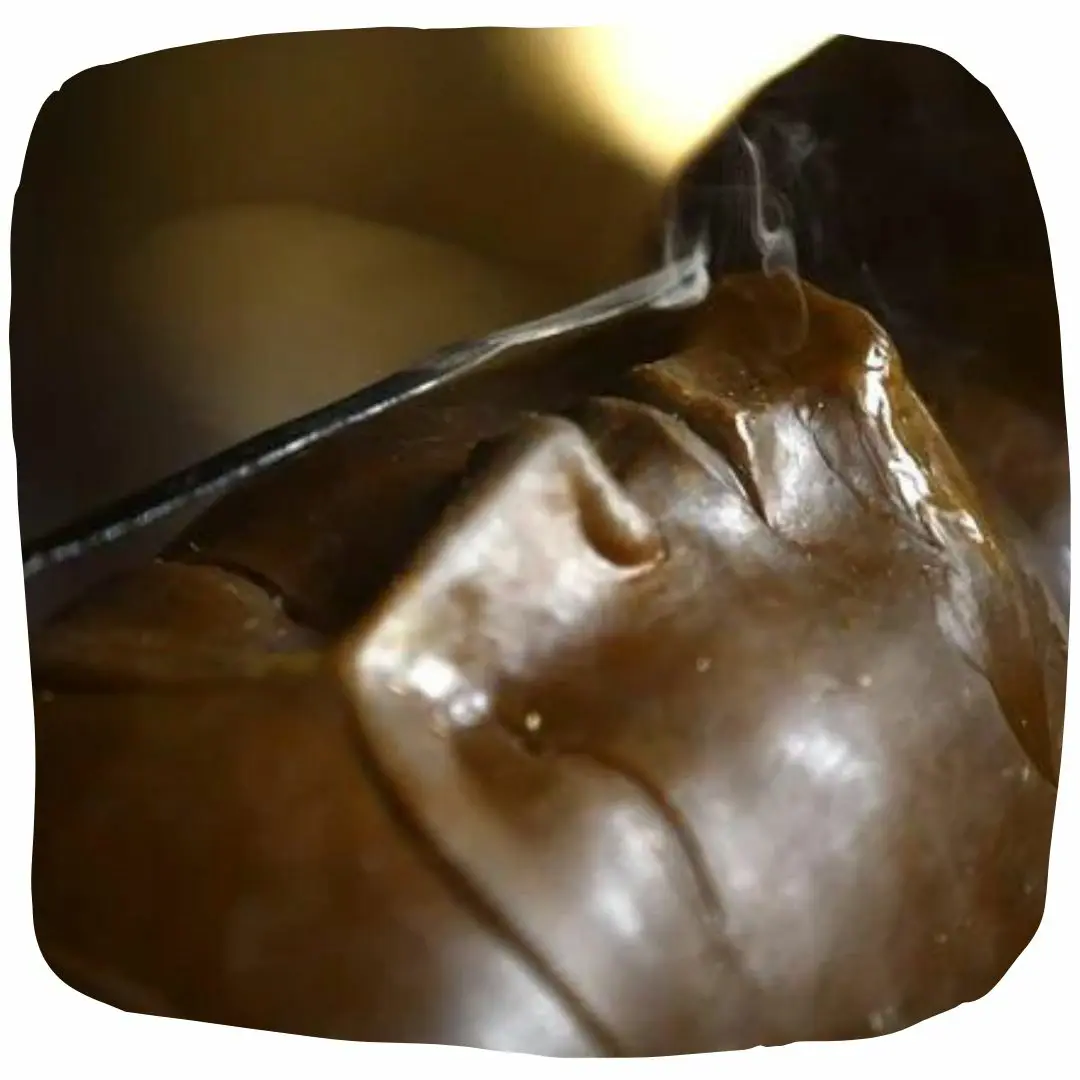
Now comes the most important part of Nepalese art which is gold
gilding. This is done by the traditional fire gilding method. A
mixture of mercury and 18K gold is applied on the surface of the
statue and heat is applied using a flame torch. The result is that
mercury evaporates along with impurities, leaving a pure 24K gold
finish.
The lost-wax method of sculpting is the most preferred technique
for artists to cast a metallic statue having intricate details.
Since Nepalese copper sculptures require extraneous effort for
giving a majestic look by adding special embellishments, it takes
several weeks to complete one masterpiece. A 24K gold gilded
copper sculpture retains its brilliant luster for many years and
appears as like before. Nepalese sculptures continue to remain one of the finest specimens of the art of the East that have a strong
aesthetic appeal that other sculptures cannot match.








 Upload an Image