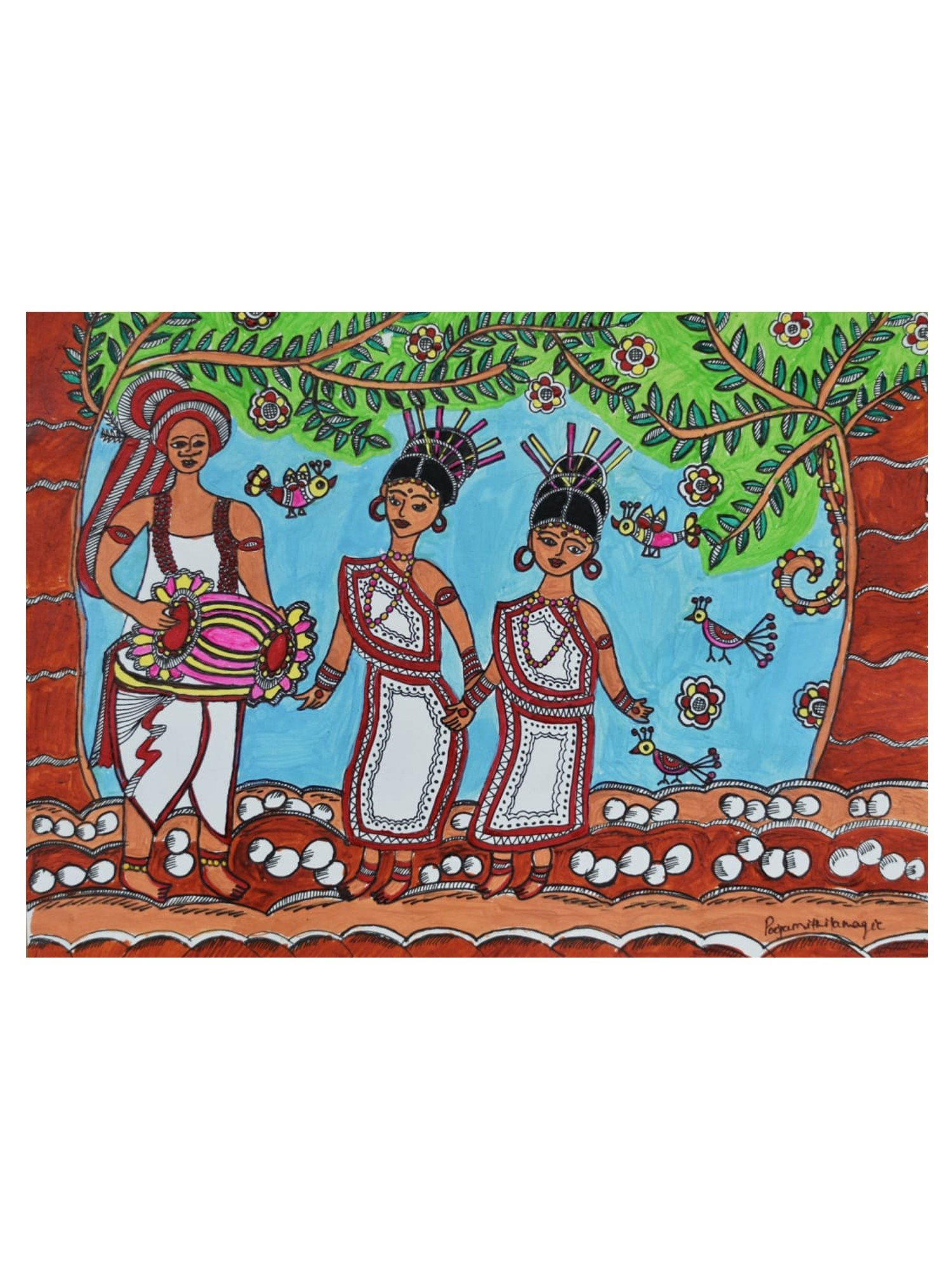
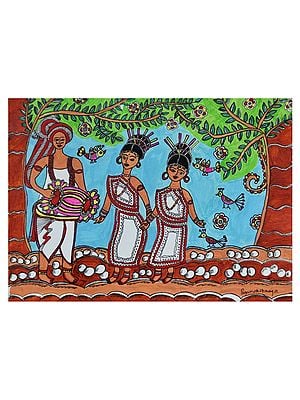
This
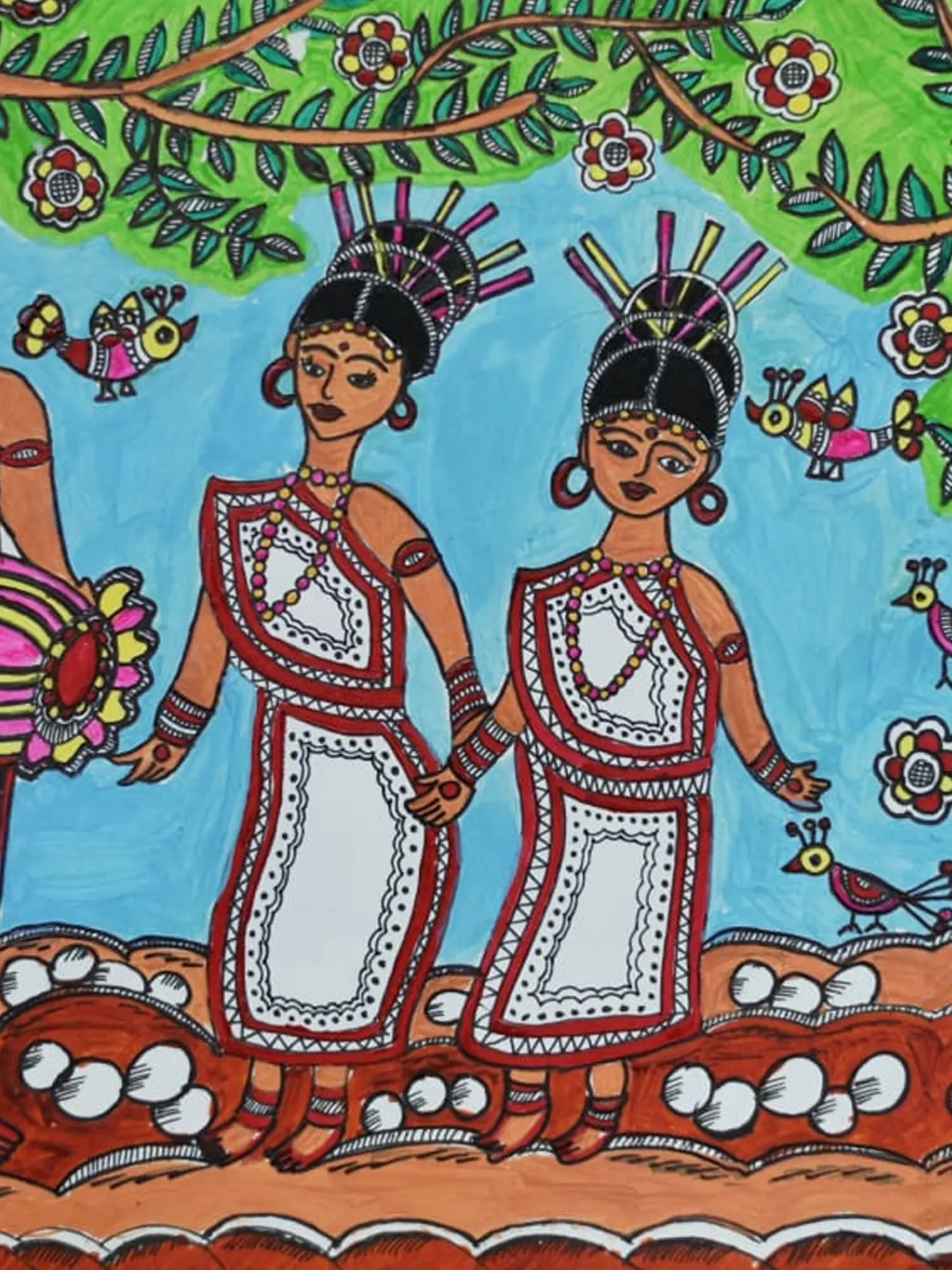
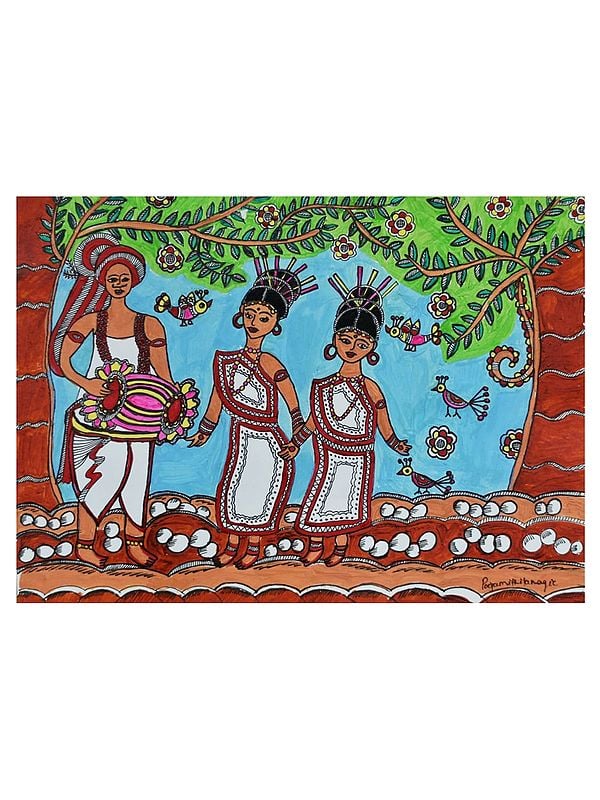
captivating Color and Pen on Watercolor Paper intricately captures the essence
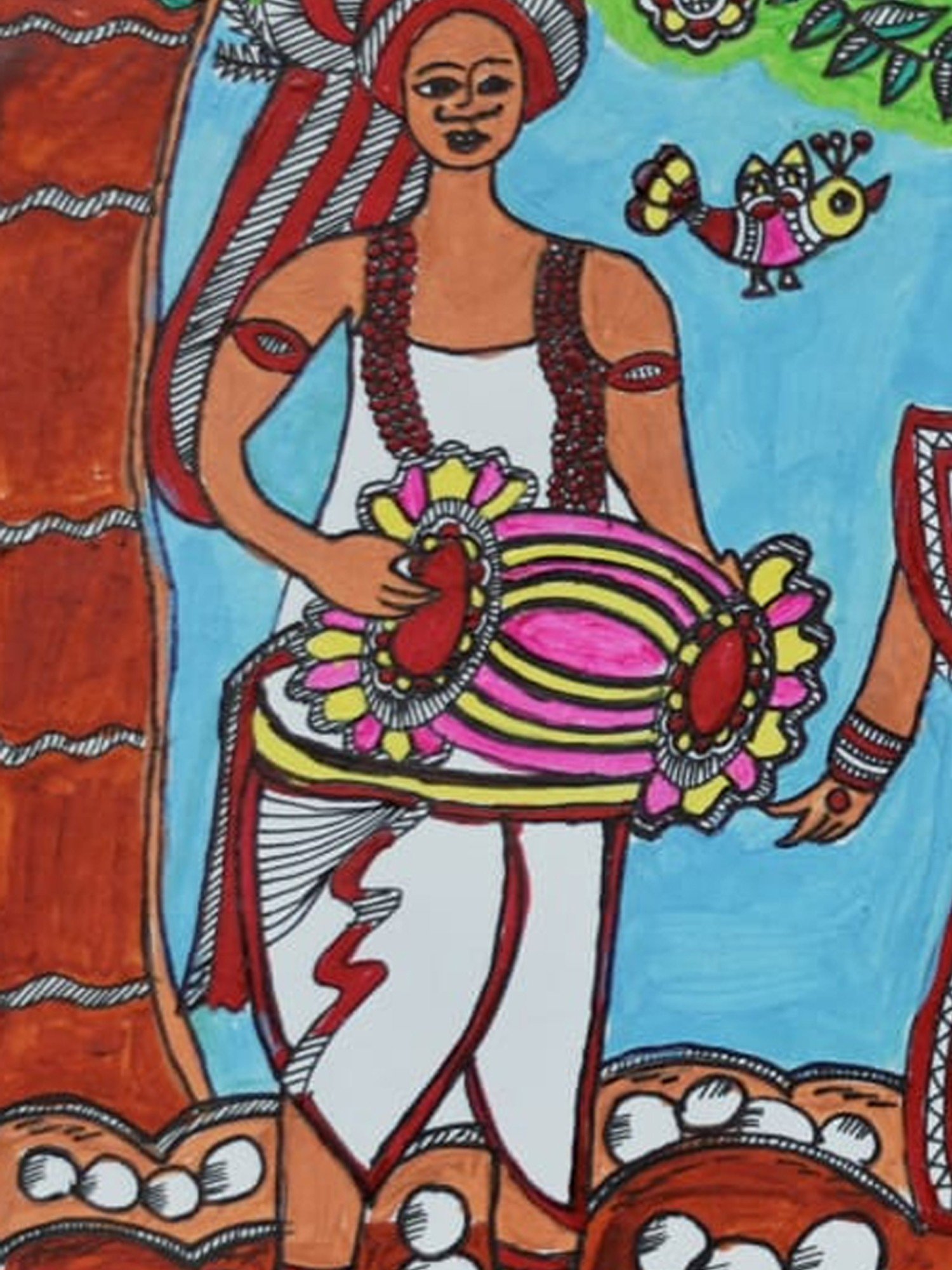
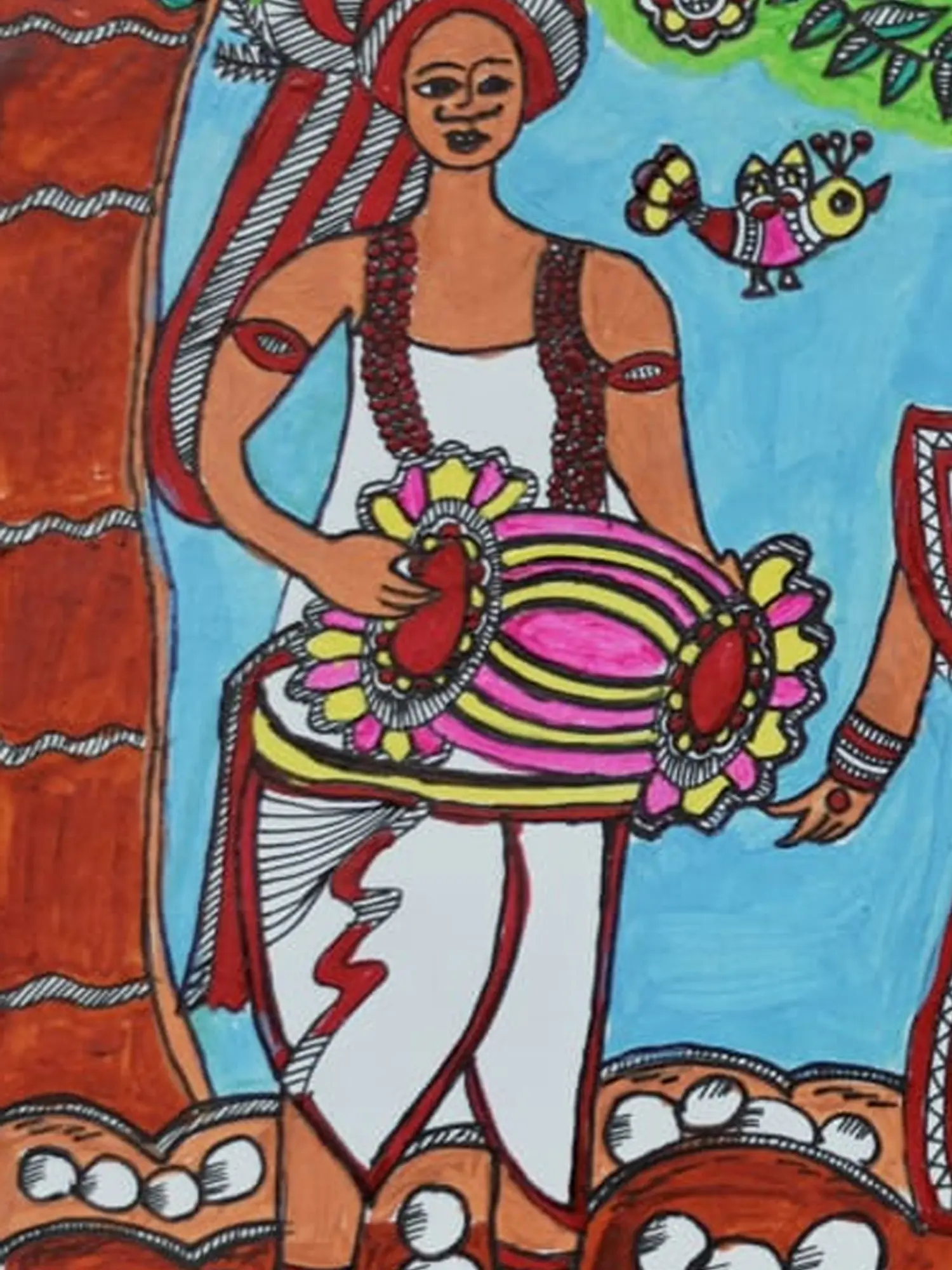
of the Sarhul Festival through the lens of Madhubani art. The vibrant scene
unfolds with a man joyously playing the Dhol, setting the rhythmic tone for
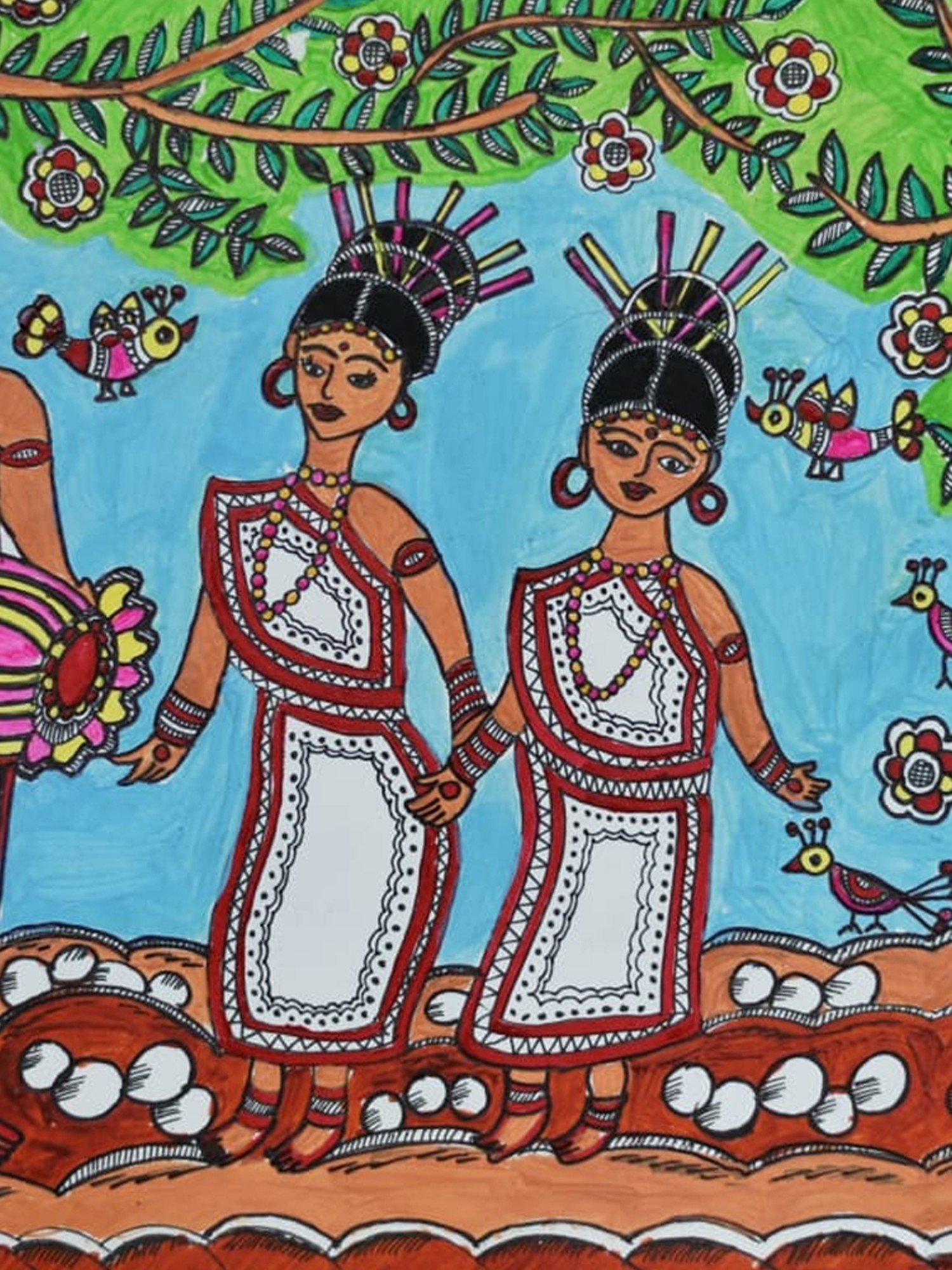
celebration. Two women, adorned in tribal attire, gracefully dance in harmony
with the festivities.
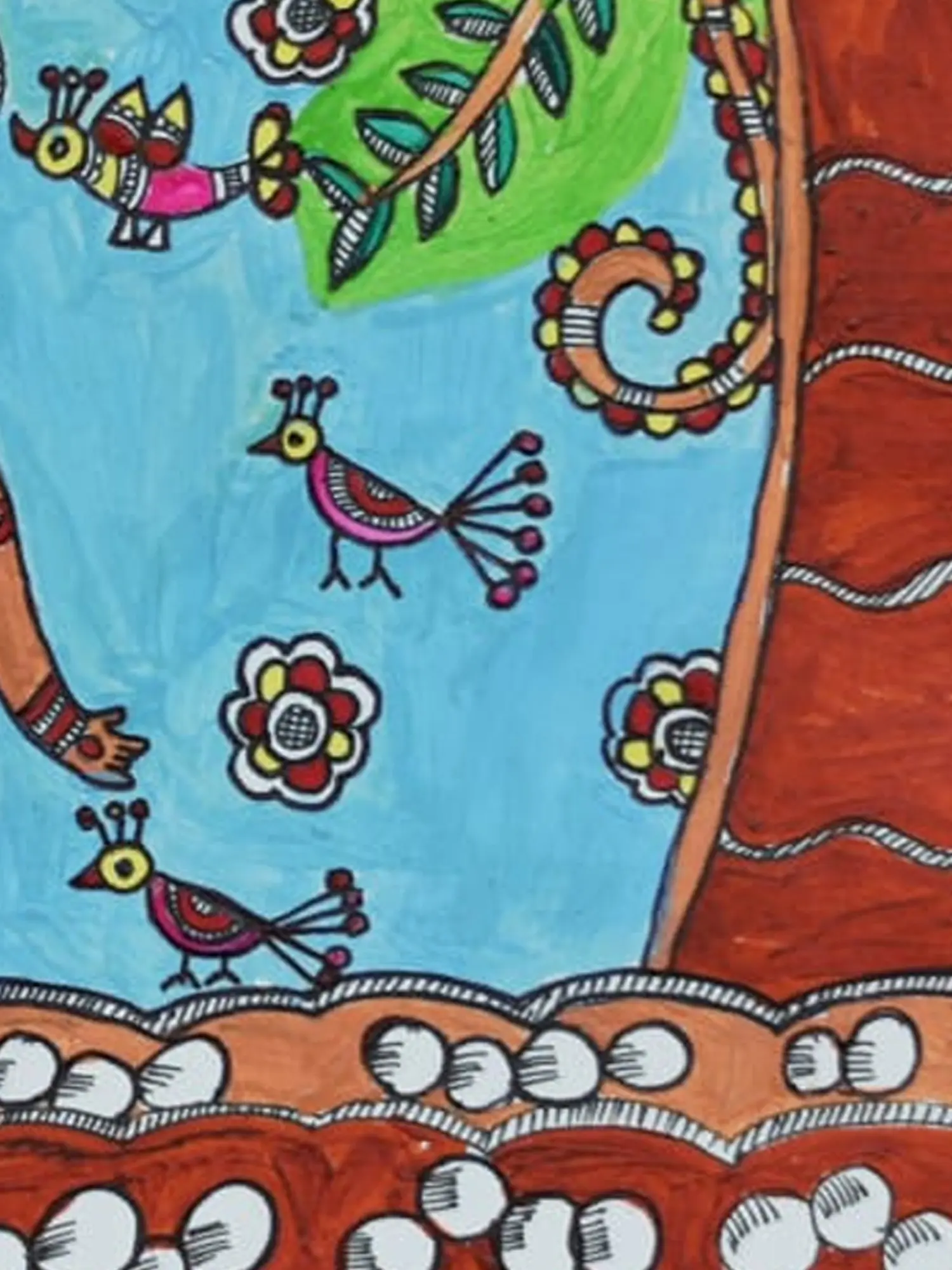
The
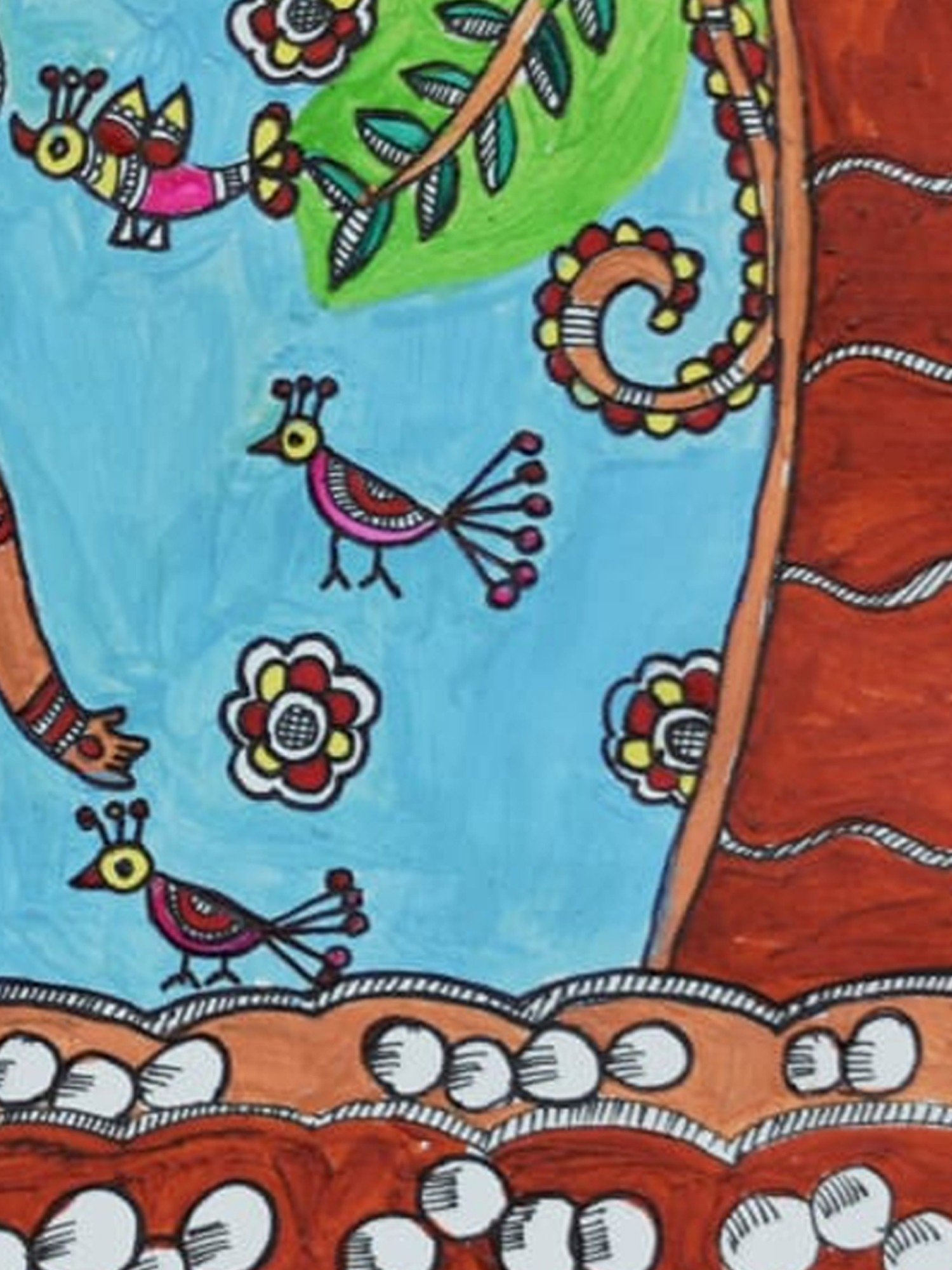
background comes alive with exquisite depictions of birds, trees, and flowers,
encapsulating the cultural richness and connection to nature inherent in the
Sarhul Festival. The artist's meticulous detailing and use of traditional
Madhubani elements create a visually stunning tableau that celebrates the
spirit of this tribal celebration with timeless elegance.
Celebrating Sarhul: A Madhubani Masterpiece
This vibrant Madhubani painting captures the essence of the Sarhul festival, a vibrant celebration of spring and new beginnings observed primarily by the tribal communities of Jharkhand and Chhatisgarh in India. The artwork depicts a scene brimming with life and color, reflecting the joy and renewal associated with this significant cultural event. The artist, Pooja Jha, masterfully employs the traditional Madhubani style, characterized by its bold lines, rich colors, and intricate detailing. The composition is a harmonious blend of natural elements and human figures, creating a captivating narrative. Notice the detailed depiction of the trees, birds, and the unique attire of the individuals portrayed—a testament to the artist’s skill and deep understanding of the festival's cultural significance. The painting’s bright and cheerful palette perfectly mirrors the festive atmosphere of Sarhul.The Mythology and Symbolism of Sarhul
Sarhul is deeply rooted in the mythology of the region, often associated with the worship of nature spirits and the celebration of the harvest. The festival marks the arrival of spring, signifying the awakening of nature from its winter slumber. This painting may subtly allude to these themes. The lush greenery and the abundant birds likely represent the flourishing of nature during springtime. The figures depicted might represent deities or significant characters from local folklore. The eggs scattered on the ground could symbolize fertility and abundance, a recurring motif in many indigenous cultures celebrating spring. These details add a layer of depth and meaning, allowing viewers to connect with the rich cultural heritage embedded within the art. The artistic depiction of this festival reveals a glimpse into a world where nature and spirituality are deeply intertwined, enriching the visual experience.The Artist's Hand: A Madhubani Tradition
Pooja Jha's mastery of the Madhubani art form is evident in every brushstroke. This traditional Indian painting style, originating in the Mithila region of Bihar, is characterized by its unique approach. Artists predominantly use natural pigments and create intricate patterns using their fingers, twigs, or brushes. This painting shows the artist’s skillful use of color and line to create a lively scene. The details are remarkably precise, reflecting the dedication and patience required to produce such a stunning piece. The bold outlines, the vibrant colors, and the use of symbolic imagery are all hallmarks of this ancient art form. By choosing to portray the Sarhul festival in this style, Pooja Jha not only preserves the tradition but also gives it new life.










 Upload an Image