An Auspicious Vision
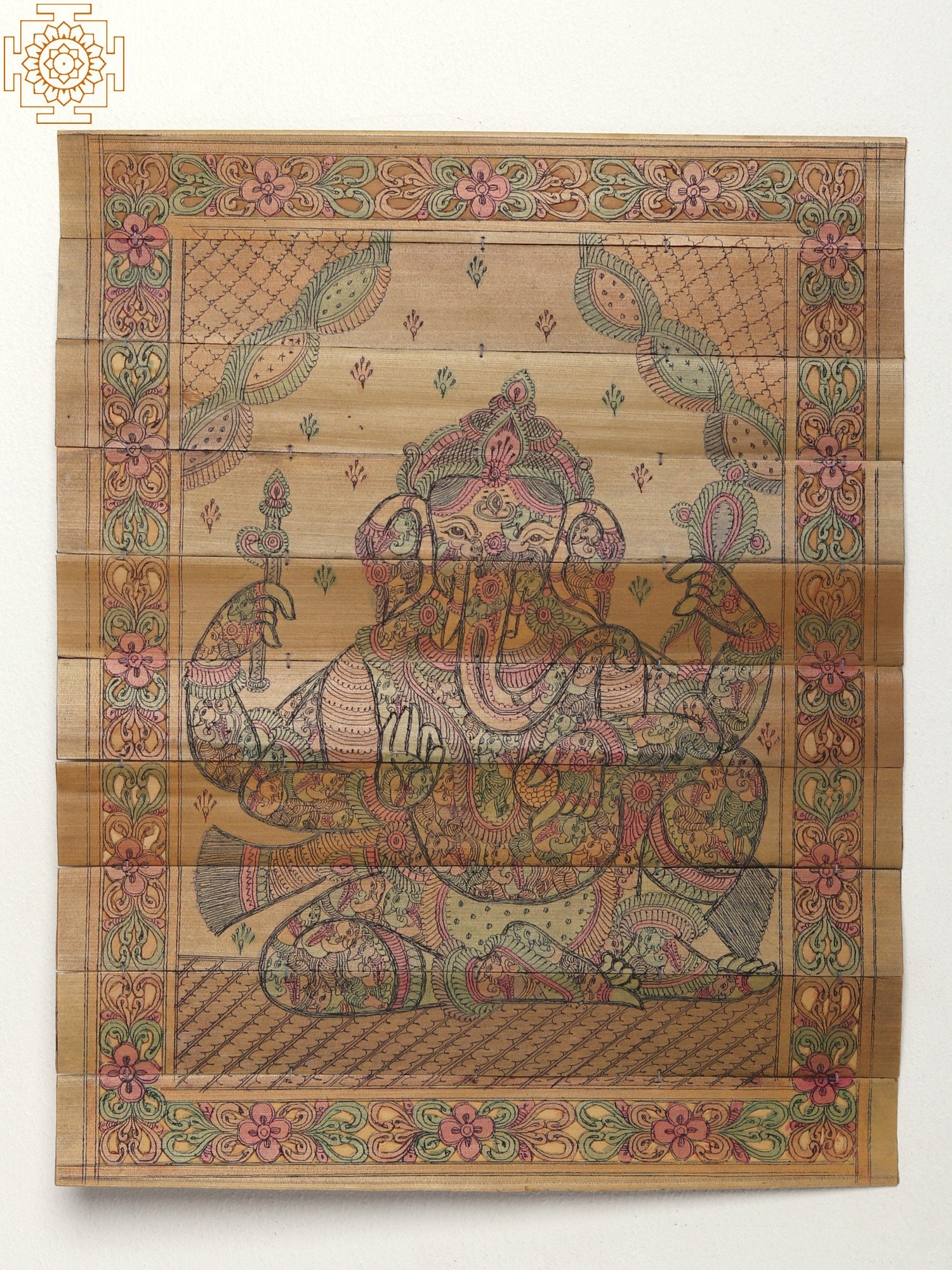
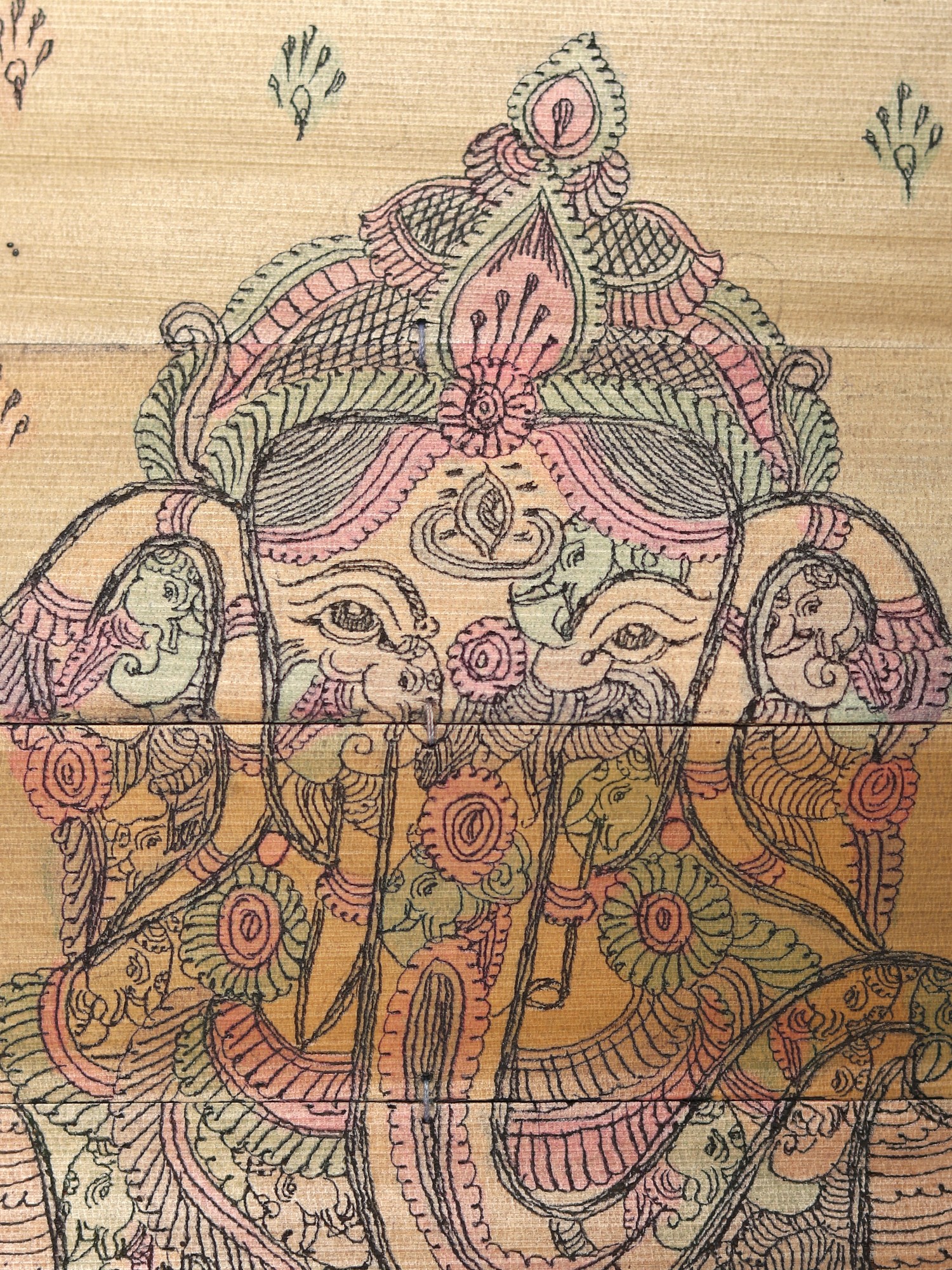
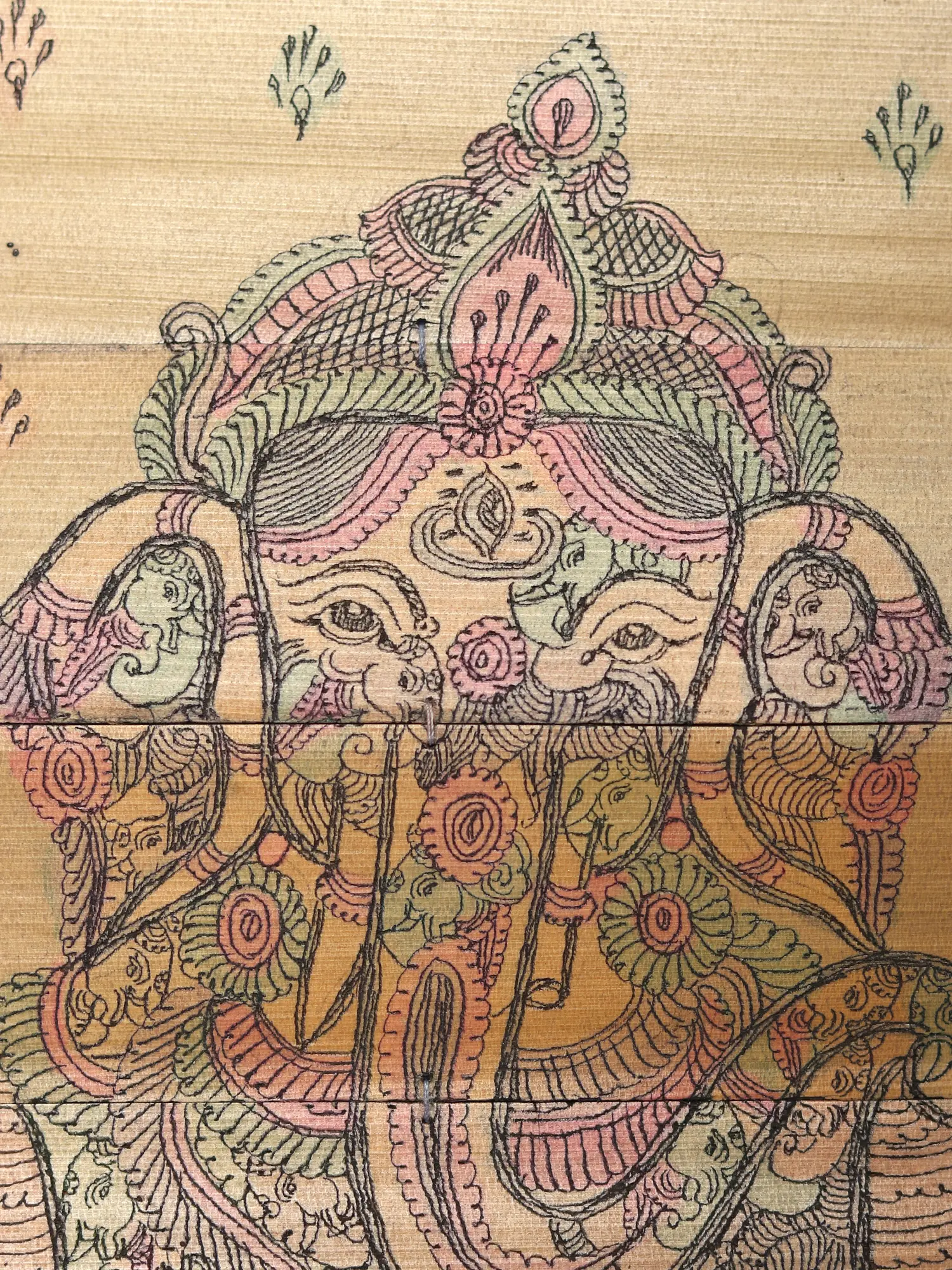
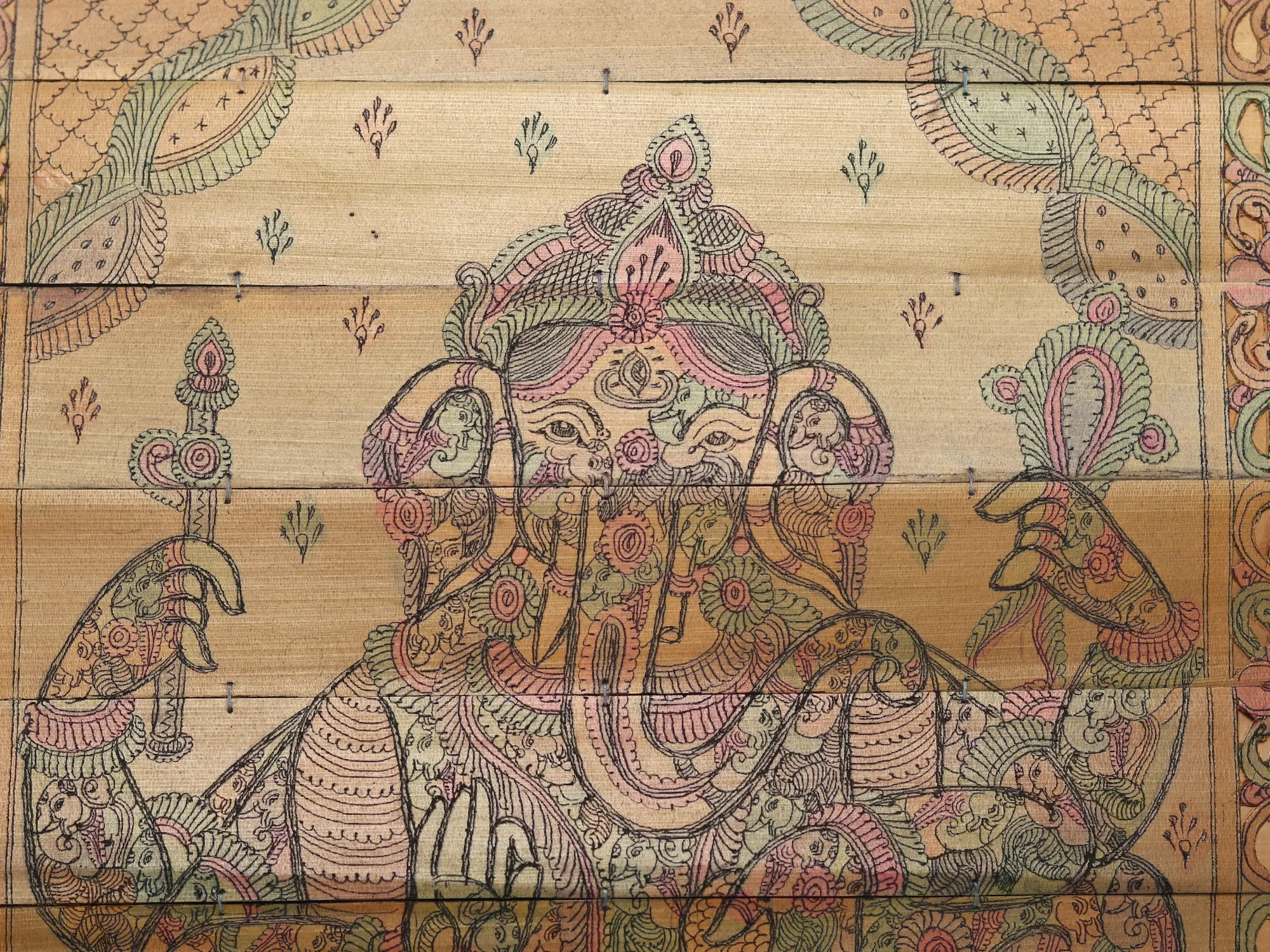
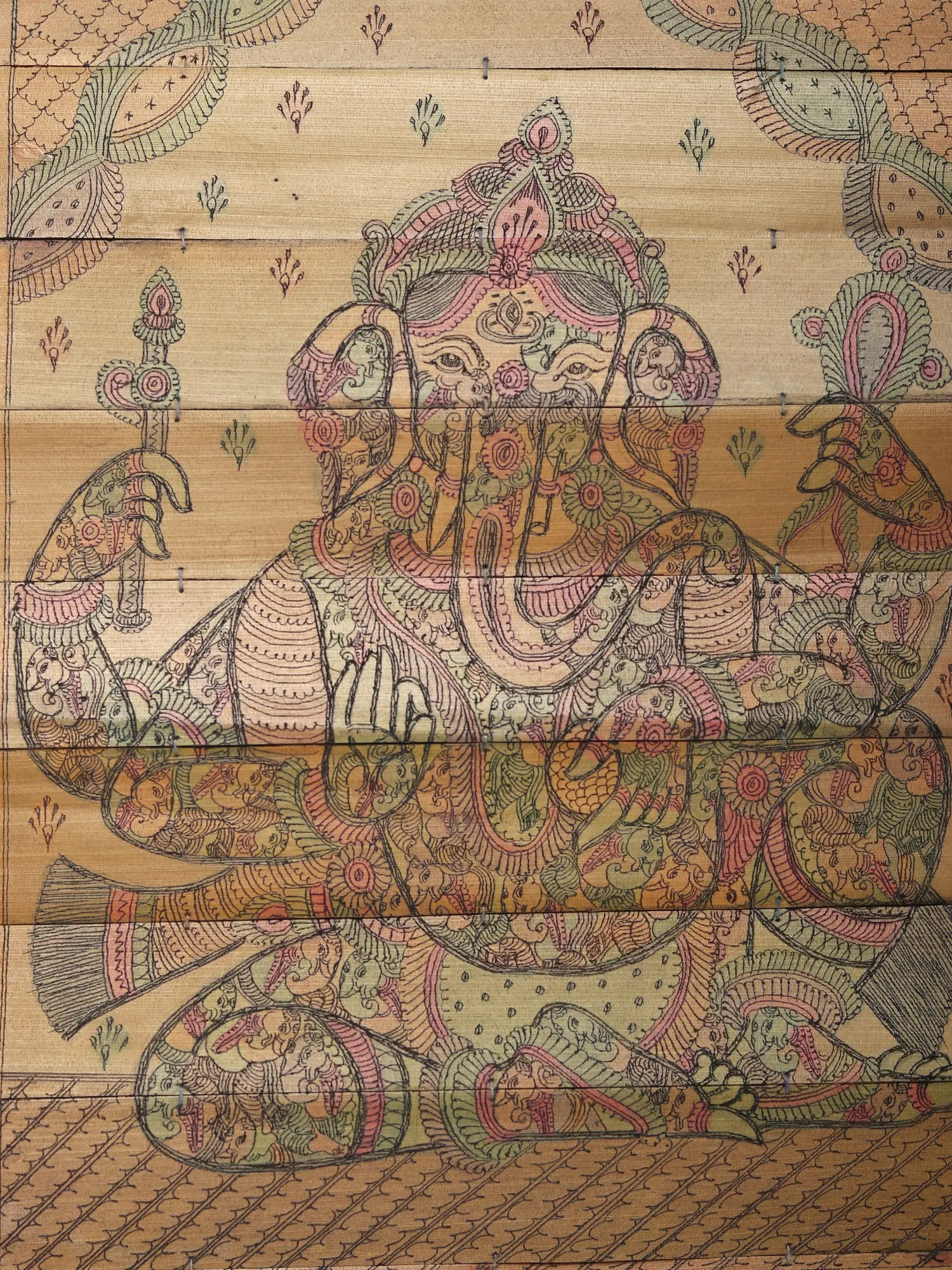
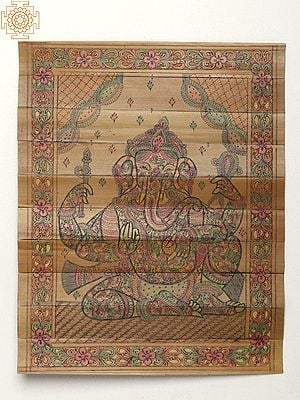
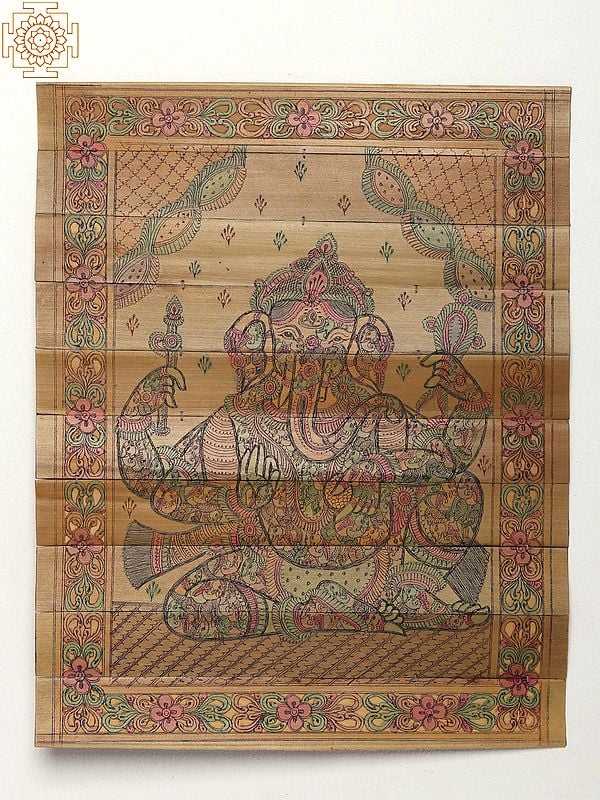
Invite divine blessings into your sanctuary with this exquisite depiction of Ganesha, the remover of obstacles and the god of beginnings. Its intricate detail and artisanal charm offer a profound sense of peace and prosperity, making it a focal point of any contemplative space. You'll find yourself drawn to its quiet power and enduring beauty.Masters of Tradition
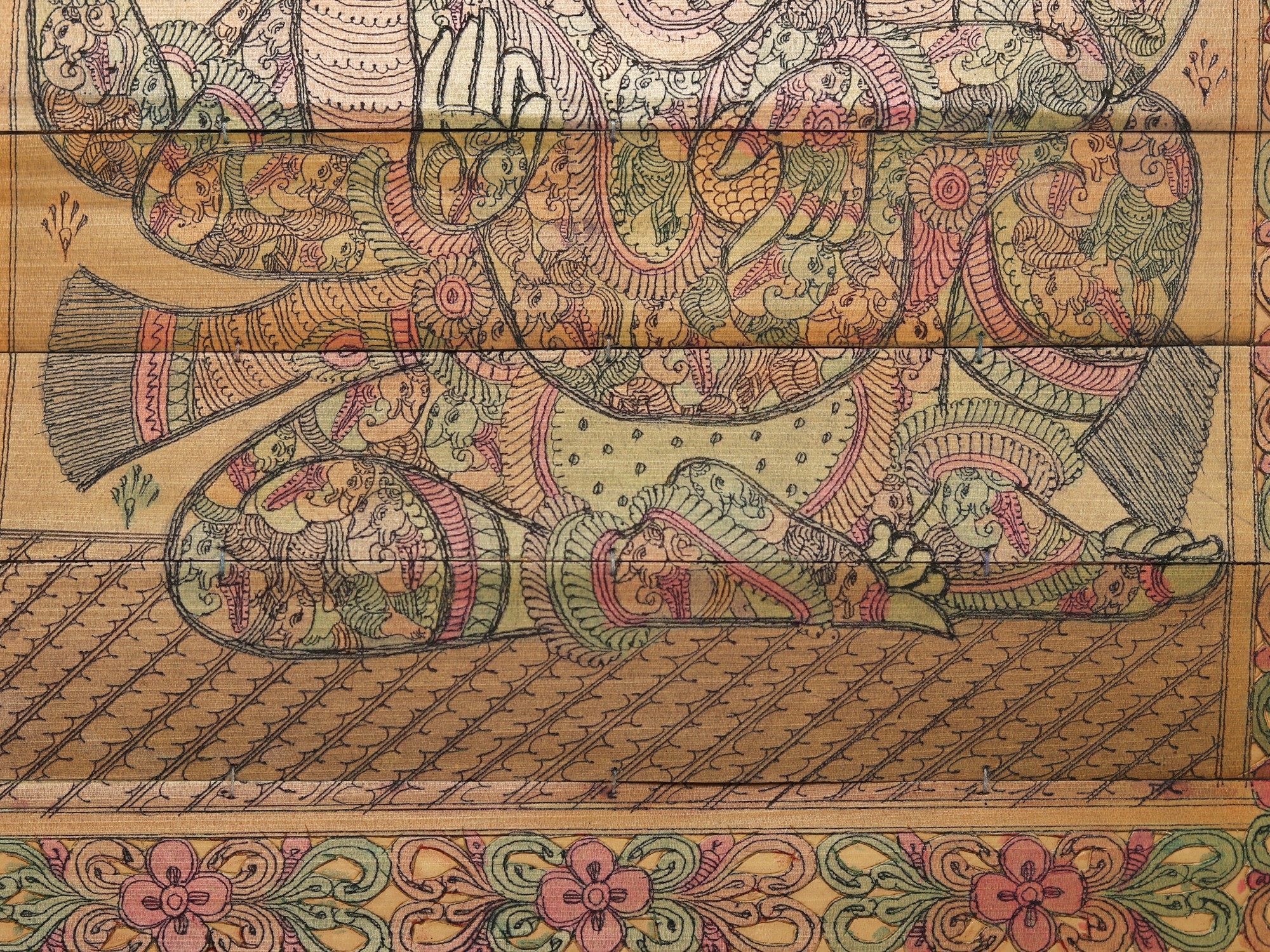
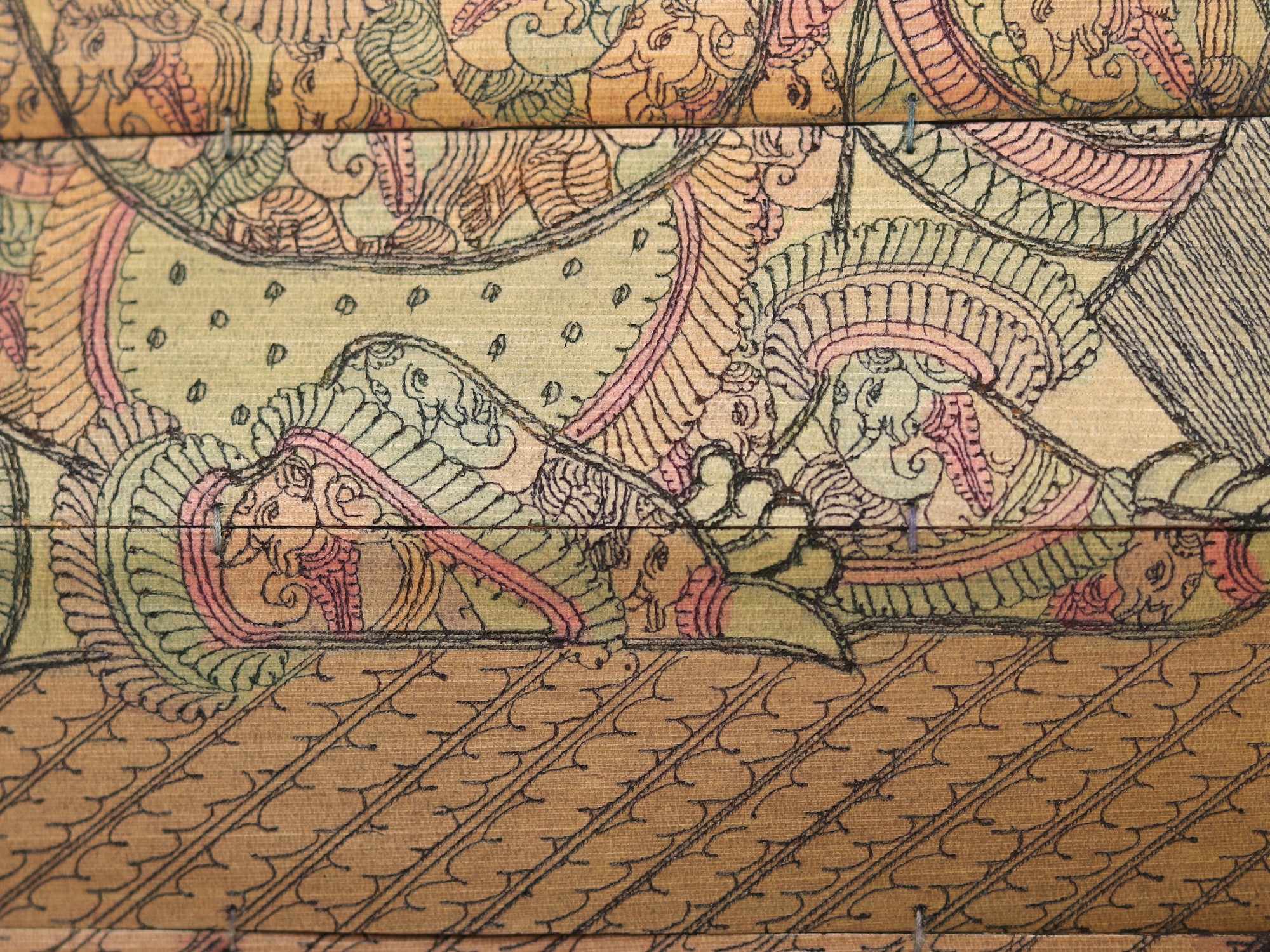
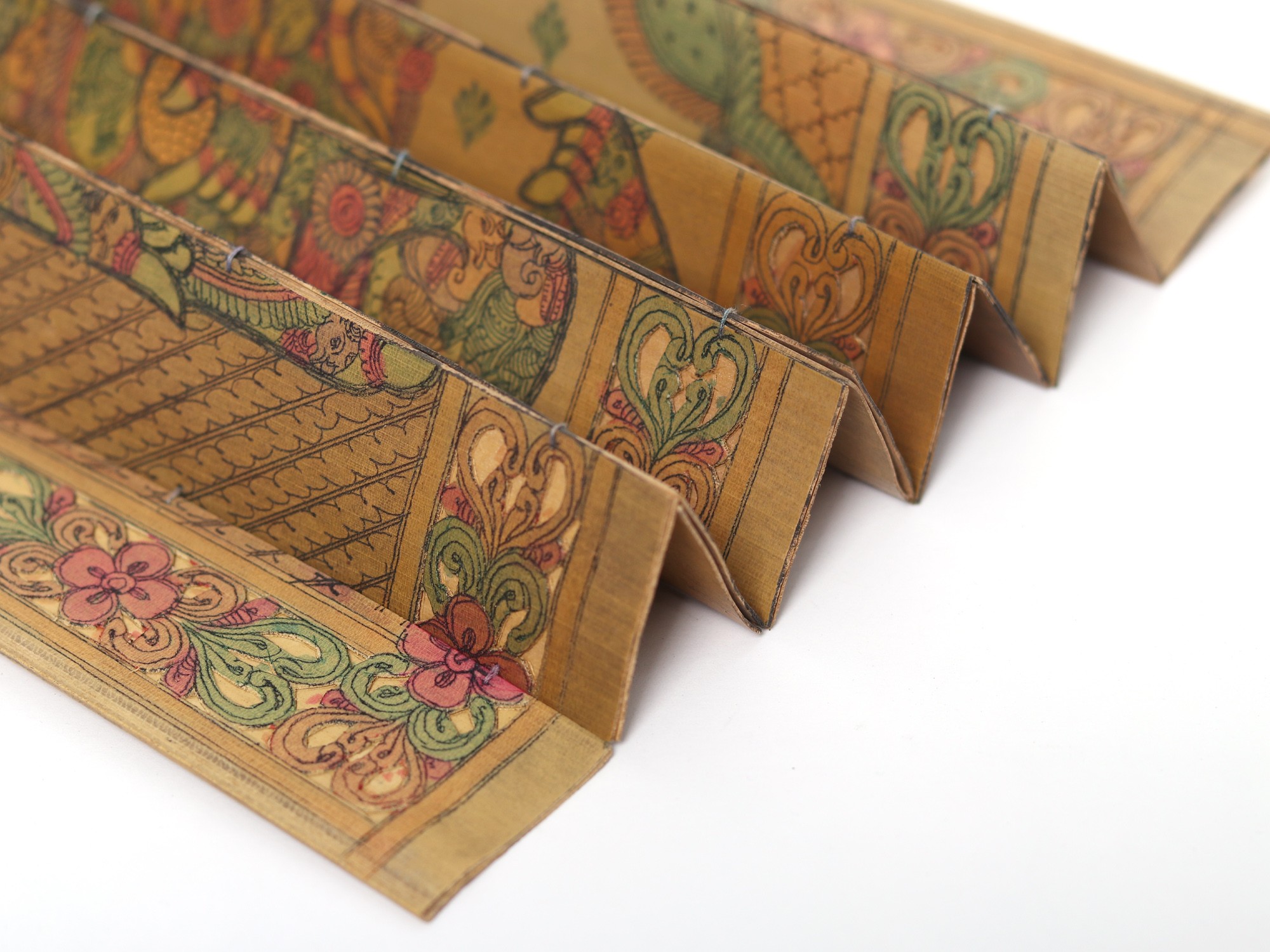
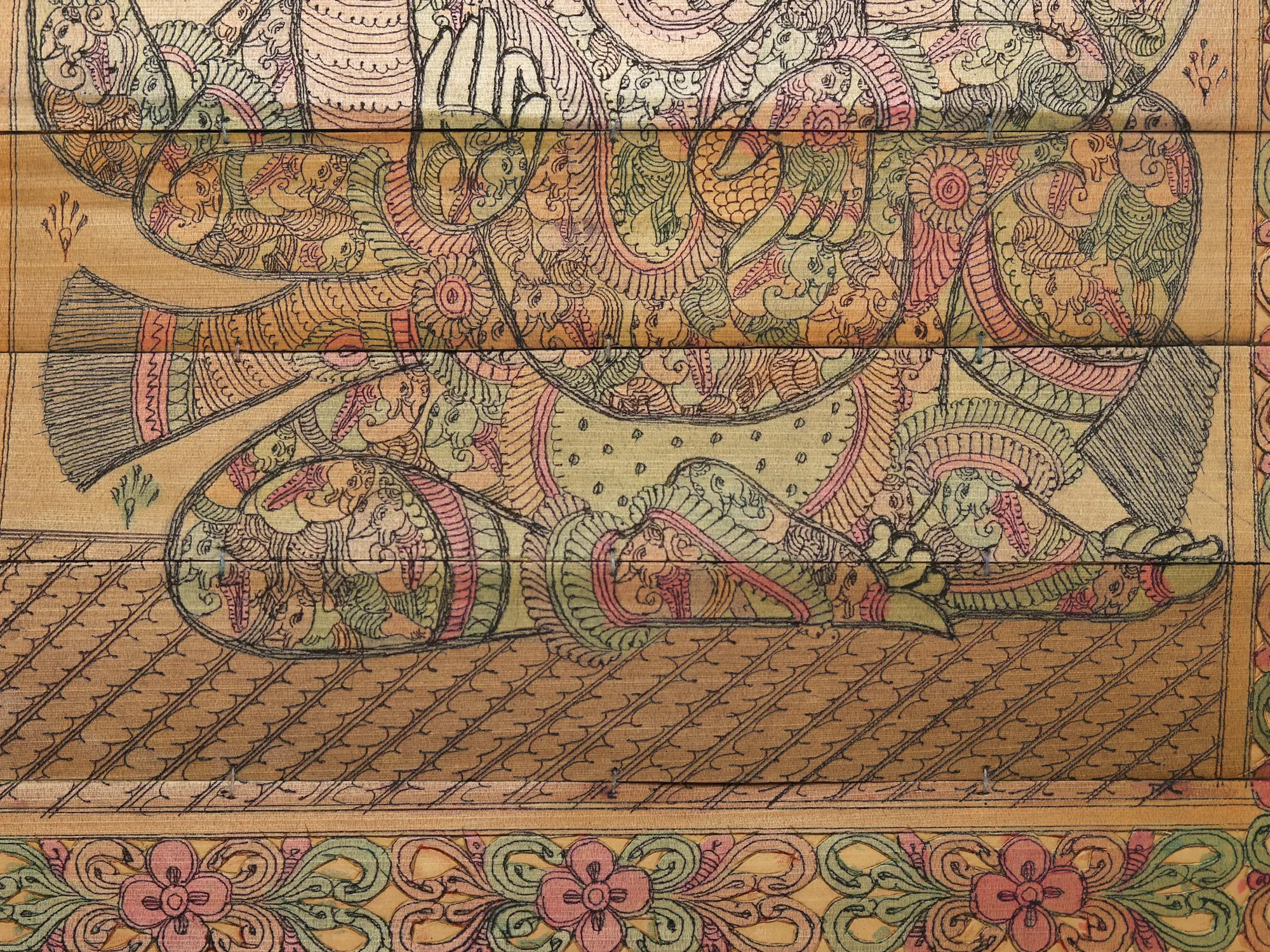
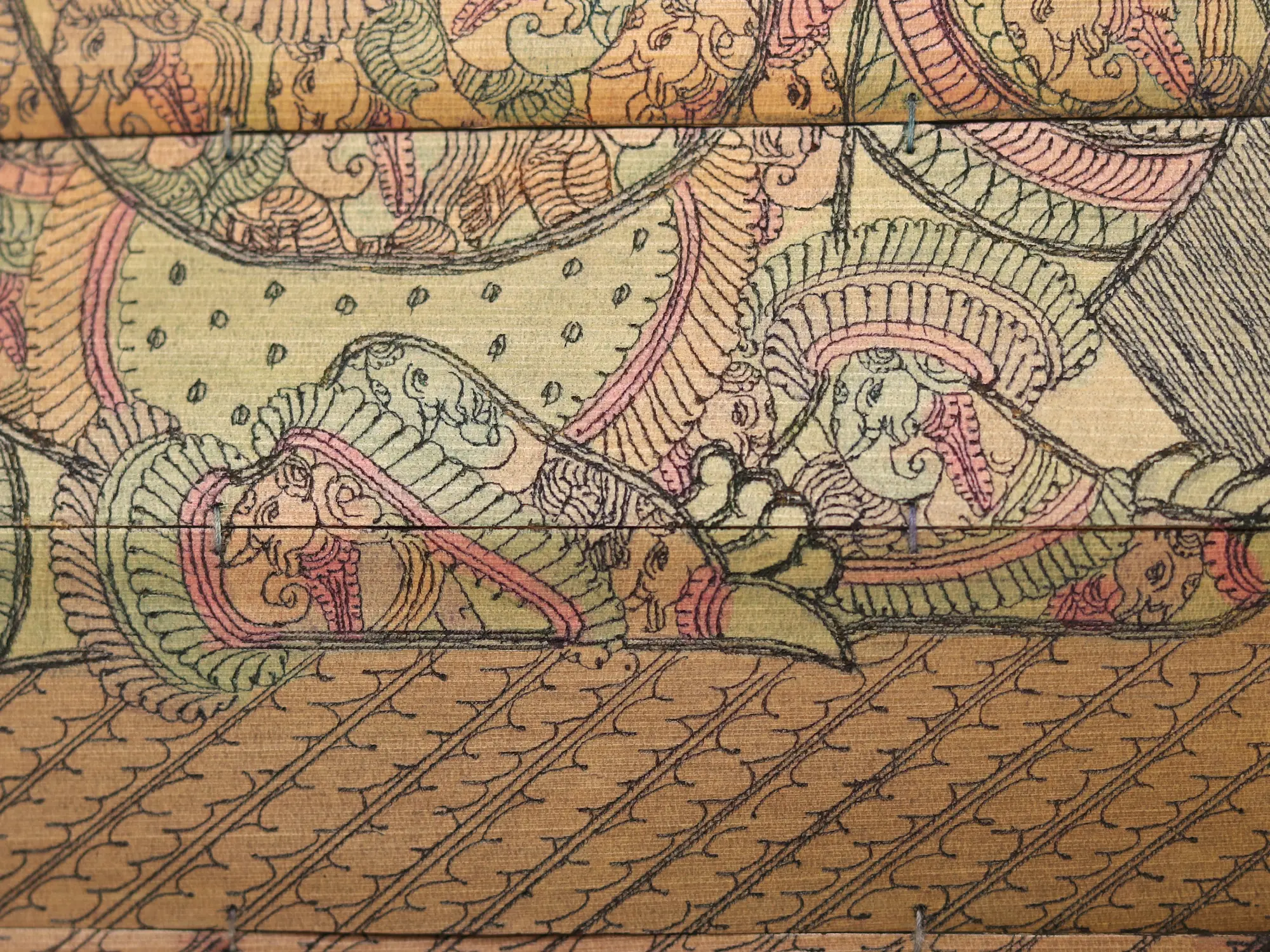
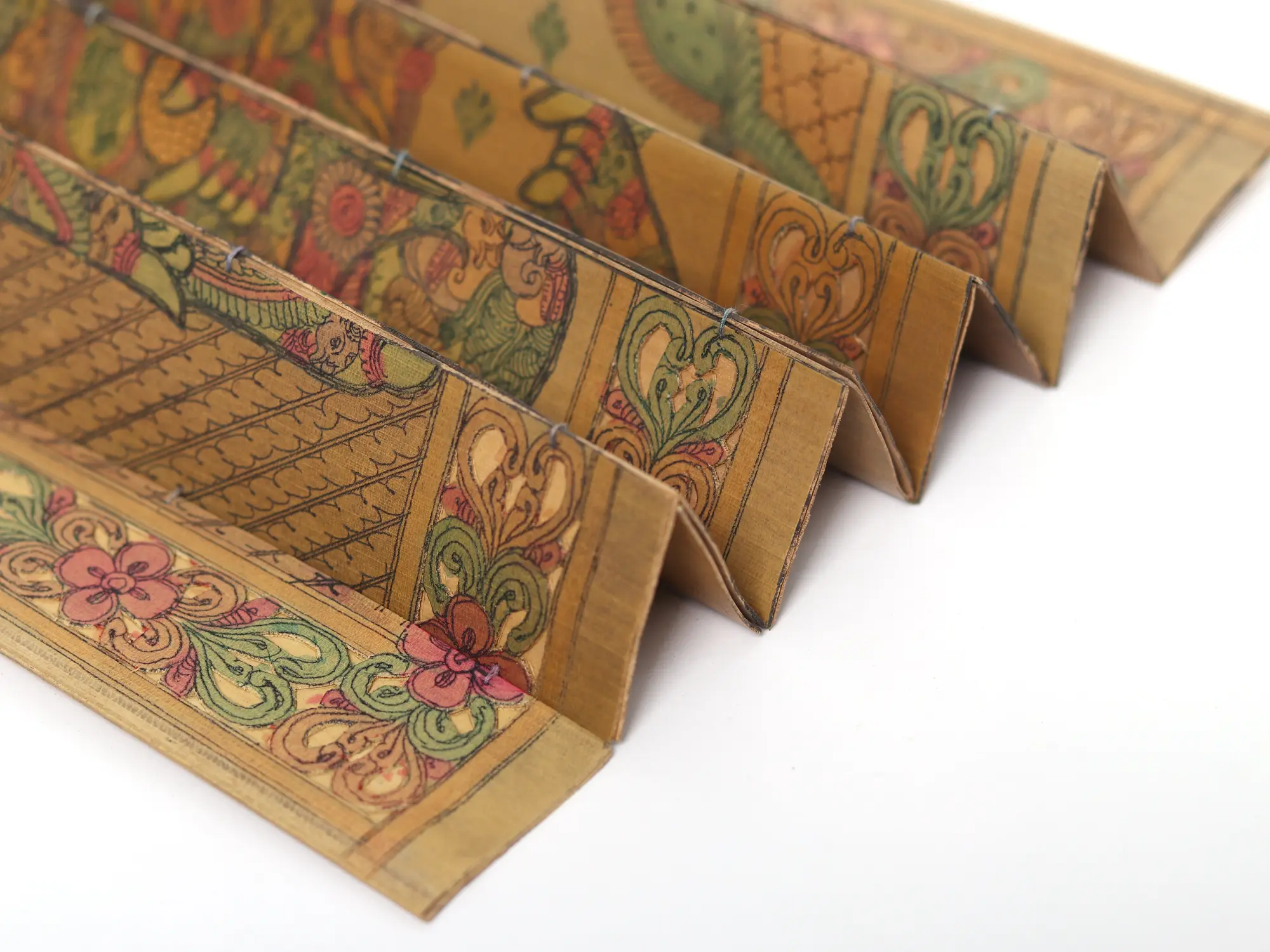
Each element of this artwork is meticulously etched and painted by the renowned artist Rabi Behra, a custodian of the ancient Pattachitra tradition. Crafted on dried palm leaves, carefully pieced together, the natural texture of the material lends a unique warmth and depth to the composition. You'll appreciate the delicate hand-drawn lines and the subtle, earthy watercolor hues that bring the divine form to life with unparalleled finesse and respect for the heritage.Ethereal Details
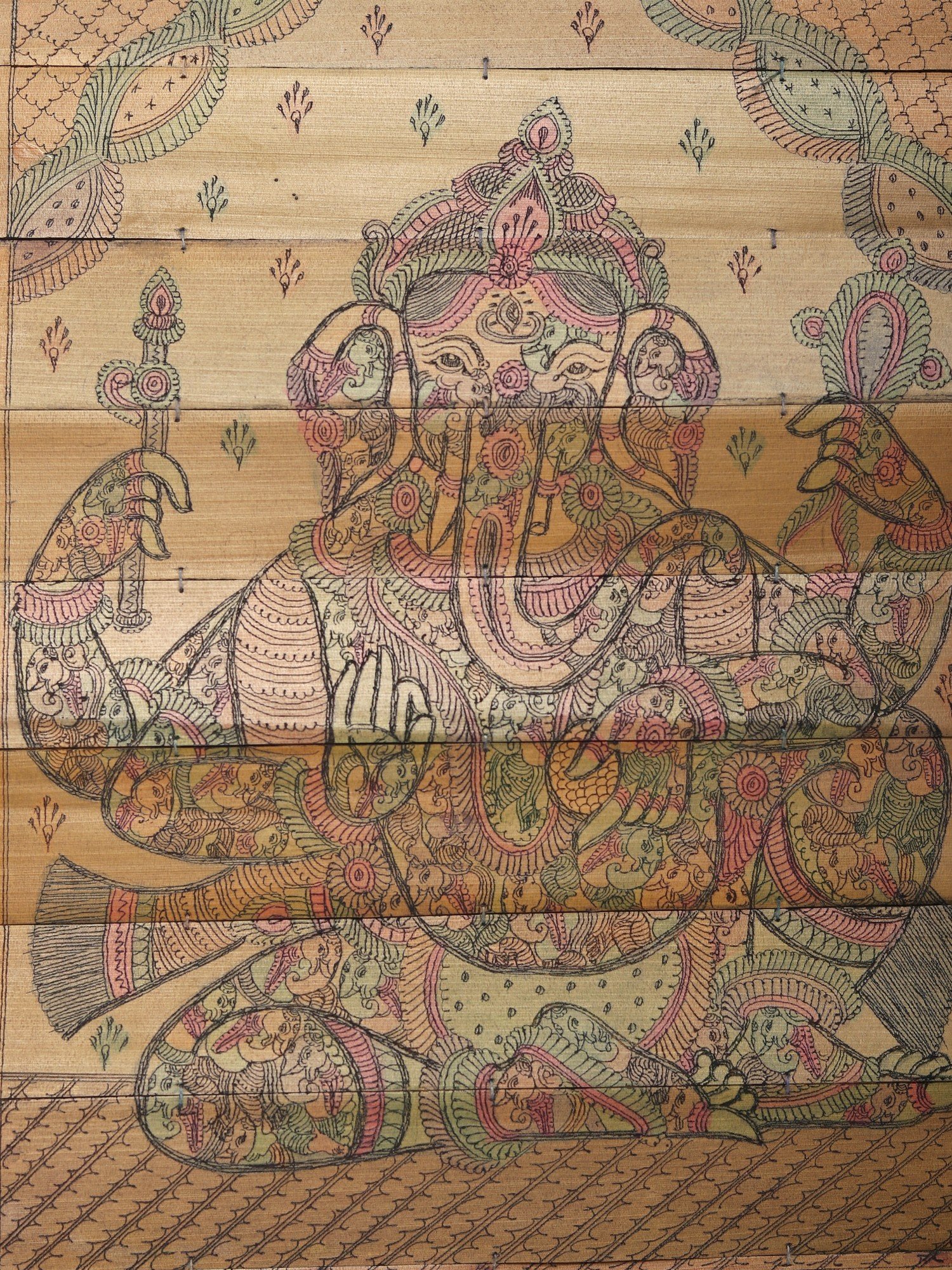
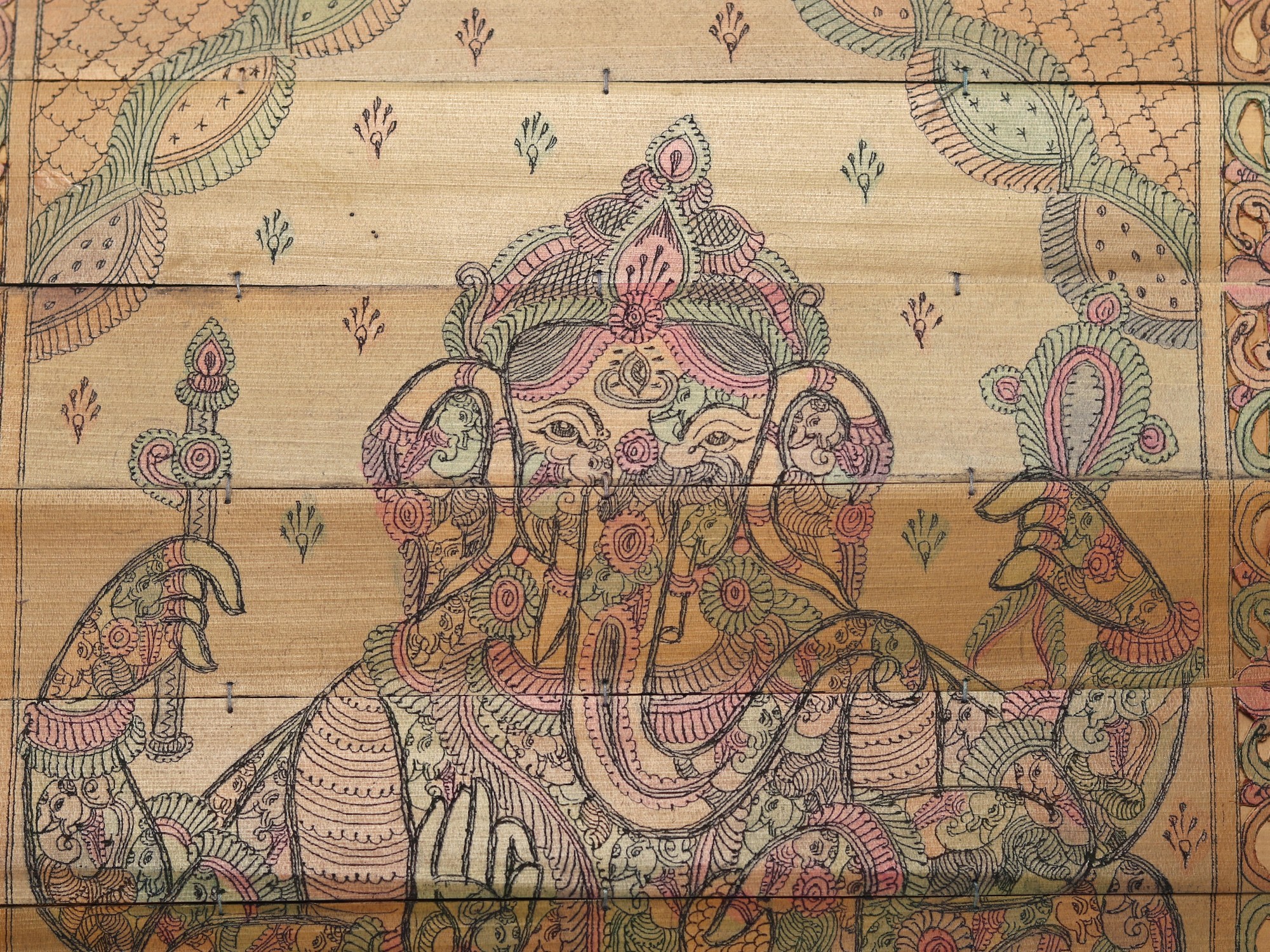
The artist has masterfully rendered Ganesha in a seated posture, adorned with intricate jewelry and flowing garments that are characteristic of traditional iconography. The composition is framed by a beautifully detailed border of floral motifs and delicate patterns, showcasing a remarkable command of visual harmony. This piece, measuring approximately 13 inches in height and 10.2 inches in width, possesses a presence that is both commanding and serene, drawing the eye to every nuanced detail.A Legacy of Devotion
The Pattachitra art form, originating from the eastern Indian state of Odisha, has a rich history spanning centuries, often depicting mythological tales and religious deities. This particular rendition of Ganesha draws upon a deep wellspring of spiritual and cultural significance, embodying the Vighnaharta's essence as a benevolent protector and harbinger of good fortune. You connect with a timeless narrative of devotion and artistic excellence.A Sacred Adornment
This captivating artwork is ideally suited to adorn spaces dedicated to peace and contemplation, such as your home altar, meditation room, or study. Its modest yet impactful size allows for versatile placement, bringing a touch of sacred artistry to even the most intimate corners of your dwelling. It serves as a constant reminder of strength, wisdom, and the auspicious beginnings that lie ahead, enriching your daily life with its presence.Preserving Enduring Beauty
To ensure its longevity, this palm leaf artwork should be kept away from direct sunlight and excessive moisture. Gentle dusting with a soft, dry cloth is recommended to maintain its pristine condition. By adhering to these simple care instructions, you will preserve the vibrant details and the inherent spiritual resonance for generations to come, cherishing a piece that is as enduring as its subject matter.Mastering the Ancient Technique: Exploring the Meticulous Creation of Pattachitra Paintings
The traditional Pattachitra is a scroll painting that is done on
cloth. This is revealed in the name; Pattachitra is a Sanskrit
term made from two words i.e. Patta meaning cloth and Chitra
meaning picture. The main subject of this painting is portraying
Hindu mythological narratives, scenes from religious texts, and
folktales. Pattachitra paintings are especially practiced in
eastern Indian states such as West Bengal and Odisha, and also in
some parts of Bangladesh. This art form is closely related to Shri
Jagannath and the tradition of the Vaishnava sect. It is believed
that Pattachitra art originated in the 11th century and the people
of Odisha practice it even today without any discrepancy. Bengalis
use these scroll paintings for ritual purposes (as a visual
device) during the performance of a song or Aarti.
Pattachitra paintings are characterized by creative and
traditional motifs/designs, decorative borders, and bright
colorful applications. The outline of the figure and motifs are
bold and sharp. Some common shapes and motifs seen in these
paintings are trees, flowers, leaves, elephants, and other
creatures. The artists of Odisha and Bengal still use the
traditional method of painting which gives a unique look to it
altogether.
1. Canvas is prepared
The process of painting a Pattachitra begins by preparing the
canvas (patta). Generally, cotton cloth is used for making the
canvas. The local artists dip the cotton cloth in a mixture of
tamarind seeds and water for a few days. The cloth is then taken
out and dried in the sun. Now natural gum is applied over it to
stick another layer of cotton cloth on it. Thus a thick layer of
cotton cloth is formed. This layered cotton is sun-dried and a
paste of chalk powder, tamarind, and gum is applied on both
sides. The surface of the cloth is then rubbed with two
different stones for smoothening and it is again dried. This
process gives the cloth a leathery finish and it is now ready to
be painted.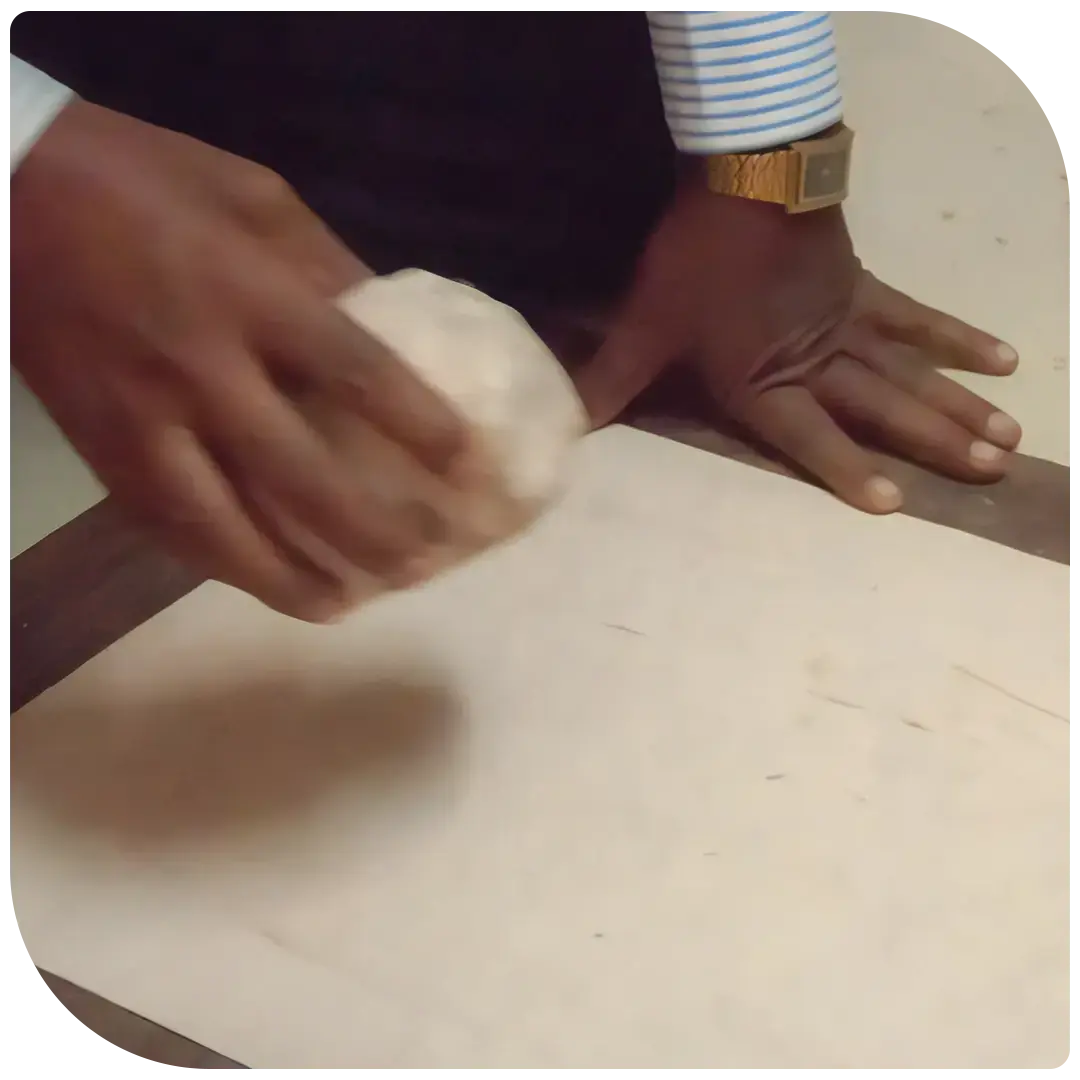
2. Natural colors are made using traditional method
The painters prepare and use vegetable and mineral colors for
application in the painting. White color is made from conch
shells, black is made by burning coconut shells, Hingula is used
for red color, Ramaraja for blue, and Haritala for yellow.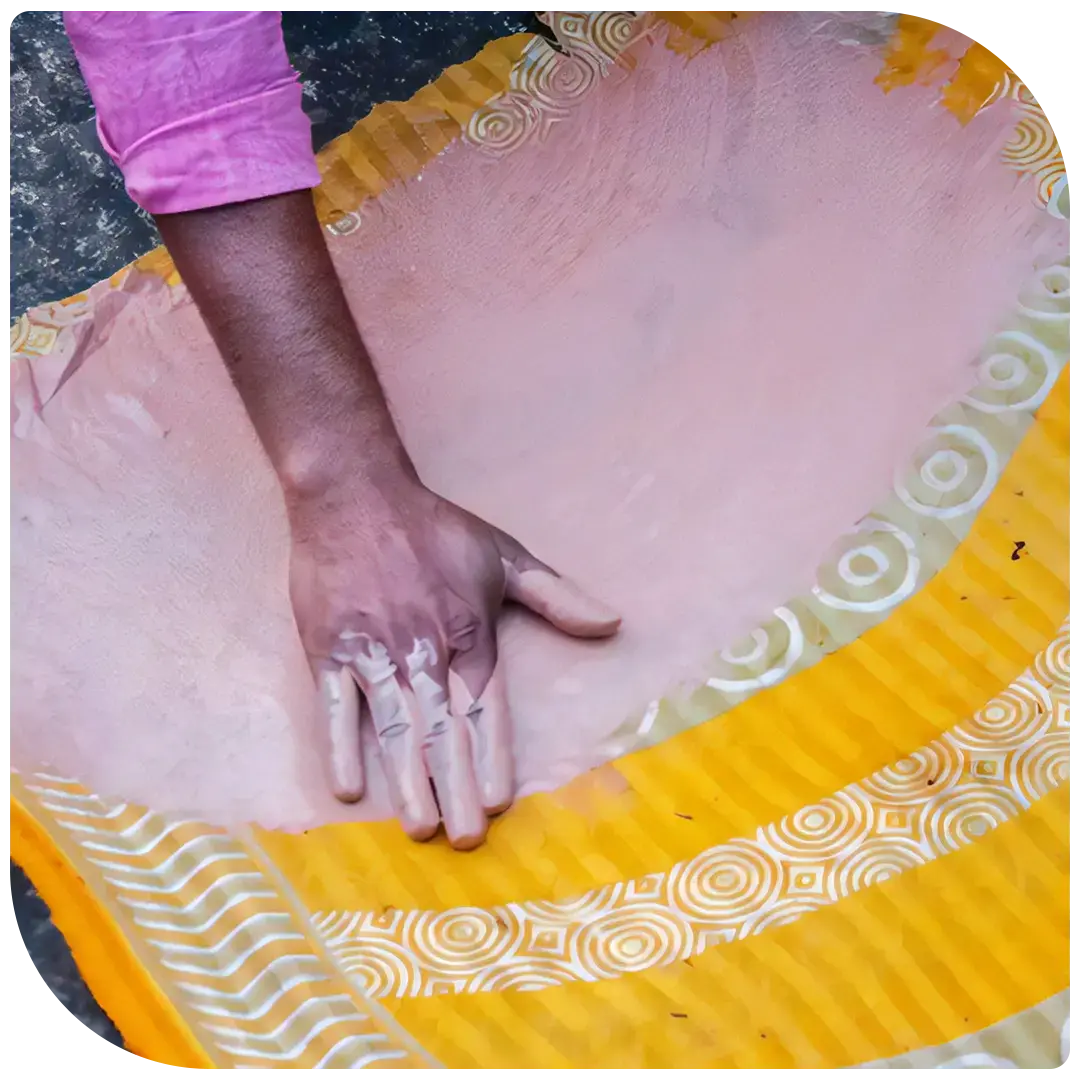
3. Colors are filled in
The artist now makes a double-lined border on all four sides of
the canvas. The local artists are so expert in painting that
they do not draw figures and motifs with pencil but directly
draw them with a brush. The paint brushes that the painters use
are made of the hair of domestic animals, a bunch of which is
tied to the end of a bamboo stick. The figures are now painted
with natural colors using the indigenous brushes. The outline is
thickened with black color.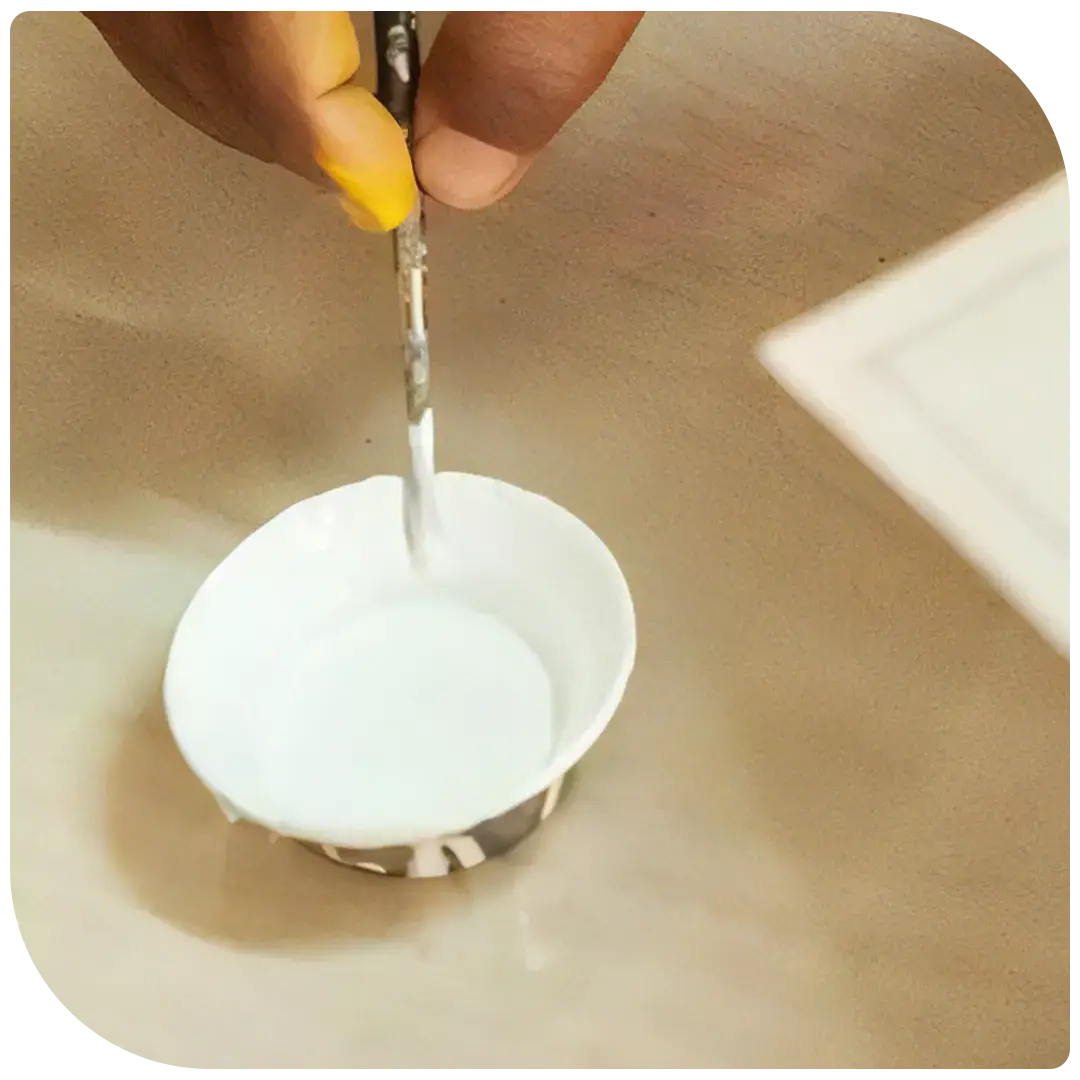
4. Painting is given a finishing
Finally, the painting is varnished/glazed to protect it from any
damage and to get a glossy shine on the surface.
The making of a Pattachitra is laborious work and therefore, one
painting may sometimes take over a month to complete. Due to their
classical look, these paintings are admired by people from all
over the world. The artistic skills used in Pattachitra are passed
down from one generation to another and thus are preserved to
date.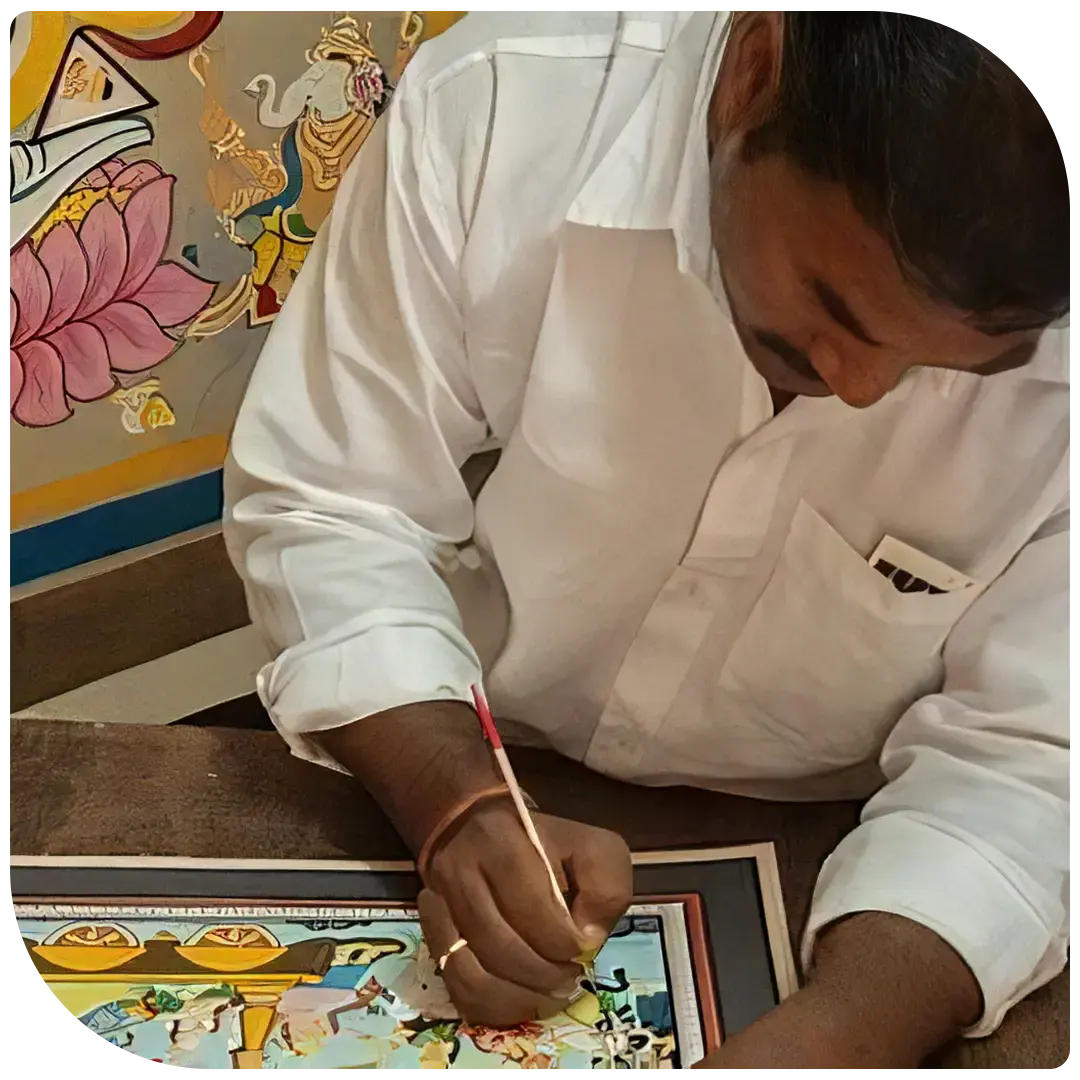








 Upload an Image